
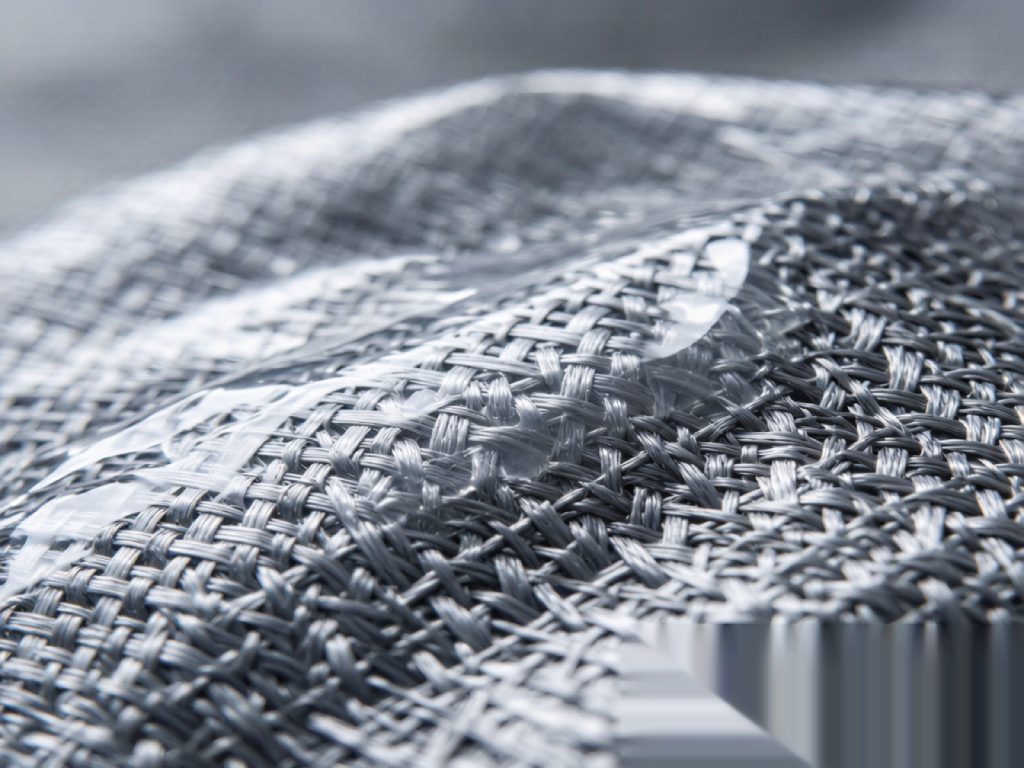
How it is made
A high-tenacity polyester scrim (500D–1000D) is coated with PVC by one of three routes:
- Knife coating — liquid PVC paste is reverse-scraped onto both sides and cured. Best waterproofing and peel strength; widths to 5–6 m.
- Calendering — PVC powder is fused to the scrim under hot rollers. Flat finish, uniform light transmission.
- Lamination — PVC films are hot-bonded either side of a scrim. Best printability and color depth.
Reading the spec sheet
| Term | Meaning |
|---|---|
| GSM (g/m²) | weight per square metre — 440 light to 1100 heavy |
| D (denier) | yarn fineness — 500D–1000D typical |
| Tensile (N/5cm) | breaking strength — 780 to 3800+ |
| Tear (N/5cm) | resistance to tearing |
| Peel (N/5cm) | coating-to-cloth adhesion |
| Hydrostatic (mm) | water pressure resistance — ≥2000 mm waterproof |
Choosing the right grade
- 440 gsm — awnings, banners, light covers.
- 650 gsm — tarpaulin, truck curtains, tents (the workhorse).
- 900–1100 gsm — inflatables, heavy covers, flooring.
Fire and compliance
Fire ratings vary by market: B1 (DIN 4102) and M2 in Europe, NFPA 701 and CPAI-84 in North America, EN 13501-1 for construction. REACH governs chemicals (phthalate ≤0.1%, PFAS limits). Always confirm the certificate for your destination.
PVC vs TPU vs TPO
PVC is cost-effective and versatile but contains chlorine. TPU is more elastic, colder-rated and recyclable at higher cost. TPO is chlorine-free and recyclable. Choose by performance, compliance and budget.
Next step
Explore our PVC coated polyester fabric range, or request a sample to test hand-feel and weldability.