Why a lithium brine pond cannot be lined like a normal water reservoir
The first step in lithium extraction from salt-lake brine is solar concentration in series of evaporation ponds, where lithium, magnesium, potassium and boron precipitate in sequence. A single pond field can cover hundreds of thousands of square metres. If brine escapes through the floor, the loss is twofold: valuable feed is lost, and surrounding grassland and shallow groundwater are salinised. A recent engineering breakdown published on 15 November 2026 reduces liner selection to three conditions — prolonged salt immersion, intense high-altitude UV, and an abrasive base of salt crust and saline soil.
Two new projects put concrete numbers on the demand
This is not a theoretical market. On 5 November 2026, Tibet Xusheng Mining Development published the first environmental impact notice for its Dangxiong Co salt-lake lithium project in Nyima County, Nagqu: a 89.06 km² mining area, 31.7964 million m³ of brine processed per year, a 13.45-year design life, total investment of RMB 3.734894 billion, and an adsorption + membrane separation + electrodialysis route. In parallel, the Huangcaohu–Kushuihu lithium beneficiation project in Hotan, Xinjiang, moved into site preparation with a brine anti-seepage system and zero-wastewater unit. Both share the same headache: enormous pond areas mean kilometres of seams, and replacing a failed liner mid-operation costs far more than the initial saving on a thinner membrane.
The four-layer build-up and staged thickness
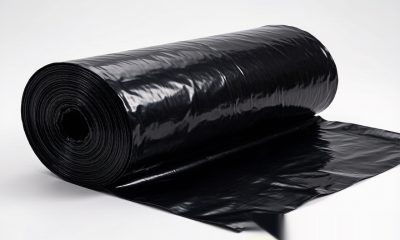
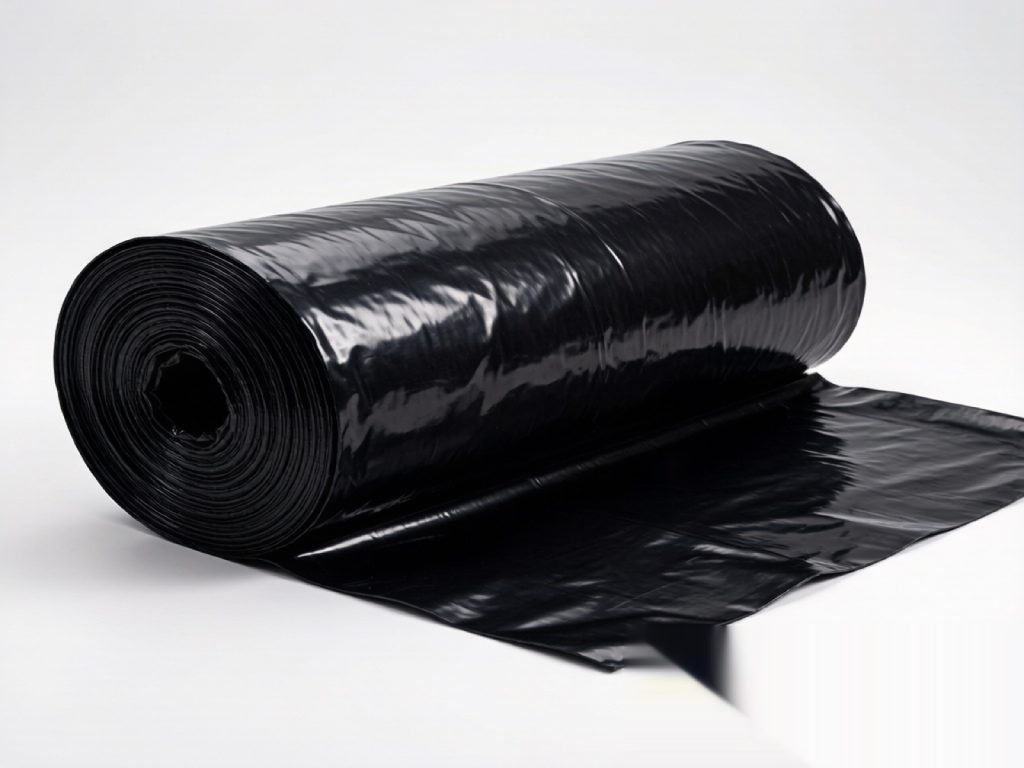
The standard section, from bottom to top, is compacted saline soil, a nonwoven geotextile cushion, the geomembrane, and a ballast protection layer. The geotextile is checked against GB/T 17638 and the membrane against GB/T 17643, with GB/T 38582-2020 relevant to environmental protection in salt-lake brine development. Thickness is not uniform across the field: the referenced practice starts at 1.0 mm and increases to 1.5 mm in the final-stage pond, where salinity and salt crystallisation are heaviest. On embankment slopes the membrane is turned over the crest and ballasted; angular stone or salt blocks are screened out before placement. Every dividing bund between cells must be wrapped completely, otherwise brine migrates through the bund and the staged concentration sequence collapses.
- Subgrade: remove sharp salt crusts, compact and level; high-moisture saline strata must drain and dry before men and machinery enter.
- Laying window: avoid windy periods, which carry salt crystals that score the membrane surface.
- Seams: double-track hot-wedge welding with an air channel, pressure-tested seam by seam; corners and irregular geometry are hand-welded.
- Operation: watch water level and embankments. If one cell drops faster than designed, inspect the membrane face and the joints first.
Where a PVC-coated geomembrane fits
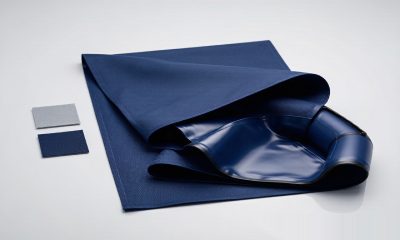
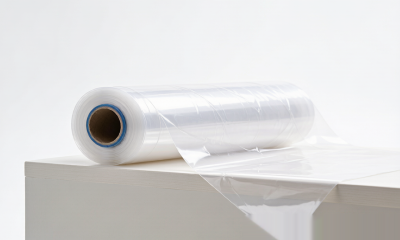
The boundary needs to be stated plainly: the membrane in the cited reports is predominantly HDPE, chosen because it is essentially inert to salt media. That does not leave PVC-coated geomembrane without a role. Where a project favours large factory-prefabricated panels with only a few hot-air field seams, the weldability and flexibility of a PVC coating are genuine advantages. The requirement is that a supplier provide retained tensile and tear data after immersion in the actual target brine, not just as-manufactured figures. Buyers can write the neutral performance clauses — 1.5 mm in the final stage, double-track or equivalent hot-air welding, seam-by-seam air/vacuum testing — and let the engineer select the polymer system against a medium report.
Market direction
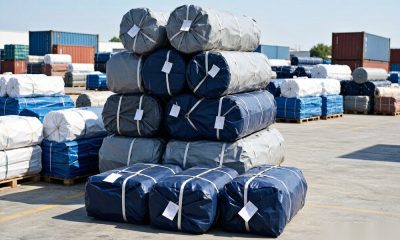
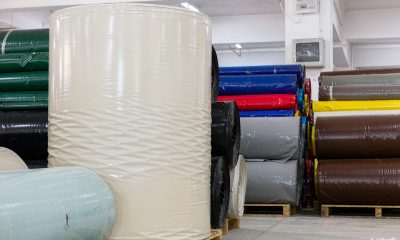
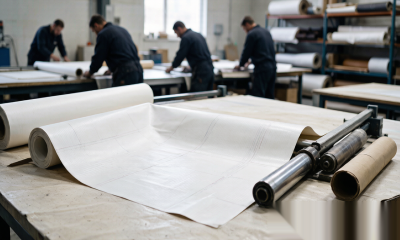
Salt-lake sites sit at high altitude and far from suppliers, so material is shipped cell by cell to avoid a second handling and the damage that comes with it. When qualifying a vendor, discuss production capacity, third-party test reports and on-site welding supervision together. As more lithium projects reach construction between 2026 and 2028, liner design life is increasingly being derived from the mine service life — 13.45 years in this case — rather than from a generic membrane warranty.
Sources
https://www.163.com/dy/article/LBOME45I0556PPK3.html | https://www.toutiao.com/article/7708146625718043146 | http://www.eiafans.com/thread-1443629-1-1.html | http://mp.weixin.qq.com/s?__biz=MzA5MjY0ODMzNQ==&mid=2651878487&idx=3&sn=d641c27377434e51f6bb7f6e5382dbc9
FAQ
Why is the final evaporation pond lined thicker than the first?
The last stage carries the highest salinity and the heaviest salt precipitation, so crystal edges and local punctures are most aggressive there. Starting at 1.0 mm and rising to 1.5 mm in the final cell is a common conservative choice.
Is an air-pressure test enough for the welds?
Double-track hot-wedge seams have a central air channel and are pressure-tested one by one. Corners, brine-channel interfaces and hand-welded repairs should additionally get vacuum-box or spark testing, with photographic records kept.
Can PVC-coated geomembrane be used in a salt-lake pond?
Yes for factory-prefabricated panels joined by hot air, provided the supplier supplies long-term immersion data in the actual sulphate/chloride/magnesium/potassium/boron brine. Public project reports still favour HDPE to GB/T 17643.