Inflatable gymnastics mats are no longer a niche import from the sports-equipment catalogue. A 2026 market compilation puts the inflatable gym mat market at US$2.49 billion by 2034, with air track mats holding a 38.5% share of their segment and growing at 7.1% annually. For a PVC-coated fabric supplier, the interesting part is not the headline number — it is which construction details buyers are finally starting to specify: drop-stitch denier, PVC skin thickness, valve type and air retention.
Three products, three different engineering problems
The same market report divides the field into air track mats, professional crash pads and high-jump or stunt airbags. Air tracks are the volume product: elongated inflatable mats for tumbling, cheerleading and home training, with double-wall drop-stitch construction giving a firm but cushioned surface. Crash pads serve stunt performers and parkour athletes and are reported to be growing at 13.3% a year, driven by safety requirements in professional training. Stunt airbags support high-frequency jump practice; the report notes demand peaked in early 2026 and cites throughput claims such as ten jumps per minute with gap-free setups.
Those are different duty cycles. A home air track is folded and rolled, may be used outdoors, and is expected to hold pressure for days. A commercial crash pad in a trampoline park sees repeated high-impact landings and needs certification and anchoring. Treating all three as the same drop-stitch fabric with different print designs is how warranties get expensive.
What the specification actually contains
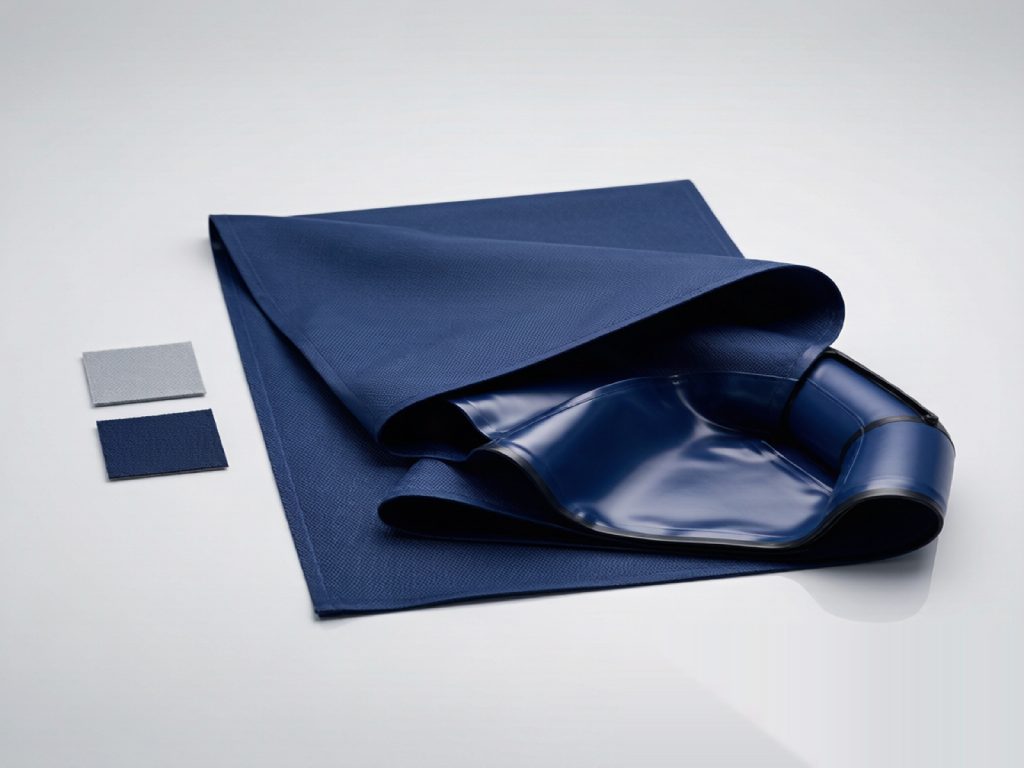
Retail listings that take material claims seriously converge on a similar stack. The better air tracks state 1000D filament-grade drop-stitch with a 0.9 mm PVC tarpaulin skin, reinforced seams and a named valve — BRAVO is cited as an Italian valve maker also used on paddle boards. Common sizes run from about 10 ft by 3.3 ft by 4 in up to 23 ft in length, with 4 in and 8 in thickness options. Some models use hook-and-loop ends so two mats can be joined instead of buying a single long one. Mid-range products describe multi-layer PVC or high-density PVC coating; the honest listings avoid claiming a pressure rating where they have not measured one.
The 2026 market commentary adds two trends: continued adoption of drop-stitch for a rigid-yet-cushioned feel, and a move toward more environmentally formulated PVC to meet tightening rules in North America and Europe. For crash pads, internal air pillars are cited as a safety feature, with one source describing a demand for four air pillars per square metre to allow softer landings and simultaneous use by several athletes. Another report points to double-wall fabric innovations and smart pressure sensors as the 2026 differentiators in portable mats.
Compliance is not one label
- Air track mats sold into North America are described as needing UV resistance and lead-free, phthalate-free material certification.
- Professional crash pads are expected to meet EN71-2, REACH and ASTM requirements for flame retardancy and durability, according to the same compilation.
- High-jump and stunt airbags used outdoors require professional-grade anchoring systems and UV protection.
- Commercial installations in Europe are also benchmarked against TUV Austria certification in buyer guidance.
Notice that these are requirements of different products in different markets, not a single checklist. A supplier who answers a crash-pad tender with a phthalate-free declaration but no flame evidence has answered a different question. Ask which standard applies to which article, and get the test report rather than the marketing line.
Prices show where the margin sits
The reported price bands are unusually wide. Consumer air tracks run roughly US$20 to US$328 depending on thickness and length, with intense price competition in the US$30 to US$80 band. Professional crash pads are quoted between US$445 and US$1,696, with replaceable top sheets at the high end. Stunt airbags span about US$480 to more than US$4,500 for professional track-and-field systems. The report frames consumer mats as a red-ocean segment where volume is high but differentiation is hard, and commercial airbags as a higher-margin opportunity with engineering and certification barriers. B2B demand for commercial airbags is cited as growing 23% year on year.
These figures come from market-research aggregators and supplier compilations rather than official trade statistics. Use them to understand the shape of the market, not to set a price.
Where PVC-coated fabric fits
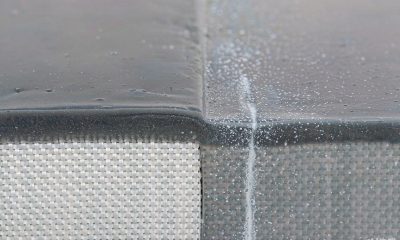
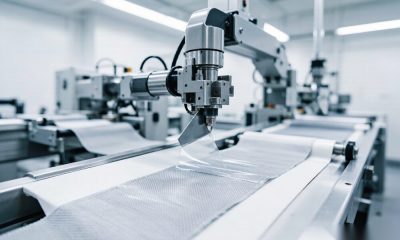
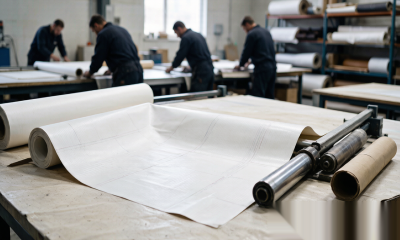
A drop-stitch mat is essentially a technical textile assembly: two PVC-coated layers joined by thousands of polyester threads, welded into a sealed chamber. The performance ceiling is set by the coating system and the seam. Buyers evaluating a supplier should ask about coating add-on per square metre, base fabric denier and construction, weld parameters and peel strength, valve sealing method, and what happens to air retention after repeated rolling. Low-cost units with unregulated material claims are the main source of leakage complaints in the retail reviews.
For the fabric mill, the practical opportunity is in the commercial end: heavier skins, verified flame performance, UV-stabilised topcoats and seam systems that survive a trampoline park’s duty cycle. That is a more defensible position than competing on the consumer price band.
Frequently asked questions
What does 1000D drop-stitch with a 0.9 mm PVC skin actually mean?
A 1000 denier filament polyester is used for the drop threads and typically the outer fabric, and each surface is laminated or coated with a 0.9 mm PVC layer. The threads hold the two skins apart when inflated, producing a firm, flat surface. Higher denier and a thicker skin generally improve durability but add weight and cost.
Why do some air tracks go soft after an hour while others hold pressure for days?
Air retention depends on valve sealing, seam integrity and material quality together. Reviews of well-known retail mats report mixed experiences, and low-cost products with unverified materials are the most common source of complaints. Check the valve closure routine first, then the seams, then the material specification.
Is phthalate-free PVC enough to meet a school or club tender?
Usually not on its own. North American buying guidance also asks for UV resistance and lead-free certification, while professional crash pads are expected to address EN71-2, REACH and ASTM flame and durability requirements. Confirm which documents the tender names.
Sources
- Inflatable stunt mats market report, 2026–2034: https://www.accio.com/business/inflatable-stunt-mat
- Gymnastics air bag safety and trend report, 2026: https://www.accio.com/business/gymnastics-air-bag
- Comparative review of inflatable gymnastics mats and material claims: https://coolinflatables.com/best-inflatable-gymnastics-mat
- 2026 air track mat buyer listings: https://www.bestpick.com/air-track-mat/
- Inflatable gymnastics mat specifications and user reports: https://healthenfitness.com/best-inflatable-gymnastics-mats/