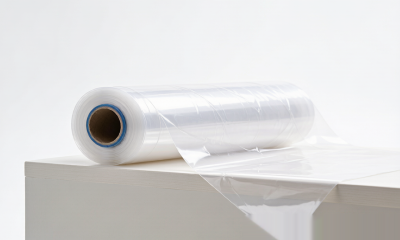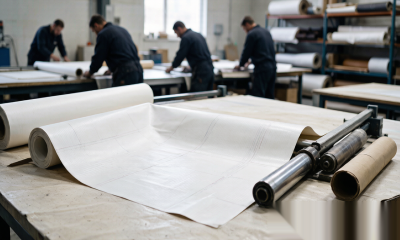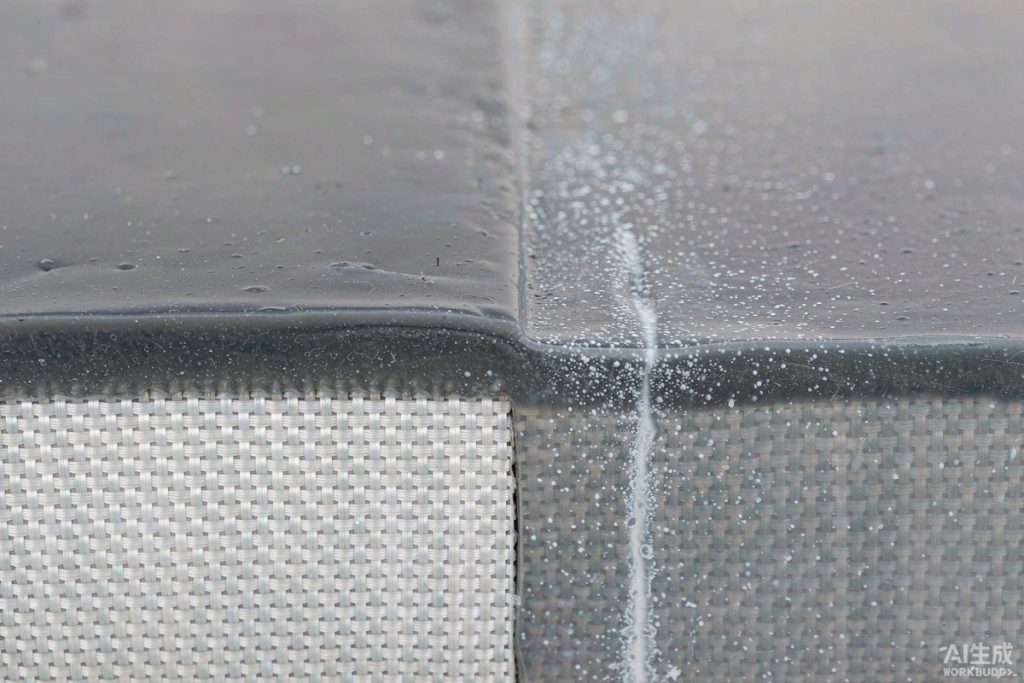
Two products announced in late October 2026 show how differently the coatings industry is answering the same VOC question. One is a family of waterborne vinyl chloride–acrylate–vinyl acetate emulsions for technical coatings and inks. The other is a PVC-free, water-based acrylate shade fabric marketed for its textile hand and lower weight. Neither is simply a greener version of the other, and specifying them as interchangeable would be a mistake.
The waterborne PVC route
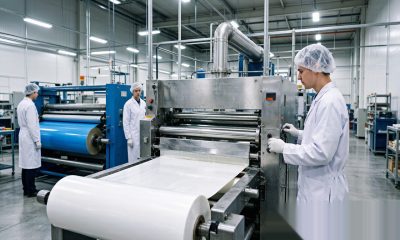
VINYBLAN emulsions are waterborne systems built by copolymerisation rather than blending. The vinyl chloride portion supplies polarity and chemical stability; acrylate and vinyl acetate segments contribute flexibility and film formation. Technical descriptions say the resulting emulsions can be compounded with inorganic pigments, other emulsions and plasticisers. Four performance dimensions are consistently cited: resistance to water, alcohol, acid and alkali plus scratch resistance; self-extinguishing behaviour; adhesion to substrates including PVC, PET and aluminium; and colour development through pigment dispersion.
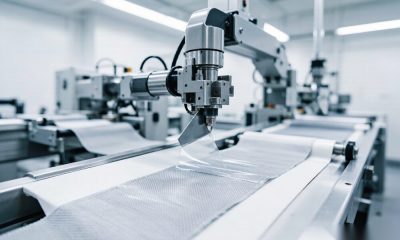
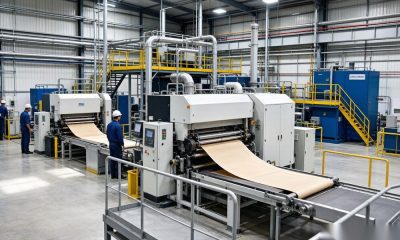
The high-solids grade, VINYBLAN 690, is where the process benefit becomes concrete. A higher solids fraction means less water in the formulation, which shortens drying time and increases film density. Applications listed in the product literature include industrial inkjet absorbent-layer binders, dye-sublimation transfer layers, textile and nonwoven treatment, and general ink and coating formulations. On textiles and nonwovens, the treatment is described as improving flame retardancy and heat resistance while reducing yellowing under heat. In PVC leather lamination, the emulsion is described as providing bond strength while protecting the adhesive layer from environmental degradation.
There is a caveat worth publishing rather than burying. The polymer is strongly polar, so solvent and additive compatibility has to be assessed formulation by formulation. The source material explicitly places the product within a class of waterborne copolymer emulsions rather than presenting it as a universal substitute. Performance still depends on substrate preparation, formulation ratios and the demands of the end-use coating system.
The PVC-free route
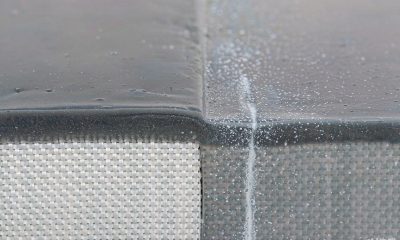
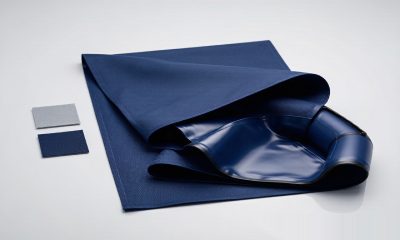
MehlerHeytex, formed from Mehler Texnologies and the core business of Heytex, describes Airtex shades 200 with a water-based coating system. The coating is an acrylate dispersion: water is the main medium, binders, pigments, fillers and additives are dispersed in it, and once applied the water evaporates and polymer particles coalesce into a continuous film. The company calls the result a PVC-free acrylate-coated shading solution with a refined matte surface and a textile-like handle. It contains no conventional plasticisers and is lighter than comparable PVC systems. Because water is the dispersion medium, the system can help reduce VOC emissions and odour during production.
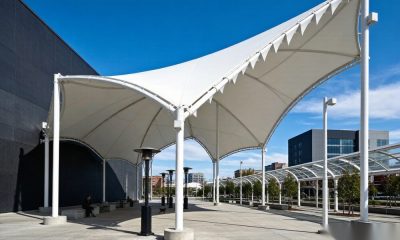
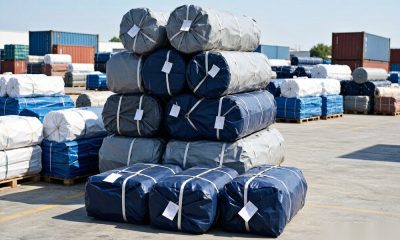
The company also argues the case on feel. Conventional PVC coatings can give technical textiles a plastic-like character; removing PVC preserves what it calls the textile character of the base cloth. That matters in mobile outdoor products where low weight and easy handling influence the user experience. MehlerHeytex employs around 1,000 people at German sites in Bramsche, Fulda, Hückelshoven and Neugersdorf, plus Lomnice nad Popelkou in the Czech Republic and Zhangjiagang in China, and supplies truck tarpaulins, biogas membranes, drinking-water containers, tents, inflatable boats and large-format media.
Reading the two routes side by side
- Chemistry: waterborne vinyl chloride copolymer keeps PVC in the film; the acrylate shade fabric removes PVC entirely.
- Plasticiser: the PVC-free system has no conventional plasticiser; the vinyl chloride route remains compatible with plasticisers and can be formulated with them.
- Processing: both cut the solvent load; the high-solids vinyl chloride grade targets shorter drying and denser film.
- End use: the emulsion route targets inks, transfer layers and technical coatings; the acrylate fabric targets outdoor shading where weight and hand feel drive specification.
A Chinese industry report cited in early 2026 put waterborne PVC leather line VOC emissions below 38 g per square metre against a 60 g/m2 limit in HJ 1382-2025, and linked a drop in cure temperature from 160 °C to 110 °C with lower energy use. Those figures come from a market research compilation rather than an independent test programme, so they belong in the background, not in a contract. The mechanism they describe — less solvent, lower cure temperature, reduced thermal load — is consistent with the product literature above.
What buyers should verify
- Ask whether waterborne refers to the dispersion medium or to a genuinely PVC-free film. Those are different claims.
- Request hydrostatic head, adhesion after washing, and weathering data on the finished fabric, not the resin.
- Confirm which flame standard the finished article is classified to. Self-extinguishing resin behaviour is not a classification.
- For printed fabric, check ink adhesion and colour fastness with the actual ink set, especially on high-polarity coatings.
- Weight claims only matter alongside tensile and tear data. A lighter fabric that tears at the seam is not an upgrade.
Frequently asked questions
Is a waterborne coating automatically PVC-free?
No. Waterborne describes the dispersion medium, not the polymer. Vinyl chloride–acrylate–vinyl acetate emulsions are waterborne and still contain vinyl chloride. An acrylate-only system can be genuinely PVC-free. Ask what the film is made of after the water evaporates.
Does removing PVC remove the need for flame-retardant verification?
No. Some waterborne emulsions are described as self-extinguishing, and some acrylate systems are formulated for flame performance, but neither statement is a classification. The finished fabric still needs testing to the standard required by the application, such as EN 13501-1 or NFPA 701.
Why does high solids content matter in a coating line?
Higher solids means less water to evaporate. That shortens drying time and can increase film density, which affects both line throughput and the final coating properties. It does not by itself establish adhesion or durability.
Sources
- Waterborne vinyl chloride–acrylate emulsions and VINYBLAN 690 technical profile, 27 October 2026: https://www.chemicaltechnique.com/blog/waterborne-vinyl-chloride-acrylic-emulsions-coatings-inks
- MehlerHeytex Airtex shades 200 water-based coating system: https://www.seedops.co/activities/mehler-heytex/provides-airtex-shades-200-with-a-water-based-coating-system-that-protects-functionalizes-and-preserves-its-textile-character-5155473
- China textile coating materials market and waterborne shift (2026): http://m.gepresearch.com/104/view-1302785-1.html
- PVC leather feasibility study citing VOC figures and HJ 1382-2025: https://m.renrendoc.com/paper/539380338.html