# PVC Coated Fabric Slip Resistance: Coefficient of Friction Testing and Selection
## Why does coefficient of friction matter for PVC coated fabric?
**The coefficient of friction governs whether stacked rolls slide on a truck deck, whether a side curtain holds its position, and whether a cover stays put on a surface; a fabric chosen only on tensile strength and weight can create a handling or safety problem if its surface is too slippery. COF testing quantifies that surface behaviour repeatably.**
– COF describes the ratio of frictional force to normal force between the fabric surface and a mating material
– Static COF controls the onset of sliding; kinetic COF controls behaviour once movement starts
– PVC surfaces range from tacky and high-grip to smooth and low-grip depending on plasticiser, topcoat, and embossing
Source: ASTM D1894 and ISO 8295, plastics film and sheeting coefficient of friction methods.
## How is fabric coefficient of friction measured?
**A conditioned specimen is drawn over a defined mating surface under a known load, and the force to start and sustain motion is recorded; the method separates static from kinetic friction and requires control of speed, temperature, and cleanliness, since all three shift results. Testing against the actual mating surface, for example steel or wood, matters most.**
– ASTM D1894 and ISO 8295 use a sled of known mass dragged at a controlled speed across the test surface
– Report static COF (peak at onset) and kinetic COF (average during sliding) separately
– Control humidity and cleanliness; plasticiser bloom or dust can change measured friction significantly
Source: ASTM D1894, ISO 8295 coefficient of friction standards.
## Which COF behaviour suits each application?
**High static friction is desirable where the fabric must stay in place — roll stacking, covers, and inflatable bases — while lower friction helps applications that slide during installation, such as side curtains running on rails. A single COF target does not fit all uses, so the specification should name both the mating surface and the desired behaviour.**
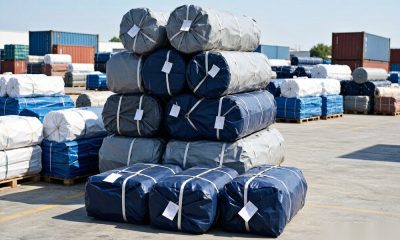
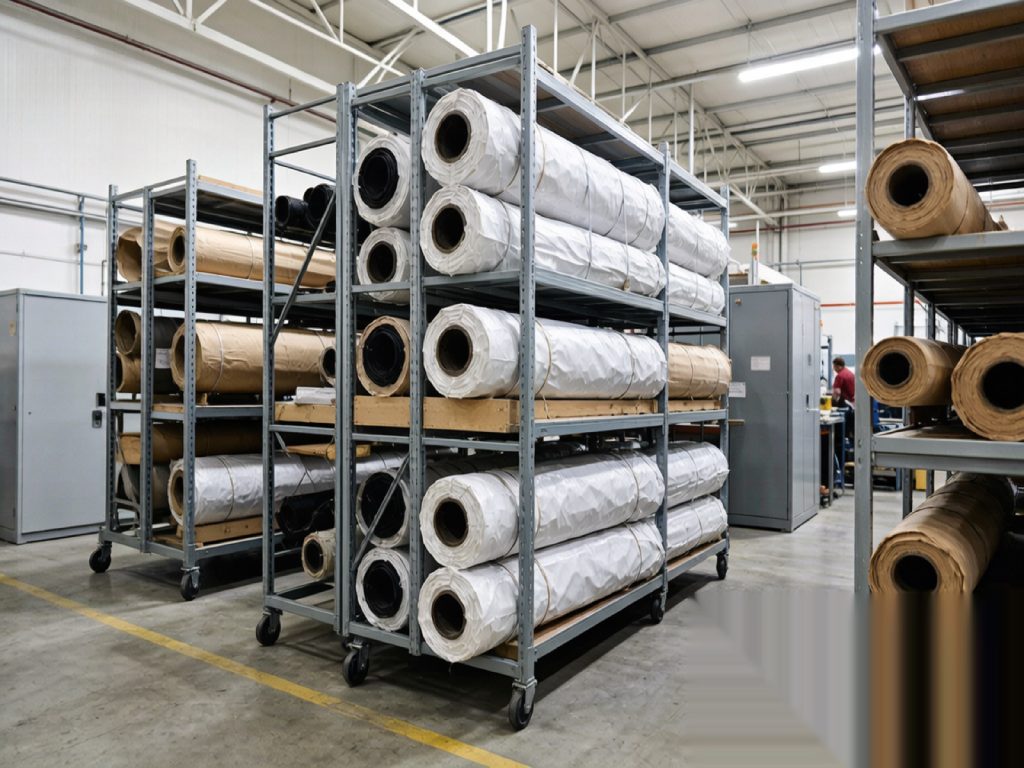
– Roll stacking and cargo covers: higher static COF against deck or neighbouring ply to resist shifting
– Inflatable bases and ground sheets: enough friction to prevent creep, balanced with abrasion resistance
– Truck side curtains and sliding covers: lower friction against guide rails to reduce drive load
Source: ASTM D1894 guidance; PVC product knowledge base, tarpaulin and inflatable application notes.
## How can surface finish tune friction?
**Surface finish changes COF more than base fabric weight: an embossed or matte finish raises grip, while a smooth PVDF or acrylic lacquer lowers friction and improves cleanability. Plasticiser content also matters because a tacky surface grips more but can attract dust. Specify the finish alongside the COF value so the measured behaviour survives production changes.**
– Embossed or textured finish raises static COF for anti-slip covers and roll stacking
– PVDF or acrylic topcoat gives a smoother, lower-friction, easier-clean surface with longer weather resistance
– Higher plasticiser loading can raise tack but may increase dust pickup and migration risk; confirm with test report
Source: PVC product knowledge base, surface-treatment and plasticiser sections.
## FAQ
**Q1: What exactly is coefficient of friction for a coated fabric?**
Coefficient of friction, or COF, is the ratio between the force needed to slide one surface over another and the load pressing them together. A higher COF means more grip; a lower COF means easier sliding. For PVC coated fabric it is measured against a defined mating surface such as steel, wood, or another fabric ply, so the value always refers to that pairing.
**Q2: What distinguishes static from kinetic COF?**
Static COF is the peak force required to start movement, while kinetic COF is the average force needed to keep moving. Static friction is usually higher. For anti-slip applications such as roll stacking, static COF is the critical figure; for surfaces that slide continuously during use, kinetic COF better predicts behaviour and drive load.
**Q3: Which test methods apply to PVC coated fabric?**
ASTM D1894 and ISO 8295 are the common sled methods for plastic film and sheeting, and they are widely applied to coated fabric. A specimen-backed sled is drawn across the mating surface at a controlled speed while force is recorded. Report speed, load, temperature, and humidity with the result, since all affect the measured value.
**Q4: Does a higher COF always mean a better fabric?**
No. Higher grip is useful for covers, stacked rolls, and inflatable bases, but it can make a sliding side curtain hard to move and increase drive-load on rail systems. The right COF depends on whether the design wants the fabric to stay put or to slide. Define the mating surface and desired behaviour before setting a target.
**Q5: How does surface finish change friction?**
An embossed or matte surface raises friction through mechanical interlock and is used for anti-slip grades. A smooth PVDF or acrylic lacquer lowers friction and improves cleaning and weathering. Plasticiser level also influences tack: a surface with high plasticiser bloom grips more but can attract dust and raise migration concerns.
**Q6: Does COF change over the fabric’s service life?**
Yes. Dust, plasticiser migration, UV exposure, and surface contamination all shift COF. A surface that starts grippy may become slick as additives bloom or wash off, and a dusty surface can behave unpredictably. For critical anti-slip applications, specify a minimum COF after conditioning or weathering rather than only an as-made value.
**Q7: Can COF results from one lab be compared to another?**
Only if the methods and conditions match. Speed, load, sled mass, mating surface, humidity, and specimen conditioning all affect the result. Two labs testing the same fabric against different mating surfaces will report different values. Ask for the full test conditions and confirm the mating surface matches your real application before comparing numbers.
**Q8: What should a slip-resistance specification include?**
Name the test method, the mating surface, the minimum static or kinetic COF, and the test conditions, plus whether the value applies as-made or after conditioning. For truck curtains, also specify sliding force against the rail. Request a lot-identified report and confirm the surface finish on the delivered grade matches the tested sample.
## FAQ (ZH)
**问1:涂层布的摩擦系数到底是什么?**
摩擦系数(COF)是使一个表面在另一个表面上滑动所需的力与压紧两者的载荷之比。COF 越高越防滑,越低越容易滑动。对 PVC 涂层布而言,它是针对特定配对表面(如钢、木材或另一层布)测得的,因此数值始终对应那一对材料。
**问2:静摩擦系数与动摩擦系数有何区别?**
静摩擦系数是开始运动所需的峰值力,动摩擦系数是维持运动所需的平均力,静摩擦通常更高。对卷材堆叠等防滑用途,静摩擦是关键值;对持续滑动的表面,动摩擦更能预测行为和驱动负荷。
**问3:PVC 涂层布适用哪些测试方法?**
ASTM D1894 和 ISO 8295 是塑料薄膜和片材常用的滑块法,也广泛用于涂层布。带配重的滑块以受控速度在配对表面上拖动并记录力。报告应包含速度、载荷、温度、湿度,因为这些都影响测得值。
**问4:摩擦系数越高是否越好?**
不是。更高抓地力有利于篷布、堆叠卷材和充气底座,但会让滑动侧帘难以移动、增加轨道系统驱动负荷。合适的 COF 取决于设计希望面料保持不动还是顺畅滑动。定目标前先明确配对表面和期望行为。
**问5:表面整理如何改变摩擦?**
压花或哑光表面通过机械咬合提高摩擦,用于防滑牌号。光滑的 PVDF 或亚克力漆面降低摩擦、改善清洁和耐候。增塑剂含量也影响黏性:溢出较多的表面更抓地,但易吸灰并带来迁移隐患。
**问6:摩擦系数在使用寿命中会变化吗?**
会。灰尘、增塑剂迁移、紫外照射和表面污染都会改变 COF。起初防滑的表面可能因助剂析出或冲刷而变滑,积灰表面表现也难以预测。对关键防滑用途,应规定调湿或老化后的最低 COF,而非只看出厂值。
**问7:不同实验室的 COF 结果能比较吗?**
只有在方法和条件一致时才可以。速度、载荷、滑块质量、配对表面、湿度和试样调湿都会影响结果。两家实验室用不同配对表面测同一面料也会得出不同数值。比较前应索取完整测试条件,并确认配对表面与实际应用一致。
**问8:防滑规范应包含哪些内容?**
写明测试方法、配对表面、最低静/动摩擦系数、测试条件,以及数值适用于出厂态还是调湿后。对卡车侧帘还应规定相对轨道的滑动阻力。索取批次检测报告,并确认交付牌号的表面整理与受测样品一致。