# PVC Coated Fabric Chemical Resistance: ISO 175 Liquid Immersion Verification
## Why does liquid chemical resistance matter for PVC coated fabric?
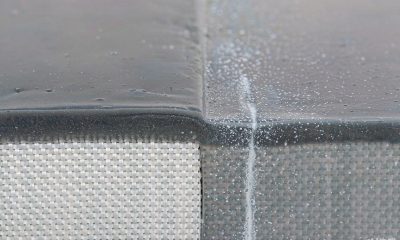
**Chemical exposure changes the mass, thickness, and hand of a PVC coated fabric, so a tarpaulin or liner that swells, softens, or loses plasticiser after contact with oil, fuel, or cleaning agents can fail in service even when its as-made tensile value looks correct. ISO 175 gives a controlled immersion method to measure those changes before a specification is released.**
– ISO 175 covers plastics’ resistance to liquid chemicals by measuring mass, dimension, and mechanical-property change after immersion
– PVC coated fabric is often exposed to diesel, hydraulic oil, mild acids and alkalis, and aqueous cleaning solutions in transport and industrial covers
– Swelling above roughly a few percent signals plasticiser uptake; mass loss after drying signals plasticiser extraction
Source: ISO 175, Plastics — Methods of test for the determination of the effects of immersion in liquid chemicals.
## How is an ISO 175 immersion test set up for coated fabric?
**A conditioned specimen is weighed and measured, fully immersed in the selected liquid at a controlled temperature for a fixed period, then wiped, reweighed, and re-measured; the protocol separates reversible liquid uptake from permanent extraction by adding a drying and reconditioning stage. Reporting the exact liquid, temperature, and duration is essential because results are not transferable between exposure conditions.**
– Condition specimens before immersion, then record initial mass and thickness to a defined precision
– Immerse fully in the test liquid at a stated temperature (often 23 C or elevated for accelerated screening) for a stated time
– After removal, wipe the surface, weigh promptly, then dry and recondition to measure permanent change
Source: ISO 175 test method; PVC product knowledge base, formulation and service-temperature notes.
## Which results from ISO 175 should a buyer check?
**A buyer should compare mass change, thickness change, and the retained tensile and peel values after immersion, because a fabric that gains mass but keeps its strength is behaving differently from one that loses mass and embrittles. The service liquid dictates the acceptance pattern: fuel contact penalises swelling, while alkaline cleaning penalises plasticiser loss.**
– Mass change after immersion and after drying-and-reconditioning, reported separately
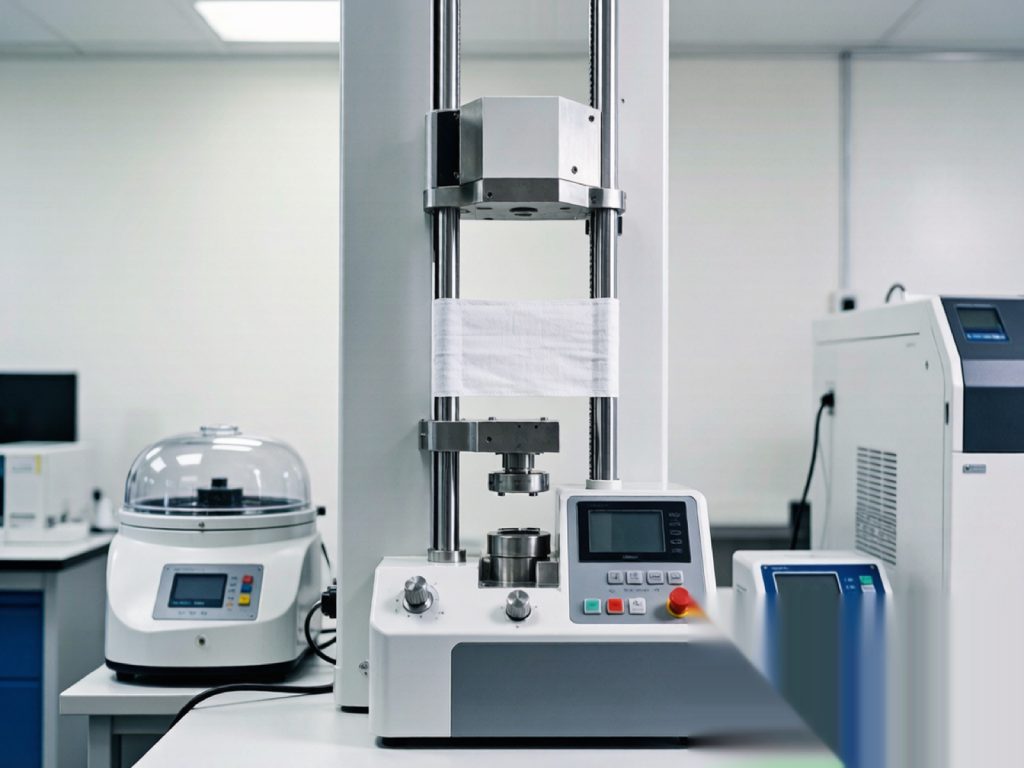
– Retained tensile strength (ISO 1421) and peel strength (ISO 2411) measured on the same conditioned lot
– Appearance check for blistering, tackiness, or coating separation after exposure
Source: ISO 175; ISO 1421 tensile; ISO 2411 peel; knowledge-base protective-cover and chemical-resistance rows.
## How does formulation affect chemical resistance?
**Plasticiser type and coating chemistry drive chemical resistance more than fabric weight alone, because DOTP and higher-molecular-weight polyester plasticisers resist extraction better than general-purpose DOP, while a PVDF or acrylic topcoat reduces surface uptake of oil and staining. A heavier scrim improves strength but does not by itself stop swelling.**
– DOTP and polymeric plasticisers show lower extraction than DOP in hydrocarbon media; confirm with a supplier test report
– PVDF or acrylic surface lacquer reduces staining and eases cleaning; PVDF carries a longer weather-resistance band
– Base scrim 500D-1100D high-tenacity polyester at 9×9 to 30×30 construction sets mechanical backing, not chemical barrier
Source: PVC product knowledge base, plasticiser and surface-treatment sections; REACH SVHC list for DOP.
## FAQ
**Q1: What does ISO 175 actually measure on PVC coated fabric?**
ISO 175 measures how a plastic article changes after immersion in a liquid chemical: mass change, dimensional change, and changes in mechanical properties such as tensile strength. For coated fabric, buyers also track thickness and coating appearance. The test does not produce a single “pass” number; it produces a set of changes tied to one liquid, one temperature, and one exposure time, so the test conditions must always be reported.
**Q2: How long does a typical immersion test run?**
Duration depends on the intended service and the agreed specification. Screening tests may run 24 to 168 hours, sometimes at elevated temperature to accelerate uptake, while end-use qualification can extend longer. There is no universal duration, so request the exact time and temperature from the laboratory and compare results only between tests run under the same conditions.
**Q3: Why report both mass gain and mass loss after drying?**
Mass gain during immersion shows liquid uptake and swelling, which can soften the fabric and change dimensions. Mass loss after drying and reconditioning shows permanent extraction of plasticiser or additives. A fabric that swells but returns to its original mass is behaving differently from one that permanently loses plasticiser and becomes brittle, so both numbers are needed to judge service life.
**Q4: Is a chemically resistant PVC tarpaulin also fuel resistant?**
Not automatically. Water-based chemicals and hydrocarbons act differently on PVC. Diesel and hydraulic oil can extract plasticiser and cause swelling that an aqueous alkaline cleaner would not. Always qualify against the actual fluid the fabric will contact, and request separate immersion results for each fluid rather than relying on one generic chemical-resistance claim.
**Q5: Does a heavier fabric resist chemicals better?**
A heavier scrim and higher coating weight improve mechanical strength and slow penetration, but chemical resistance is mainly a function of the plasticiser and topcoat chemistry. A 900 g/m2 fabric with a general-purpose DOP plasticiser can lose more plasticiser in oil than a 650 g/m2 fabric built with DOTP and a PVDF topcoat. Treat weight and chemistry as separate specification axes.
**Q6: Which liquids most often degrade PVC coated fabric in service?**
Hydrocarbon fuels and oils, some aromatic solvents, and aggressive cleaners are the common risks. Weak acids and alkalis are usually better tolerated, but concentration and temperature matter. Salt water mainly affects seams and eyelets rather than the coating itself. Request a fluid-by-fluid compatibility matrix from the supplier and verify the exposure concentration matches your site.
**Q7: Can immersion results predict field service life directly?**
No. Immersion is an accelerated comparative screen, not a lifetime model. It ranks formulations and flags gross incompatibility, but real service adds UV, flexing, abrasion, and temperature cycles. Use immersion as one input alongside weathering (EN ISO 4892-2), flex (DIN EN 1876-1), and seam tests before committing to a service-life expectation.
**Q8: What should be written into a chemical-resistance specification?**
Name the exact test liquid, concentration, temperature, duration, and the properties to be measured, plus the maximum acceptable mass and strength change. Avoid vague wording such as “oil resistant” without conditions. Ask for a lot-identified report from an accredited laboratory and confirm the tested construction matches the grade you are buying.
## FAQ (ZH)
**问1:ISO 175 对 PVC 涂层布实际测量什么?**
ISO 175 测量塑料制品浸入液体后的质量变化、尺寸变化以及拉伸强度等机械性能变化。对涂层布还会 tracking 厚度和涂层外观。该测试不产生单一”合格”数字,而是给出与特定液体、温度、时间绑定的一组变化值,因此必须同时报告测试条件。
**问2:典型的浸泡测试要跑多久?**
时长取决于用途和约定规范。筛选测试可能 24 到 168 小时,有时升温加速吸收,而最终用途认证可能更长。没有统一时长,请向实验室索取准确时间与温度,并只在同一条件下比较结果。
**问3:为什么要同时报告浸泡后的增重和干燥后的失重?**
浸泡增重反映液体吸收和溶胀,会使面料变软、尺寸变化。干燥再调湿后的失重反映增塑剂或助剂的永久析出。溶胀但质量恢复的面料,与永久失去增塑剂而变脆的面料表现完全不同,因此两个数字都需要。
**问4:耐化学的 PVC 篷布是否也耐油?**
不一定。水性化学品和烃类对 PVC 的作用不同。柴油、液压油可能萃取增塑剂并引起溶胀,而水性碱性清洗剂不会。务必按实际接触液体做认证,并索取每种液体的单独浸泡结果,不要依赖笼统的耐化学表述。
**问5:更重的面料是否更耐化学?**
更重的基布和更高涂层量提高机械强度、延缓渗透,但耐化学性主要取决于增塑剂和面层化学。采用通用 DOP 的 900 g/m2 面料在油中可能比采用 DOTP 加 PVDF 面层的 650 g/m2 面料损失更多增塑剂。请把克重与化学体系当作两个独立规格维度。
**问6:使用中哪些液体最容易劣化 PVC 涂层布?**
烃类燃料和油、部分芳香溶剂、强力清洗剂是常见风险。弱酸弱碱通常耐受较好,但浓度和温度很关键。盐水主要影响缝线和扣眼而非涂层本身。请向供应商索取逐液相容性矩阵,并核实测试浓度与现场一致。
**问7:浸泡结果能否直接预测现场寿命?**
不能。浸泡是加速对比筛选,不是寿命模型。它能对配方排序、发现明显不相容,但真实使用还叠加紫外、弯折、磨耗和温度循环。在给出寿命预期前,应把浸泡与耐候 (EN ISO 4892-2)、弯折 (DIN EN 1876-1) 和接缝测试结合使用。
**问8:耐化学规范应该写清楚什么?**
写明确切测试液体、浓度、温度、时长、要测的性能,以及允许的最大质量和强度变化。避免没有条件的”耐油”之类模糊措辞。索取有资质实验室的批次检测报告,并确认所测结构与所购牌号一致。