Three reliable ways to join PVC-coated fabric — and why the wrong process costs more than the wrong fabric
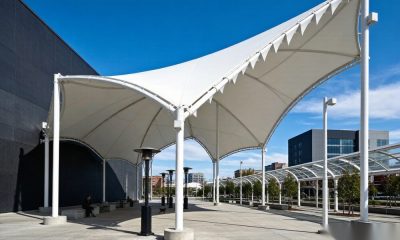
Most tarpaulin, tent, inflatable and curtain failures start at the seam, not in the base cloth. A process note published on 23 October 2026 and updated on 10 November states the numbers plainly: high-frequency (HF/RF) welding brings a PVC fabric seam to 95–100% of parent tensile strength in factory production; correctly executed hot-air welding reaches 85–95%; sewing plus adhesive leaves both needle holes and an ageing glue line. These are not rankings but task allocations.
Why HF welding works with PVC specifically
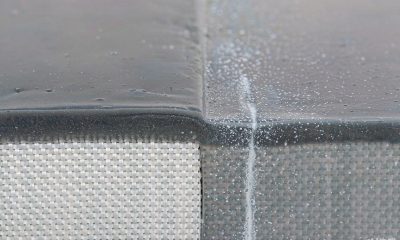
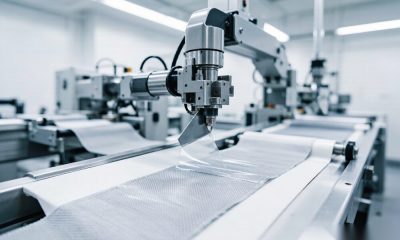
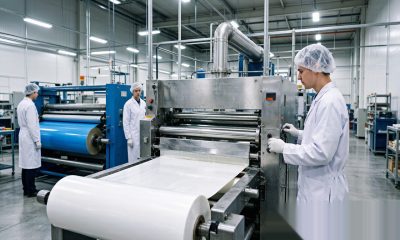
HF welding, also called radio-frequency or dielectric welding, uses electromagnetic energy at 27.12 MHz — the industrial frequency fixed by ITU regulation, so machines need no adjustment for PVC. PVC is a polar thermoplastic: it absorbs RF energy and heats from within through molecular friction. Two layers placed between a shaped electrode and a metal platen melt simultaneously, then cool under pressure into one continuous homogeneous weld. The seam is fully waterproof, has no needle holes or adhesive gaps, and shares the parent compound’s UV resistance. The limitation is material chemistry: non-polar PE and PP will not heat at all, while TPU is weldable but has a narrow softening band and is moisture-sensitive.
- Machine power: around 3 kVA for light banner and thin film; 8–15 kVA for 750–950 gsm tent fabric; 25 kVA and above for 900–1050 gsm heavy grades.
- Electrode types: turntable for long panel joins, C-frame platen for pockets, reinforcement patches and shaped welds, conveyor for high-volume straight seams.
- FEP release film: placed between electrode and fabric so molten PVC does not stick to metal. It is a consumable and must be replaced on schedule.
- Ambient correction: 35–40°C workshop temperatures in a Dubai summer pre-soften the PVC, so output must be reduced or the surface burns through; winter settings need restoring.
Hot air and hot wedge: field work and long straight seams
Hot-air welding directs a 400–550°C air stream between the two layers from the outside. It handles PVC, TPU, PE, PP and PET, and is portable — the right tool for site repair, curved nose sections and three-dimensional details. Hot-wedge welding slides a heated wedge between the layers, placing heat more precisely and repeatably, which makes it the first choice for long straight seams. A truck-cover fabrication guide recommends hot wedge for long bed panels, hot air for curved or shaped sections, a fused overlap of roughly 1.5–2 inches, fabric weights commonly 450–900 gsm, and grommet spacing around 12–18 inches, tightened and reinforced in high-wind or high-vibration service.
The parameter window matters more than the machine brand
A waterproof-bag welding reference gives usable figures: HF dwell 1.5–5 seconds per seam section, electrode pressure 0.2–0.6 MPa, cooling under pressure 0.5–2 seconds, bond width 8–25 mm set by electrode geometry; hot air/wedge travel 1.5–6 m per minute with a 15–30 mm bond. Excess pressure squeezes molten material out and starves the bond line; early release lets the joint relax above its softening point and creates micro-channels that pass a visual check but fail a water column. Corners stack three or four layers and need more energy — a 12–20 mm radius welds far more consistently than a sharp mitre.
Acceptance: test for strength and for water
Mechanical peel and shear follow ASTM D751 and confirm the bond is stronger than the film. Hydrostatic performance follows ISO 811 or AATCC 127 and confirms water cannot pass. Both belong in the specification: a peel test averages over a specimen, while a leak needs only one discontinuity. Buyers should require test strips from the actual roll, a recorded parameter card covering temperature, speed, pressure and dwell, and a fresh strip whenever the roll or batch changes.
Market direction
Fabricators in the Gulf and North America are meeting the same problem: acrylic and PVDF topcoats are increasingly specified for dirt and UV resistance, and they make welding harder. Settings proven on an uncoated face do not transfer. Knife-coated and hot-laminated PVC also behave differently at the seam. The practical move is to make weldability part of the enquiry — method, seam geometry, topcoat, target standards — instead of asking only for grams per square metre.
Sources
https://www.watad.co/high-frequency-welding-machine-dubai/ | https://lonatarp.com/?p=40479 | https://www.seamancorp.com/?p=4931 | https://fr.weldmaster.com/blog/pvc-tarp-welding-truck-covers | https://oemwaterproofbags.com/articles/waterproof-bag-welding-techniques.html
FAQ
Can HF welding handle TPU or PE-coated fabric?
HF requires a polar material, so PVC is ideal. PE and PP generally cannot be HF welded and need hot air or hot wedge. TPU is possible but has a narrow window and absorbs moisture, so condition rolls before long runs.
What seam strength should be specified?
Reference ranges are 95–100% of parent strength for HF and 85–95% for correctly executed hot air. On a test strip, failure should move into the parent fabric rather than peel cleanly along the bond line.
Why does a good-looking seam still fail a water-column test?
Usually insufficient cooling or pressure released before solidification, leaving micro-channels; alternatively a corner stack that never reached fusion temperature. Put cool time on the parameter card and test corners separately.