China’s Standardization Administration under SAMR opened public comments on 4 November 2026 on two proposed mandatory national standards, one of them titled Restricted Substances in Plastic Products — Limit Requirements. Comments close on 4 December 2026. For PVC coated fabric, tarpaulin and membrane producers, the accurate reading is that a mandatory standard has entered the project proposal stage. No numerical limits have been published. What has changed is the likelihood that restriction of substances in plastics will be consolidated rather than scattered across product-specific rules.
What the notice confirms
Two primary sources set out the procedure. The SAMR notice states that comments on two proposed national standards are invited through the standardisation department’s public comment portal. China Standard Online Service lists both projects: Restricted Substances in Plastic Products — Limit Requirements, and Safety Technical Specification for Smart Glasses. Both are new developments, and both carry the same 4 December deadline.
Two qualifications matter. First, what is public today is a project proposal, not a draft standard. There is no official text specifying limits, test methods or transition periods, so any such figure would be invention. Second, the mandatory designation is significant: if the project proceeds, the resulting GB would carry a different legal status from recommended national standards and sector specifications. The correct response is preparation, not guesswork.
Why coated fabrics fall inside the scope
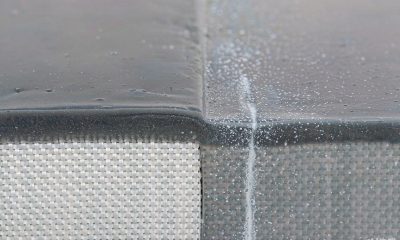
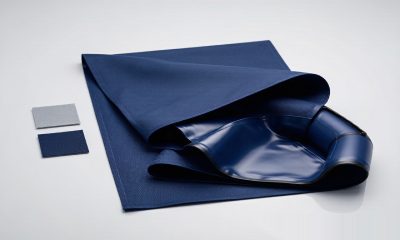
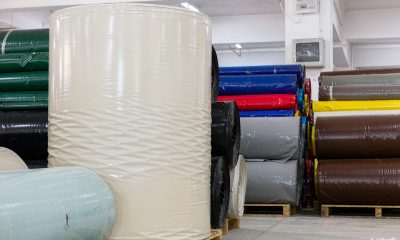
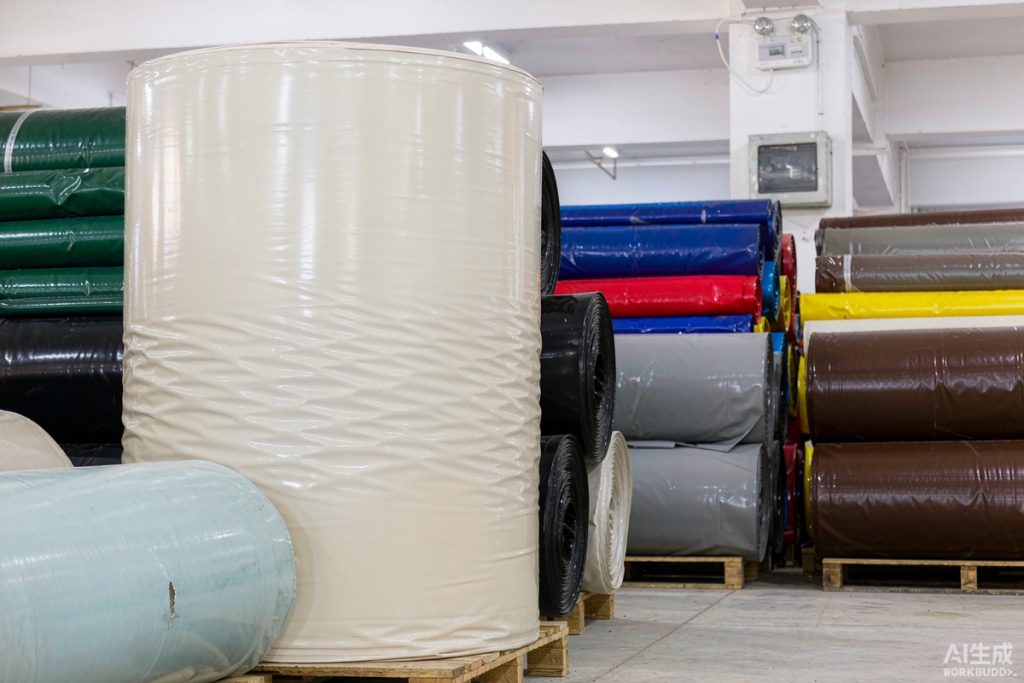
A PVC coated textile is a hybrid: a PVC face layer carrying plasticisers, heat stabilisers, flame retardants and pigments, bonded to a polyester or glass-fibre substrate. That formulation sits squarely within the logic of a horizontal restriction on substances in plastic products. Today the requirements are fragmented. Domestic rules are spread across separate product standards, while export markets follow REACH Annex XVII, CPSIA and similar frameworks. A single mandatory GB would make the idea of one documentation package for both domestic and export sales far more realistic.
Buyers often ask whether REACH phthalate limits can be used as a proxy. It is a useful way to organise data, but it is not a substitute. Scope, sampling rules and the definition of a homogeneous material may all differ under a future GB. Printing overseas limits into a domestic product datasheet would create avoidable confusion.
Four documentation sets to assemble
- A full formulation register, split by resin, plasticiser, stabiliser, flame retardant, pigment, base fabric and coating additives, with supplier and lot recorded rather than a trade name alone.
- Supplier declarations of conformity that state substance content and the test basis, so the converter is not reverse-engineering chemicals at finished-goods stage.
- Existing third-party test reports organised by layer, with the standard applied, sample description and issue date noted. Expired reports should not be reused in new tenders.
- A regulatory crosswalk setting REACH SVHC, phthalate and PFAS requirements against current GB obligations, with the gaps highlighted.
How to use the one-month window
The period from 4 November to 4 December is a window for submitting industry comments, not a compliance deadline. For most small and mid-sized coaters, the highest-value action is to complete the formulation register and then take part in the drafting process once the project is approved. The expensive part of compliance is rarely the testing fee. It is trying to reconstruct the composition of an additive lot purchased three years ago.
One detail is easy to misread. The other proposed standard in the same notice concerns smart glasses and has no technical relationship to plastics. Publishing the two together reflects batch scheduling within the standardisation system, not a targeted crackdown on one sector.
Two questions to put to the supplier during integration
First, ask which entity will hold the product certification after the transfer. A certificate issued to the former owner does not automatically cover batches produced under new management, even when the plant, equipment and operators are unchanged. Request a dated statement, and then request a recent batch report from the actual production line.
Second, for geomembrane in particular, ask about the welding consumables and surface formulation rather than only the sheet. Field seams fail for reasons that a roll datasheet rarely captures: surface contamination, inconsistent plasticiser content at the overlap, or a changed anti-block treatment. If the acquiring group intends to qualify a new PVC grade at the Moroccan site, a seam-qualification record from the previous grade is not transferable evidence. These questions are procedural, but they are where integration-period supply risk usually shows up.
FAQ
Is the standard already in force?
No. The 4 November 2026 notice invites comments on proposed projects and closes on 4 December. Project approval, drafting, further consultation and publication are separate later stages. No enforceable limit exists at present.
Should we reformulate PVC now to meet REACH limits?
If you export to the EU, current REACH obligations already apply, independently of this proposal. Domestic-only producers should complete a data audit first and defer formulation changes until limits are formally issued, so cost is not spent against a guessed number.
How can a coated fabric maker submit comments?
Through the public comment portal named in the notice, where project details can be reviewed. Trade associations are often the efficient route for smaller firms, particularly for raising testing-method and transition-period concerns collectively.