PVC insulated flexible ducting is the workhorse for temporary air supply at airport jet bridges, stadiums and convention centres. Take the VENTDUCTFAN DFV model listed on 2026-11-16: diameter 100–1,500 mm, section length 1–30 m, temperature range −50 to +80°C, pressure 1,000–3,000 Pa, class B flame resistance, with a body built from PVC coated scrim, insulation wool, high-elasticity steel wire and wear strips. The hard part of specification is not the data sheet. It is answering practical questions such as whether the fire rating applies to the material or the assembled system, and whether the insulation will sweat outdoors.
Structure defines performance: four layers, four jobs
The listed DFV construction includes PVC, insulation wool, high-elasticity steel wire and wear-resistant strip. A second supplier, Baofeng on the China-ASEAN Free Trade portal (updated 2026-10-29), is more specific: the body combines flame-retardant PVC coated scrim with aluminium-foil foam, while PVC ribs wrap a steel-wire helix and a zipper joint allows fast opening for cleaning.
Read together, the typical layered logic becomes clear:
- Inner layer, PVC coated scrim — air tightness, abrasion and flame resistance; the scrim adds tear strength;
- Middle layer, insulation wool or aluminium-foil foam — thermal barrier and radiant reflection, with the foil doubling as a vapour barrier;
- Frame, steel helix plus PVC ribs — holds the section round, resists negative-pressure collapse, yet permits bending and compact storage;
- Joint, zipper or cuff — determines installation speed and whether the duct can be opened and cleaned.
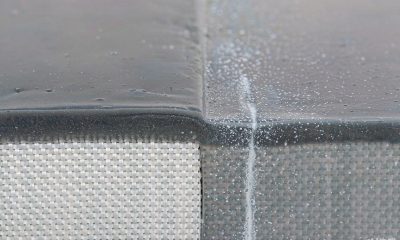
This is a different product from a single-layer PVC air duct. An uninsulated duct carrying chilled air sweats quickly, and water dripping onto a ceiling stand or exhibition booth is the most common complaint on temporary HVAC jobs.
Four ranges worth reading carefully
The DFV sheet covers a wide span, and the endpoints alone are not enough:
- Diameter 100–1,500 mm — small sizes serve local supply, large sizes whole-space ventilation. At fixed airflow, each step down in diameter raises velocity and pressure loss;
- Length 1–30 m — longer runs mean more joints and higher friction loss, so available fan static pressure must be checked;
- −50 to +80°C — this covers nearly all heating and cooling supply duties, but it is not a licence to run continuously at 80°C. Sustained heat accelerates plasticiser migration in PVC;
- 1,000–3,000 Pa — the source writes the unit as 1000-3000PaMPa, which is not a valid notation. Ask the supplier to state whether this is a positive or negative pressure rating, and on what test basis.
On flame resistance, the source says only class B. Under GB 8624-2012, B1 means difficult to ignite and B2 means combustible; the shorthand class B can point to different criteria depending on the supplier. For occupied buildings, request the reaction-to-fire report for the exact model rather than accepting three characters on a data sheet.
Why the applications cluster around hubs and venues
The two sources list almost identical use cases: airport terminals and jet bridges, stadiums, convention centres, shopping malls and hotels. These spaces share four traits — large volume, high ceiling, frequent temporary events, and fixed ductwork that cannot cover every zone.
In that context the value of insulated flexible duct is a combination of three things: it compresses for transport, the zipper joint supports rapid assembly and removal, and the insulation prevents chilled air from losing capacity over a long run. The listing gives a reference price starting at CNY 70, but the pricing unit is not clearly stated, so treat it as an order-of-magnitude indication and confirm by diameter, length and joint count.
Six questions to put in every RFQ
A 2026 UNITARP guide to flexible PVC duct manufacturers offers a genuinely useful instruction: state the expected pressure direction, frequency of use, air condition and available storage space. Beyond price, compare material structure, reinforcement spacing, seam method and end fittings, and require samples to match the actual production specification.
Turned into a buyer’s checklist:
- Pressure direction (supply or exhaust) and design working pressure;
- Duty cycle — continuous operation or seasonal/event use;
- Air condition — dust, oil, humidity, possible kitchen grease;
- Storage and transport space, which decides whether high compression and a dedicated bag are needed;
- Reinforcement spacing and seam method — heat weld, high-frequency weld or stitched reinforcement;
- End fittings and joint type — zipper, clamp or flange — and compatibility with existing equipment.
The guide adds that pressure, temperature and fire-performance documentation for a specific model must match the exact structure purchased. Ducts from the same factory but with different constructions cannot share one report, a trap that is easy to fall into on marketplace procurement.
Two installation details that pay off
Flexible ducts fail in two predictable ways. First, a bend radius too tight deforms the steel helix and collapses the section locally. Second, dragging the duct across the floor wears through the outer strip and exposes the wire. Keeping runs straight or generously curved, and adding protective sleeves where a route crosses a walkway, extends service life substantially.
The zipper joint exists so the inner wall can be cleaned, but repeated opening wears the teeth. Since the source presents the zipper as a selling point rather than a maintenance item, my practical addition is to log opening cycles and put the zipper on the inspection checklist. That recommendation comes from the structure, not from the listing.
Trend and boundary
Across the October–November 2026 supplier updates, the conversation has moved from whether the duct can move air to whether it can do so while remaining compliant, cleanable and fast to deploy. For PVC coated material suppliers, the differentiator is the lamination of flame-retardant scrim with aluminium-foil foam and a weatherable formulation, not ordinary tarpaulin technology.
The boundary is equally clear. Parameters here come from supplier product pages and buying guides and are market information, not an engineering specification. Fire class, duct pressure and insulation thickness must follow project design codes, third-party reports and on-site commissioning.
Frequently asked questions
How does an insulated PVC duct differ from a plain PVC air duct?
A plain duct is usually a single layer of PVC or PVC coated scrim. An insulated duct adds insulation wool or aluminium-foil foam, a steel helix and a wear-resistant outer layer. It reduces chilled-air loss and condensation over long runs, which matters at jet bridges and convention centres.
Is a data sheet saying class B flame resistance sufficient for fire acceptance?
No. The listing gives only class B, with no standard or test basis. For occupied buildings, request the reaction-to-fire report for the exact model and confirm it follows a current standard such as GB 8624-2012 and reaches the level the project requires.
Why state pressure direction in an enquiry?
Because supply and exhaust impose different demands on frame stiffness and collapse resistance. The UNITARP guide explicitly recommends stating pressure direction, frequency of use, air condition and storage space, and comparing reinforcement spacing and seam construction.
Sources:
JDZJ: PVC retractable insulated air duct DFV specifications (2026-11-16)
China-ASEAN Free Trade: Baofeng zippered insulated air duct (2026-10-29)
UNITARP: 2026 flexible PVC duct manufacturers and selection guide