TL;DR — Core Answer
The circular economy has moved from a buzzword to a procurement requirement in 2026. Major European logistics firms, US rental equipment companies, and global food retailers now specify 100% recyclable or recycled-content tarpaulins for their fleets and packaging. Traditional PVC tarpaulins — while durable and cost-effective — face growing pressure due to mixed-fibre recycling challenges and regulatory mandates. The emerging solution: sustainable coated fabric with mass-balance certified recycled content, paired with next-generation polyolefin alternatives that are fully melt-recyclable.
Why Circular Tarpaulins Matter Now (Not Tomorrow)
Three forces are converging to make recyclability a non-negotiable specification for industrial tarpaulin buyers in 2026:
1. Extended Producer Responsibility (EPR) laws. The EU’s Packaging and Packaging Waste Regulation (PPWR), effective 2025, assigns recycling cost responsibility to the original product brand owner for all tarpaulins used in transport packaging. France, Germany, and the Netherlands have already implemented national EPR schemes for industrial textiles, with fines reaching €15,000 per tonne of non-compliant waste.
2. Corporate Scope 3 reporting. 73% of S&P 500 companies now report Scope 3 emissions, and transport packaging tarpaulins are a significant category. A typical fleet of 10,000 trucks wearing 800-gram PVC tarpaulins generates approximately 1,200 tonnes of CO₂e from tarpaulin production and disposal alone over a 3-year replacement cycle.
3. Premium pricing for circularity. Early-moving buyers — notably DHL, Maersk, and Ikea — are paying a 10-20% premium for tarpaulins with verified recycled content and take-back programs. Freitag, the circular tarpaulin bag brand, launched its “Reference Collection” retail expansion in spring 2026, demonstrating that consumers also will pay for products with transparent circularity claims.
Traditional PVC vs. Next-Gen Recyclable Tarpaulins — Performance Comparison
The common misconception is that recyclable tarpaulins sacrifice performance. The latest generation proves otherwise:
| Property | Traditional PVC Tarpaulin | Bio-PVC / Mass-Balance Recycled | Polyolefin (TPO) Fully Recyclable |
|---|---|---|---|
| Material | PVC + polyester scrim | PVC (bio-based resin, mass balance) + polyester scrim | Polypropylene substrate + polypropylene film |
| Recyclability | Limited (mixed-fibre, must separate PVC from PET) | Same as traditional; improved via chain-of-custody certification | 100% melt-recyclable; uniform polypropylene throughout |
| Tensile Strength | Excellent (900-1500 GSM) | Excellent (900-1500 GSM) | Very Good (1000-1400 GSM) |
| UV Stability | 8-12 years outdoor | 8-12 years outdoor | 4-7 years outdoor (currently improving) |
| Price Premium | Baseline | +5-10% | +10-20% |
| Best For | General logistics, construction | Food transport, EU-regulated packaging | Short-cycle applications, closed-loop systems |
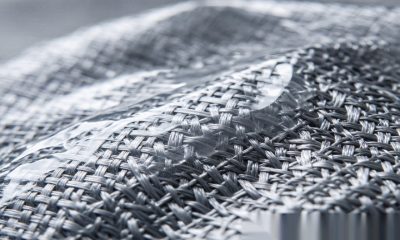
Key innovation of 2026: A new patent (CN122275405A) published in China describes a homogeneous polypropylene substrate + polypropylene film composite that requires no adhesives or dissimilar materials during manufacturing. This eliminates the most expensive step in tarpaulin recycling — material separation — enabling true closed-loop remanufacturing at scale.
VinylPlus 2026: What the PVC Industry Is Doing
VinylPlus — the voluntary sustainability program for European PVC manufacturers — reported in 2026 that PVC recycling in Europe reached 765,972 tonnes, a 12% increase over 2024 levels. This is driven by two breakthrough technologies:
1. Hydrothermal depolymerization. Used by companies like Recovinyl in Belgium, this process breaks PVC into its molecular components (chlorine, calcium carbonate, hydrocarbons) without burning, enabling the resulting chlorine to be reinjected directly back into vinyl chloride monomer (VCM) production. First-generation commercial plants opened in 2025 with 20,000-tonne annual capacity.
2. Mass-balance certification. The mass-balance approach allows certified manufacturers to blend recycled PVC resin with virgin resin while maintaining traceability through the supply chain. This enables converters to claim “30% recycled content” even when individual rolls may be 0-60% recycled, as long as the average over their annual production meets the claim.
What Buyers Should Verify When Specifying Recyclable Tarpaulins
When specifying circular tarpaulins for your 2027 fleet refresh, audit these five points before purchase:
- Chain-of-custody certification. Is the recycled content claim backed by a third-party auditor? Accepted standards include GRS (Global Recycled Standard), RCS (Recycled Claim Standard), and VinylPlus mass-balance.
- Take-back program. Does the supplier offer a verifiable end-of-life collection service with documented recycling pathways? EPR laws now require this traceability.
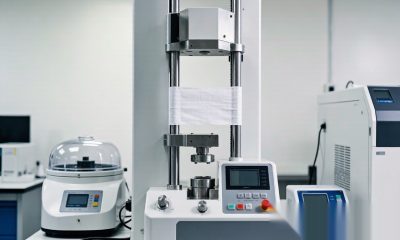
- Performance parity. Conduct side-by-side tensile, tear, and UV testing to confirm the recycled or bio-based variant matches your traditional specification — some early formulations showed 10-15% lower tear strength.
- Carbon footprint. Request a certified LCA showing the cradle-to-gate CO₂e of the recycled-content product. A good target is ≤ 4.5 kg CO₂e per square meter (vs. ~7.5 kg CO₂e for virgin PVC).
- Compliance documentation. Confirm PFAS-free status (required for California/EU), REACH Annex XVII compliance, and full DPP readiness if the product will enter the EU in 2027+.