Background: the material contest in containment
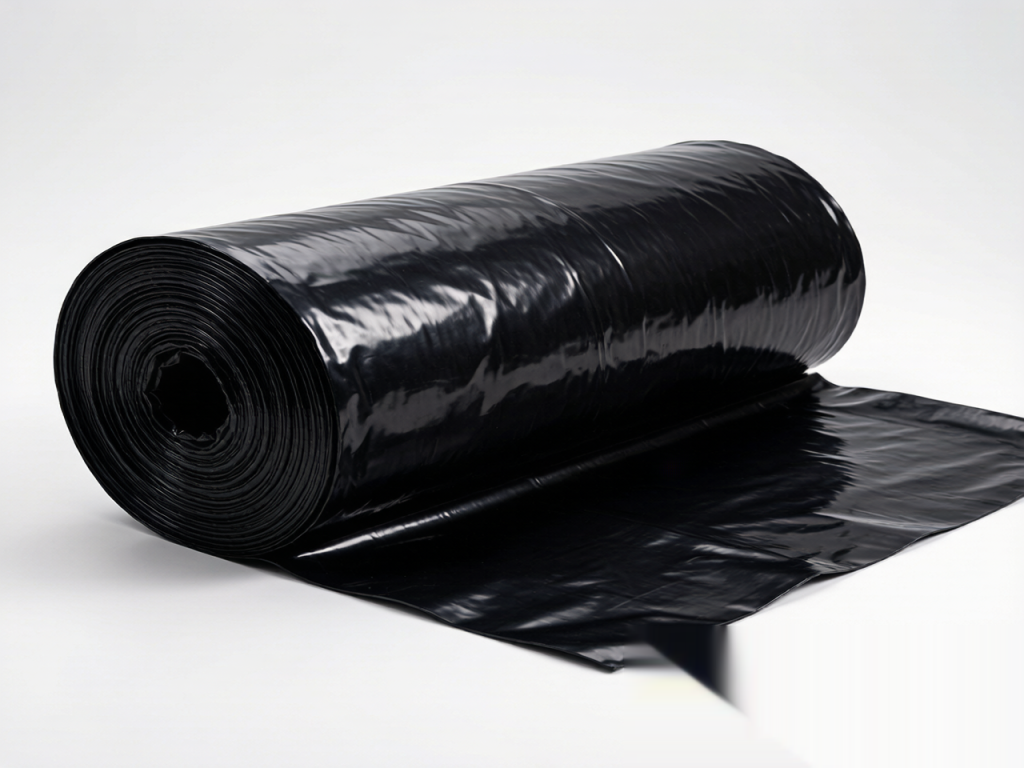
Municipal landfills, leachate ponds, stormwater basins, mining heap-leach pads and agricultural waste lagoons all need a continuous, low-permeability barrier to lock contaminants in. HDPE has long been the byword for ‘high spec’, but PVC geomembranes — with their flexibility and installation speed — hold an irreplaceable position in caps, equalization ponds, temporary covers and irregular subgrades. Through 2026 several engineering and technical bodies re-examined PVC’s role in containment systems.
Technical principle: factory-fabricated panels and ESC resistance
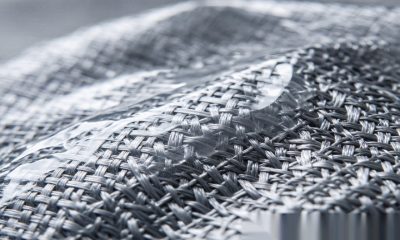
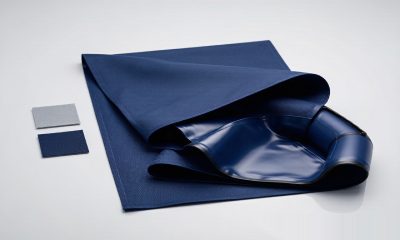
PVC geomembranes come reinforced (scrim-inserted) or non-reinforced, manufactured to ASTM, EPA and USDA NRCS standards. A key advantage is factory fabrication: Ronald Mark Associates notes PVC panels can be shop-welded into single sheets up to about 40,000 ft² (roughly 3,700 m²), slashing field seams and schedule while cutting leak risk by up to 80%; their flexibility conforms to uneven terrain without heavy subgrade prep and, in chemically and UV-resistant formulations, lasts over 20 years exposed (ronaldmark.com).
A second, underrated strength is environmental stress-crack (ESC) resistance. PVC’s amorphous structure and plasticizer-enhanced flexibility let it absorb strain without the brittle fracture that afflicts more rigid polymers like HDPE under sustained stress and chemical exposure — ideal for leachate ponds and industrial lagoons where ESC risk is high. GeoSincere stresses that the primary spec for buried non-reinforced PVC sheet is ASTM D7176, covering thickness (typically 0.25–1.5 mm), tensile, tear and volatile loss (upbb616.myueeshop.com). Factoring material, construction and CQA, PVC can save 30–40% versus PE.
Application scenarios
- Landfills: from daily covers and interim caps to primary liners and final closure, PVC’s flexibility, chemical resistance and durability make it common in MSW facilities.
- Leachate ponds and stormwater diversion: low permeability and easy fabrication support compliance and operational efficiency.
- Hydraulic and mining: dam-face lining, reservoir rehab, tailings dams and heap-leach pads; PVC conforms to dam contours and resists puncture for potable and hydro reservoirs.
Market and trends
24ChemicalResearch’s 2026 PVC geomembrane report names Asia-Pacific the largest region: China’s clean-water drive and large landfills lift liner installation, while India’s reservoir expansion and sewage modernization sustain demand. Tightening EU certification pushes reinforced, UV-enhanced blends; Australia’s mining code encourages higher puncture-resistance; North American green-building drives long-life composites. Regional demand tracks infrastructure cadence rather than commodity prices, giving a steadier project pipeline.
Selection checklist
- Know the spec: buried non-reinforced PVC answers to ASTM D7176; exposed or reinforced types may follow project-specific standards.
- Check the plasticizer: modern recipes use polymeric plasticizers (>1000 g/mol) or non-phthalate DOTP to cut leaching risk (gscgeosynthetics.com).
- Check seams: hot-air/hot-wedge welding is preferred; test double-track seams by air pressure, single-track by vacuum box, non-destructively.
- Check recycle content and EPD: some products already declare 15–30% recycled content with an EPD, helping green tenders.
Installation quality control is where PVC’s flexibility advantage is won or lost. Good practice: clear the subgrade of rock, roots and debris; lay a nonwoven geotextile cushion; unroll panels with the specified 50 to 100 mm overlap; weld by hot-air or hot-wedge and verify double-track seams by air pressure, single-track by vacuum box; anchor edges in a perimeter trench and backfill. Post-installation, electrical leak-location surveys can confirm integrity across the entire lined area, worth the cost on critical containment.
Recycling and EPD are moving from optional to expected. Modern PVC geomembranes increasingly declare 15 to 30 percent recycled content and publish Environmental Product Declarations; some plasticizer-free grades blend PVC with chlorinated polyethylene (CPE) or nitrile rubber (NBR) to gain flexibility without small-molecule plasticizers, easing end-of-life handling. For green tenders these documents now carry real weight.
Specifiers sometimes ask why not simply specify HDPE everywhere. The answer is site reality: HDPE is stiff, requires fusion welding with expensive equipment, and is unforgiving on uneven or penetration-heavy subgrades. PVC’s higher elongation and easy solvent or hot-air seaming make it the pragmatic choice where speed, conformability and cold flexibility, down to minus 30 C, decide the project. HDPE remains correct for aggressive chemicals and maximum puncture demand; the two are complements, not rivals.
Thickness selection tracks the duty: 0.5 to 1.5 mm for buried non-reinforced liners per ASTM D7176, up to 3.0 mm for reinforced or exposed configurations. Pair the chosen gauge with the right plasticizer system and the result is a barrier that, exhumations show, still flexes and holds tensile strength two to three decades after burial.
Frequently asked questions
Q1: PVC or HDPE geomembrane — how to choose?
A1: Pick PVC when the subgrade is uneven, many penetrations must be sealed, speed matters or it will be cold-exposed; HDPE stays the standard for strong oxidizers, extreme UV and maximum puncture demand.
Q2: How long does a PVC geomembrane last?
A2: Accelerated aging (ASTM G155 xenon arc) projects service life above 50 years for well-formulated, stabilized PVC; exhumations at 20–30 years still show retained flexibility and strength.
Q3: How do you guarantee no leaks on site?
A3: Clear substrate of rock and roots, lay a nonwoven geotextile cushion, non-destructively test seams, backfill perimeter anchor trenches, and where needed run electrical leak-location surveys.