Kezhibo has signed distribution partnerships that extend its reach into fast-growing Southeast Asian markets and established European Union channels. Local warehouses will shorten lead times and improve after-sales support.
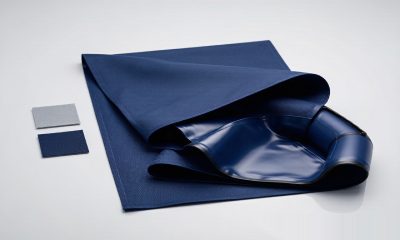
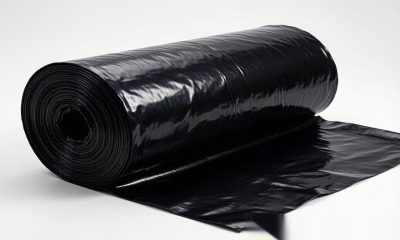
The expansion reflects steady overseas demand for the company’s PVC, TPU and TPO product lines, particularly in signage, transport and architectural membrane segments.
What the Distribution Partnerships Cover
The new agreements establish two complementary channels. In Southeast Asia, distribution partnerships put Kezhibo materials in fast-growing markets where construction, transport and outdoor advertising are expanding faster than local coated-fabric supply can serve them. In the European Union, the company is working through established channels that already serve signage distributors, fabricators and construction contractors — markets where buyers expect documented specifications, certified flame-retardant grades and reliable batch-to-batch consistency.
The structure matters as much as the geography. Kezhibo remains the manufacturer behind every roll: formulations, knife-coating production and ISO 9001 certified quality management stay at the factory. The distribution layer adds what a factory alone cannot provide from thousands of kilometres away — stock on the ground, local language support, and someone to call when a project deadline is tomorrow.
Why Local Warehousing Changes the Math for Fabric Buyers
Coated fabric is not bought the way office supplies are bought. A signage company needs rolls when a campaign is sold; a fabricator needs membrane when a structure is scheduled; a transport operator needs tarpaulin when a fleet is fitted. None of these demand signals arrive three months in advance — and sea freight from Asia, however well organised, measures its lead time in weeks, not days.
Local warehouses attack exactly that gap. Stock held in-region converts a multi-week factory order into a days-long delivery, which changes purchasing behaviour in three concrete ways:
- Call-off quantities get smaller. Buyers can order what the next job needs instead of what a shipping container makes economical, freeing working capital and storage space.
- Campaign deadlines stop being freight risks. A print house that wins a building-wrap contract mid-quarter can start printing this week, not next month.
- Replacements and top-ups are routine. A damaged panel or an extra roll for an extended project no longer means a production queue on another continent.
After-sales support is the quieter benefit. Questions about welding parameters, ink compatibility or finishing details are answered by people in the buyer’s time zone who have the material on their own shelf.
Matching Formulation to Market
Export supply is not a copy-paste operation. The same nominal fabric needs different formulation emphasis depending on where it will live, and this is where a manufacturer-direct distribution model earns its keep.
In equatorial Southeast Asian climates, the UV package and anti-fungus treatment dominate: intense year-round sunlight and high humidity punish coatings that were balanced for milder latitudes. In European markets, flame retardancy documentation is frequently the entry ticket — public-facing structures commonly reference standards such as EN 13501 or DIN 4102 B1, and buyers need certified grades with test evidence, not assurances. Cold-climate applications add their own requirement: plasticiser systems that keep the fabric flexible through genuine winters.
Because Kezhibo formulates and produces in-house, regional distributors can specify climate- and compliance-tuned grades rather than selling a single global compromise. That flexibility extends through the company’s custom manufacturing services for partners building a differentiated line in their own market.
Which Product Lines Are Driving Demand
The expansion follows demand that has been building across three segments.
Signage and printing. Wide-format advertising keeps growing across both regions, and print houses increasingly source banner fabric — frontlit, backlit and mesh constructions — from manufacturers who can guarantee surface consistency roll to roll. Print quality complaints, more often than not, trace back to coating thickness variation, which is a production capability question before it is a printing question.
Transport. Truck covers, side curtains and container-related fabrics are a steady, repeat-purchase category. Fleet operators and body builders want weldable, durable PVC tarpaulin in consistent grades, and they want the replacement rolls available locally — which the new warehouse structure now provides.
Architectural membranes. Tensile structures, canopies and facade elements are growing in both regions, and these projects specify at a higher level: tensile values, fire classification, translucency. Kezhibo’s architectural membranes enter these projects with datasheets and test documentation, and the EU channels in particular give specifiers a local route to the material.
Alongside these, the TPU and TPO lines continue to serve buyers whose applications demand abrasion resistance, low-temperature flexibility or plasticiser-free weathering — the performance tier of the range.
Working With Kezhibo Through a Local Partner
For distributors, the expansion opens a manufacturer relationship rather than a roll transaction: regional exclusivity options, formulation support for market-specific grades, and marketing materials backed by factory documentation. For fabricators, contractors and print houses, it means the material is now close enough to be an operational input rather than a logistics project.
Technical support travels with the product. Application questions go through the local partner to Kezhibo’s engineers and back with answers grounded in production data — welding guidance, grade selection, formulation options — under the same ISO 9001 quality system that governs the factory floor.
Choosing a Regional Supply Partner: A Short Checklist
The distribution expansion gives buyers more options, and options are only useful if they can be evaluated. When comparing supply routes for coated fabric — whether through the new regional partners or otherwise — a short checklist keeps the comparison honest:
- Who manufactures the material? The answer should be a nameable factory with a certifiable quality system, not a trading company with a catalogue. Batch consistency and reformulation ability live at the production line.
- Can the grade be documented? Datasheets with measured tensile, tear, coating weight and fire-classification evidence — issued by the manufacturer, not rewritten by intermediaries.
- What happens when a batch disappoints? A manufacturer standing behind its production answers with traceability and corrective action; a reseller answers with a discount.
- Is custom formulation available? Markets differ in climate, regulation and print systems. A supplier who can tune the compound beats one who can only repackage it.
- Does local stock exist for the grades you actually use? Warehousing a broad catalogue is easy to promise; holding the specific frontlit, tarpaulin and membrane grades a buyer runs through is the real test.
Kezhibo’s distribution model was built against that checklist: factory-direct manufacturing under ISO 9001, manufacturer-issued documentation, formulation support through custom manufacturing, and regional stock concentrated in the product lines each market actually consumes.
Talk to Kezhibo
Whether you buy through distribution or directly for projects, the fastest route to the right grade is the same: describe the application, the environment and the timeline. Kezhibo’s team will propose suitable materials with datasheets, samples and — through the new regional network — lead times that finally match the way coated fabric projects actually move.
Contact Kezhibo to discuss supply through a local distribution partner or direct from the factory.