TL;DR — World’s First 12-Meter HDPE Geomembrane Line: What You Need to Know
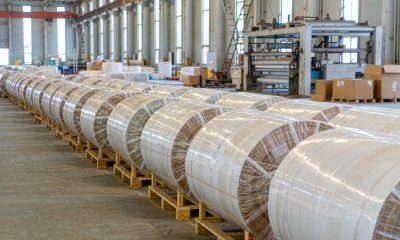
In 2026, Shandong Lude New Material launched the world’s first 12-meter ultra-wide HDPE geomembrane production line — a 50% width increase over the traditional 8-meter standard. The breakthrough cuts required weld seam lengths by 67% for large reservoir installations, dramatically reducing leakage risk and construction timelines. Integrated spark detection and X-ray thickness monitoring deliver products exceeding international uniformity benchmarks. The line is now deployed across over 1,000 national key projects in water conservancy, highway reinforcement, tunnels, airports, ports, and environmental municipal engineering (source).
What Is the 12-Meter Ultra-Wide Geomembrane Technology?
Traditional HDPE geomembrane lines cap at 8 meters — the width ceiling that had persisted for decades. A wider sheet means fewer welds per installation, but producing a uniform bubble at that scale required solving three bottleneck technologies: micro-bubble control in the blown-film process, online thickness consistency across a 12-meter die, and intelligent defect detection at production speed. Shandong Lude’s solution integrates an in-line X-ray thickness gauge and a spark-detection system that can pinpoint micro-holes as small as 0.1mm before the geomembrane is rolled for shipping.
The numbers tell the story. A typical 10-hectare reservoir previously required approximately 1,250 linear meters of field weld seams with 8-meter geomembrane. With 12-meter sheet, that drops to roughly 416 meters — a 67% reduction. Every weld is a potential leak point, so fewer seams directly translate to lower long-term maintenance cost and reduced geotechnical risk. The line achieves stable mass production up to 3.0mm thickness, covering the full range from light agricultural liners to heavy industrial containment.
12-Meter vs 8-Meter: Side-by-Side Performance Comparison
| Parameter | Traditional 8m Line | New 12m Ultra-Wide | Improvement |
|---|---|---|---|
| Maximum Sheet Width | 8 meters | 12 meters | +50% |
| Weld Seams per 10ha Reservoir | ~1,250 m | ~416 m | -67% |
| Maximum Thickness | 2.5 mm typical | 3.0 mm | +20% |
| Thickness Uniformity | ±8-10% | ±3-5% | >50% improvement |
| Defect Detection | Manual sampling | X-ray + spark in-line | 100% coverage |
| Field Installation Time | Baseline | 30-40% faster | Crew hours cut |
Why This Matters for Global Infrastructure Projects
Water scarcity is accelerating worldwide. The World Bank has allocated approximately USD 22 billion to water security and irrigation lending from 2021 to 2025, with pipeline projects specifying engineered geomembrane barriers where earthen sections previously lost 30-40% of conveyed volume to seepage (source). The 12-meter line arrives at precisely the moment when massive reservoir relining projects — like Layfield’s 523-million-gallon Garvey Reservoir contract in California — are setting new benchmarks for scale and reliability.
For buyers evaluating PVC geomembrane vs HDPE trade-offs, this innovation shifts the calculus. Wider rolls reduce field labor, but the real advantage lies in uniformity and strength. The X-ray monitoring ensures consistent thickness, which directly correlates with puncture resistance and long-term durability. Projects in extreme climates — where freeze-thaw cycles or high-temperature brine ponds demand premium sheets — will benefit most from the 3.0mm maximum thickness capability.
At kezhibo, we supply high-quality PVC geomembrane for water management, aquaculture, and industrial containment applications. While HDPE remains dominant for ultra-wide reservoir liners, PVC offers superior flexibility for complex geometries and excellent chemical resistance for many containment scenarios. Pairing either material with wider production technology is the industry trajectory.
What’s Next for Geomembrane Manufacturing?
The CECS standard for TPO geomembranes was initiated in Suzhou in September 2026, signaling continued standardization of high-performance impermeable materials for complex working conditions. China Building Material Test & Certification Group is leading the effort to align domestic benchmarks with international technical standards. Meanwhile, Solmax’s new European geosynthetics center in Les Mureaux, France — consolidating operations from Linz, Austria and Bezons, France — will demonstrate how geosynthetic engineering integrates throughout modern construction (source).
For specifiers and project managers, the takeaway is clear: when evaluating geomembrane suppliers in 2026 and beyond, ask not just for sheet width and thickness — ask for the measurement method. In-line X-ray thickness monitoring and spark-detection coverage are no longer premium options. They’re becoming table stakes for projects that can’t afford leaks.
Sources & Further Reading
- Shandong Hongyue Engineering Materials Co. — Geomembrane Industry News Roundup 2026 (Sep 28, 2026)
- Market Research Future — Geomembranes Market Forecast 2026-2035 (Oct 27, 2026)
- CECS Waterproofing and Protection Committee — TPO Geomembrane Standard Initiative (Sep 16, 2026)