
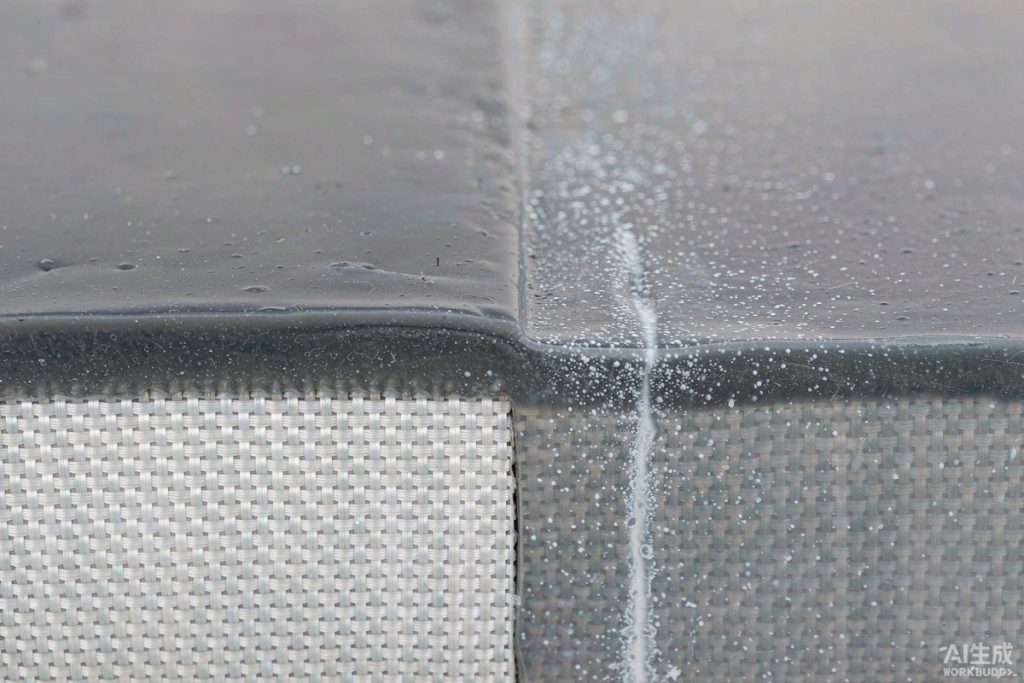
The push to remove lead from PVC coated fabric has moved from policy statement to formulation sheet. What determines whether a roll can enter food-contact, medical or children’s-product channels is often not the resin but the stabilizer. Phenol-free calcium-zinc grades now deliver at least 30 minutes of thermal stability at 180 °C, VOC at or below 0.5%, and documentation under REACH, RoHS and FDA, while tin and lead systems face migration limits or use bans. The discipline lies in separating certificate scope from batch testing.
Why the stabilizer became the bottleneck
PVC dehydrochlorinates at processing temperature; stabilisers suppress degradation, protect colour and preserve mechanical properties. Lead salts are cheap and offer long thermal stability but are banned in the EU and US for food and children’s products. Organotin offers clarity but tighter migration limits. Baerlocher’s Tin Replacement programme argues for moving to Ca/Zn ahead of regulation, citing roughly 50% lower CO2-eq/kg, no authorisation requirement, cleaner recycling streams and support for post-consumer recycled content (Asia Plas & Pack, Baerlocher Tin Replacement). These are supplier-stated advantages; actual performance still needs measurement.
What a phenol-free Ca/Zn specification looks like
A coating-grade materials shortlist gives figures usable in an enquiry: CZ-2756 is a liquid phenol-free Ca/Zn stabiliser with density 1.02–1.08 g/cm³, viscosity 200–250 mPa·s at 30 °C, thermal stability of at least 30 minutes at 180 °C, VOC ≤0.5%, no detected phenols, and a recommended processing window of 160–185 °C. Applications listed include artificial leather, coated fabric, yoga mats, flexible film and cable sheathing. SC-135 is a paste-grade grade aimed at food-contact film, medical catheters and bags, artificial leather and flooring; CT303TX-type liquid systems are dosed at 1.5–3.0 phr on paste resin (HTNXT, Coating-Grade PVC Vinyl Materials).
Surface quality is also a formulation question. Eastman TXIB works as both viscosity reducer and film-forming agent in PVC plastisols at about 9 cP, reducing wave marks from high-shear coating, allowing higher filler loading, speeding bubble removal and producing a drier, more printable surface. For printed banner fabric and decorative film this can matter more than the stabiliser itself.
A regional certification guide adds the documentation layer: CZ-2756, SC-1600C, SC-135 and CZ-190 are stated to comply with REACH, RoHS and FDA, with CZ-2756 additionally passing PAHS and EN71-3 toy safety requirements and declaring no phenols, lead, cadmium or heavy metals. CT303TX is described as meeting EU REACH, RoHS and GB 4806 food-contact requirements at 1.5–3.0 phr. The same guide notes an ADEKA agency certificate issued 21 January 2026, valid to 31 December 2026, whose scope explicitly names PVC coated material and markets including Vietnam and Indonesia (Baoshan Trading, Regional Certification Guide). The lesson is to check whether a certificate actually names your material and market.
Market signals and the limits of substitution
Third-party data points the same way: the global eco-friendly plasticisers market was USD 5.03 billion in 2024 and is projected at USD 7.55 billion by 2030, a 7.0% CAGR, according to MarketsandMarkets as cited by HTNXT. One industry source claims lead-free formulations will hold 85% of the global PVC heat stabiliser market by 2030, but that figure comes from a supplier citing an association report and should not be the sole basis for a decision (Kefeng Chemical, 2026 PVC heat stabiliser guide).
Substitution is not universal. Lead systems retain a cost edge in unregulated industrial uses such as underground drainage pipe; organotin remains relevant where high clarity is critical, though its cost index can run 2.8–3.5 times higher. For outdoor tarpaulin, architectural membrane and inflatables, the case for phenol-free Ca/Zn rests on compliance and recycled-content compatibility rather than maximum thermal stability.
Purchase and acceptance checklist
- Define the end channel first — food contact, medical, toys or general industrial — because that decides the documentation tier.
- Request the stabilizer data sheet and check thermal stability at 180 °C, VOC, phenol and heavy-metal declarations.
- Verify the named entity, production site, validity and scope on every certificate, including whether PVC coated material is listed.
- Require batch testing with the same method, grade and laboratory; GC-MS, ICP-MS and LC-MS/MS are typical screens for phthalates, heavy metals, BPA and organotin.
- Treat a change of stabiliser grade or dosage as a re-qualification event in the supplier change-control clause.
FAQ
Can phenol-free Ca/Zn replace lead salts without changing the process?
Usually not without recalibration inside the processing window. CZ-2756 is recommended at 160–185 °C and CT303TX-type systems at 1.5–3.0 phr on paste resin. After switching, re-measure plasticisation behaviour, thermal stability and plate-out rather than substituting weight for weight.
Is saying a product is REACH compliant enough?
No. REACH addresses substance-level restrictions and authorisation; the finished article still depends on end use, migration testing and destination-market rules. Confirm that certificate scope names your material, application and market, and pair it with batch-level reports.
Are phenol-free and lead-free the same claim?
No. Phenol-free means no phenolic substances; lead-free means no lead compounds. Grades such as CZ-2756 declare both, plus cadmium-free, but the purchase specification should state each requirement and its test method separately.












