
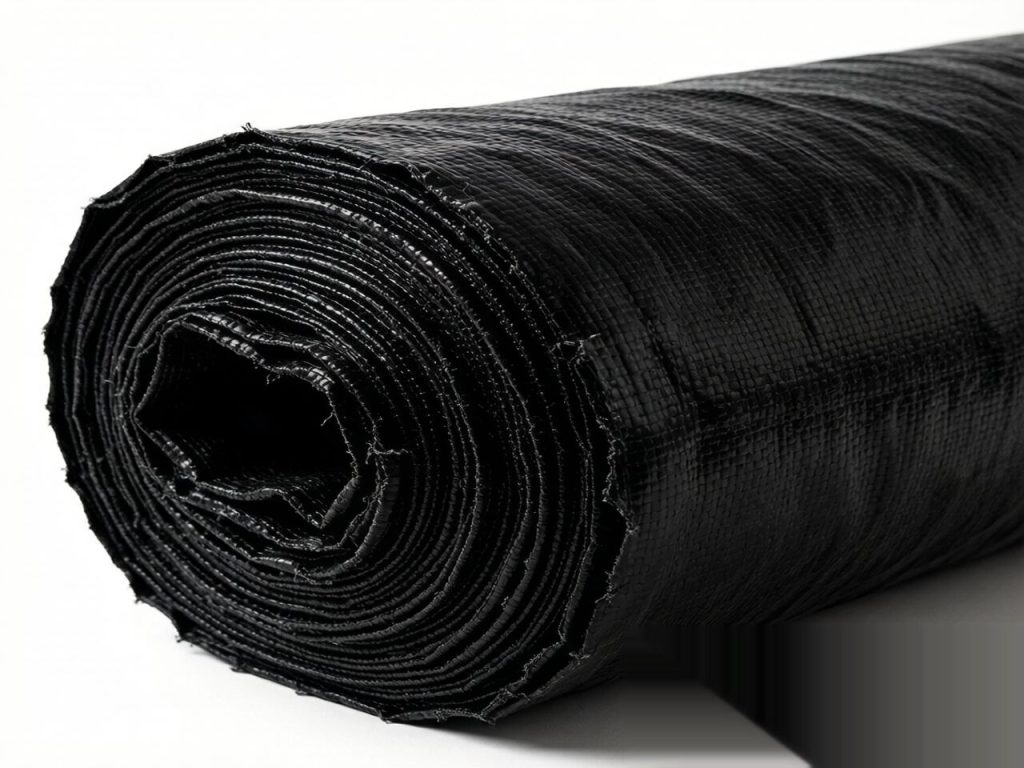
Why silage must be oxygen-tight
Silage preserves chopped forage – corn, grass, alfalfa – by fermentation under anaerobic conditions. The moment oxygen gets in, aerobic yeasts and moulds start consuming nutrients, generating heat and spoilage, and the top few to tens of centimetres of feed are lost. DERFLEX puts a painful number on it: inadequate covering can cause up to 30% feed loss (source: derflex.com/silage-tarp). For a dairy or feed base, that 30% is pure lost margin. So the first job of a silage cover is not “keep the rain off” – it is “seal the oxygen out”.
Why PVC knife-coated fabric beats commodity PE film
JZ Coated Fabrics explains that PVC knife-coated tarpaulin is built from polyvinyl chloride via a knife-coating process into a multilayer structure, with anti-slip, abrasion-resistant, UV-resistant surface treatment and reinforced edges – the core being high airtightness, oxygen and moisture blocking (source: jz-coatedfabrics.com). Jinxiang (jinxiangtarp.com) uses Negev-desert farms in Israel as the cautionary tale: commodity PE sheet embrittles, micro-cracks, and tears at tie-down points under intense UV and salt air, letting oxygen into the clamp; marine-grade PVC – high-tenacity polyester scrim plus PVC with UV stabilisers and anti-hydrolysis agents – keeps flexibility and strength for years and can be heat-welded into an integral airtight seam, the same airtightness logic used in inflatable boats. Jinxiang’s sweet spot for silage coverage is 600-800 GSM: enough weight to resist wind uplift, still manageable to install. DERFLEX specs its silage tarp at 0.12-1.2 mm thickness, 120-900 gsm, 3-5 year UV life, -30 to +70 degC, in PE or PVC (source: derflex.com).
Applications: piles, bunkers, towers, and airbag covers
Silage covers seal the tops and sides of piles, bunkers/trenches, and towers. Jinxiang’s piece on airbag-style silage coverage makes the engineering point that a general cargo tarp is a static rain shield and cannot survive the radial tension of an inflating bag or tropical UV; technical airbag fabric needs low-elongation high-tenacity polyester plus double-sided dip-coated PVC, with seam peel strength that holds under inflation pressure and near-zero oxygen permeability (source: jinxiangtarp.com/airbag-fabric). That matters most on large ranches and in tropical/subtropical climates, where one failure can ruin thousands of tonnes of feed. DER-Factory confirms that multilayer oxygen-barrier film plus heavy PVC, with overlapped seams and ballasting, holds the anaerobic environment (source: der-factory.com).
Selection: don’t read GSM alone, read airtightness and seams
Jinxiang’s buying advice is blunt: stop asking “how heavy”, start asking about weave density, coating continuity, and tensioned airtightness. The checklist: (1) high-tenacity, low-elongation polyester base so it does not creep under tension; (2) double-sided dip-coat or knife-coat with continuous, pinhole-free coverage; (3) heat-welded seams, not taped overlaps, with adequate peel strength; (4) UV stabilisers and non-migrating plasticisers so it does not chalk and crack within months; (5) -30 to +70 degC rating for northern wintering and southern sun; (6) reusability – proper heavy PVC silage tarps run across seasons. DERFLEX notes its PE/PVC silage tarps are customisable in size, reinforced hems, and grommets, with OEM/ODM support.
Market and trend: from disposable consumable to multi-year asset
Silage covering is shifting from “cheap PE film replaced every year” to “engineered PVC asset reused for years”. Drivers are rising feed prices and tighter ranch management – saving 10% dry matter often pays for the higher material cost. DER-Factory lists PVC heavy-duty outdoor life at 5-12 years with UV stabilisers, well above light PE’s 2-8 years. For export-oriented ranch-equipment makers this also means longer warranty promises and better brand reputation. In short, the procurement logic is moving from “lowest unit price” to “lowest cost per tonne of preserved feed”.
Frequently asked questions
Q: How is PVC silage film different from ordinary PE film?
A: PE relies on overlap and ballast, and seams leak as it expands and contracts; PVC knife-coated fabric can be heat-welded into an integral airtight seam and resists UV and tearing far better, suited to multi-year anaerobic sealing. DERFLEX notes poor covering can mean up to 30% feed loss.
Q: What GSM should a silage cover be?
A: Jinxiang’s sweet spot is 600-800 GSM, balancing wind uplift against handling. More important than total weight are weave density, coating continuity, and seam peel strength.
Q: How many seasons does a PVC silage tarp last?
A: Proper heavy PVC silage tarps are reusable across seasons; DERFLEX rates its PE/PVC silage tarps from one season to five years, and UV-stabilised PVC heavy grades reach 5-12 years outdoors.












