
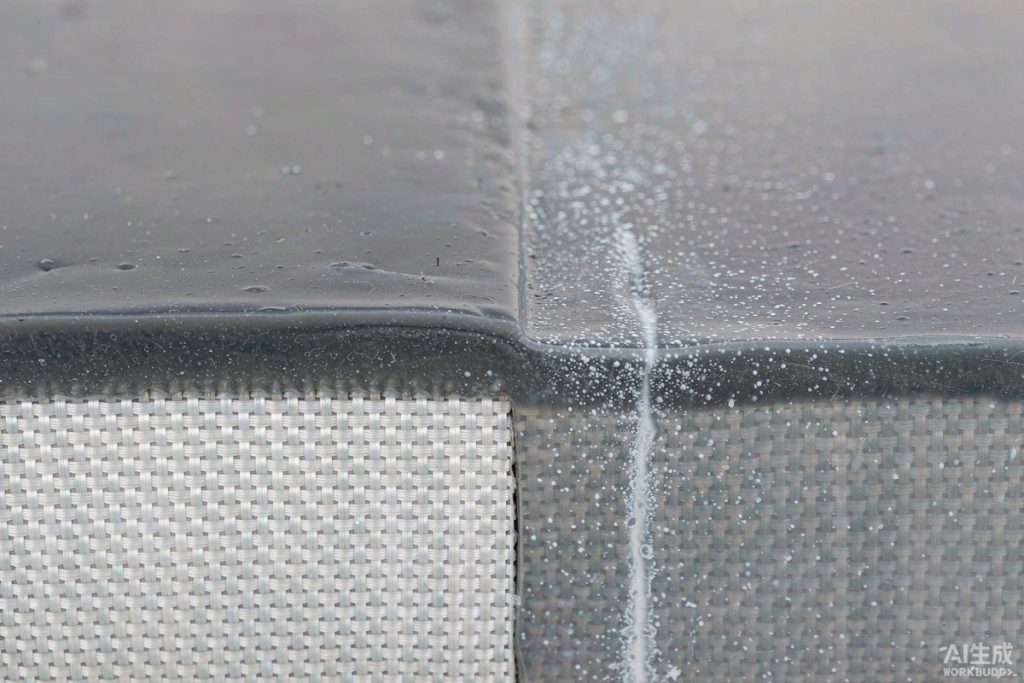
What causes plasticiser migration in PVC coated fabric?
Plasticiser migration in PVC coated fabric occurs when liquid plasticiser molecules slowly move within the PVC matrix and toward the surface, driven by concentration gradients, temperature cycling, and contact with absorbent materials. Over time this loss reduces coating flexibility, increases hardness, and can cause surface tackiness or bloom, ultimately shortening the usable life of tarpaulins and covers.
- Primary plasticisers: DOP/DOTP at 40-60 phr in PVC paste; DOTP lower migration rate than DOP — KB1 §7
- DOTP cost premium over DOP narrowed from 35-42% (2023) to 18-24% (2025) — KB1 §7
- Migration accelerated by service temperature -30 to +70 C; special systems to -40 C — KB1 §2.1
How does plasticiser volatilisation affect outdoor PVC fabric?
Plasticiser volatilisation in outdoor PVC fabric is the evaporative loss of lower-molecular-weight plasticiser molecules under UV heat and ambient temperature, causing progressive stiffening and eventual cracking under flex. Fabrics with higher-volatility plasticisers like DOP lose flexibility faster than those formulated with DOTP or polymeric plasticisers, especially in hot-climate exposed applications.
- DOTP (bis(2-ethylhexyl) terephthalate) lower volatility than DOP (DEHP) — KB1 §7
- Service temperature range -30 to +70 C; special low-temp systems to -40 C — KB1 §2.1
- UV heat accelerates volatilisation: combine with EN ISO 4892-2 ageing to assess — KB1 §2.2
What test methods verify plasticiser retention in PVC coatings?
Plasticiser retention is verified by accelerated ageing tests that measure mass loss, hardness change, and tensile retention after controlled heat and UV exposure. EN ISO 4892-2 xenon ageing and thermal ageing at elevated temperature are the primary methods, with results compared against unaged baseline samples to quantify plasticiser loss and flexibility change.
- EN ISO 4892-2 xenon arc: 2,000 h exposure per EN 15619 Annex A — KB1 §2.2
- Tensile retention and elongation change per ISO 1421 before/after ageing — KB1 §2.2
- Shore A hardness change indicates plasticiser loss; measure before and after — KB1 §2.1
Can DOTP replace DOP without changing fabric performance?
DOTP can replace DOP in most PVC coated fabric formulations without changing tensile strength, weldability, or fire performance, because both are primary plasticisers serving the same flexibilising function. DOTP offers lower migration and volatility, making it preferable for REACH-aligned and low-VOC applications, though raw material cost remains higher.
- DOTP vs DOP cost premium: 18-24% as of 2025, down from 35-42% in 2023 — KB1 §7
- REACH status: DOTP not classified as SVHC; DOP/DEHP restricted — KB1 §5
- Global non-phthalate plasticiser market: USD 5.87bn (2023), CAGR 6.2% (2024-2030) — KB1 §7
FAQ
What is plasticiser migration in PVC coated fabric?
Plasticiser migration is the slow diffusion of liquid plasticiser molecules within the PVC coating matrix toward the surface and into adjacent materials. It reduces coating flexibility over time, increases hardness, and can cause surface bloom or tackiness. Migration is accelerated by elevated temperature, UV exposure, and contact with absorbent substrates like foam or fabric linings.
How does plasticiser loss affect PVC fabric flexibility?
As plasticiser molecules leave the PVC matrix, the coating becomes harder and less flexible. This increases the risk of cracking under repeated flexing or folding, particularly at low temperatures. The fabric may also lose elongation capacity measured by ISO 1421, reducing its ability to absorb wind and impact loads without tearing.
What is the difference between DOP and DOTP plasticisers?
DOP (DEHP) is a traditional ortho-phthalate plasticiser with low cost but higher migration, volatility, and REACH restriction as an SVHC. DOTP (bis(2-ethylhexyl) terephthalate) is a terephthalate with lower migration rate, lower volatility, and no SVHC classification. DOTP costs approximately 18-24% more than DOP as of 2025, down from 35-42% in 2023.
How do I test for plasticiser volatilisation in PVC fabric?
Request EN ISO 4892-2 xenon arc ageing for 2,000 hours per EN 15619 Annex A, with tensile strength and elongation tested per ISO 1421 before and after ageing. Also request Shore A hardness measurement before and after. A significant increase in hardness or decrease in elongation indicates plasticiser volatilisation and flexibility loss.
Does plasticiser migration affect welding performance?
Plasticiser migration can affect welding performance if surface bloom changes the PVC surface chemistry at the weld interface. If a waxy or oily layer forms on the coating surface, RF, hot-air, or hot-wedge welding may produce weaker seams. Clean the surface with the recommended solvent before welding if bloom is visible, and verify seam peel strength per ISO 2411.
Are polymeric plasticisers better than monomeric ones for outdoor PVC?
Polymeric plasticisers have higher molecular weight and lower migration and volatility than monomeric plasticisers like DOP or DOTP, making them more durable for high-temperature outdoor applications. However, they may increase viscosity and complicate knife-coating processing. The selection depends on the coating process, performance target, and cost framework. Confirm with the supplier’s technical data sheet.
What REACH restrictions apply to plasticisers in PVC coated fabric?
REACH restricts DEHP (DOP), DBP, BBP, and DIBP in articles at concentrations above 0.1% by weight, with specific limits for childcare and consumer products. DOTP, DINP, and DIDP are not currently SVHC-listed for general industrial use. PVC coated fabric exported to the EU should verify plasticiser compliance through a REACH declaration or third-party test report.
Can plasticiser migration cause delamination in PVC coated fabric?
Yes, plasticiser migration can contribute to coating delamination if plasticiser loss at the scrim-coating interface reduces adhesion. The coating may separate from the polyester scrim under stress or flex, particularly in fabrics with inadequate coating adhesion verified per ISO 2411. Anti-wick yarn treatment and proper coating formulation help maintain adhesion over the service life.












