Introduction
Every year, industrial procurement teams waste tens of thousands of dollars on tarpaulin failures that could have been avoided with proper specification. A tarpaulin that delaminates after six months in a coastal environment, or one that burns through during a welding operation, is not just a product defect — it is a supply chain liability. This guide distills ten non-negotiable specifications that every OEM, ODM, and project manager must verify before signing a purchase order.
1. Base Fabric GSM and Weave Structure
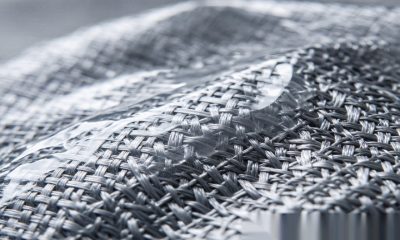
The base fabric — typically polyester or nylon — determines the tensile backbone of the finished tarpaulin. GSM (grams per square meter) is the industry shorthand for fabric weight, but GSM alone is incomplete. Two fabrics of the same GSM can behave very differently under load depending on whether they use a plain, twill, or leno weave, and whether the yarn is texturized or flat.
| Application | Recommended Base GSM | Weave Type | Yarn Specification |
|---|---|---|---|
| Truck side curtains | 600–680 gsm | Plain | 1000D × 1000D polyester |
| Cover tarpaulins (general) | 500–600 gsm | Plain | 750D × 750D polyester |
| Heavy-duty mining covers | 800–900 gsm | High-density plain | 1500D × 1500D polyester |
| Inflatable structures | 450–550 gsm | Twill | 500D × 500D nylon |
Specification tip: Always request both the finished tarpaulin GSM and the base fabric GSM. A 650 gsm tarpaulin with a 500 gsm base fabric and 150 gsm of top and bottom coating is structurally sound; a 650 gsm tarpaulin with a 400 gsm base fabric and 250 gsm of coating is coating-heavy and will delaminate under cyclic tension.
2. Coating Thickness and Uniformity
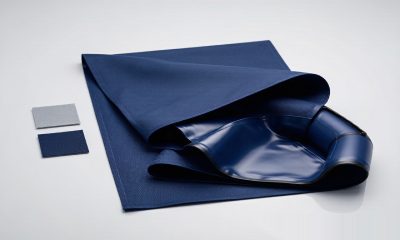
The coating — PVC plastisol, TPU, or PE — provides water resistance, UV protection, and chemical resistance. Coating thickness is measured in microns (µm) and must be uniform across the entire roll. Variations greater than ±10 µm on a 100 µm coating are a red flag because thin spots become failure initiation points.
Kezhibo uses an advanced knife-coating line with closed-loop feedback that maintains coating uniformity within ±5 µm across a 3-meter width. The company’s internal QA protocol requires 12 thickness measurements per 100-meter roll, taken at equal intervals across both machine and cross directions.
3. Tensile Strength and Tear Resistance
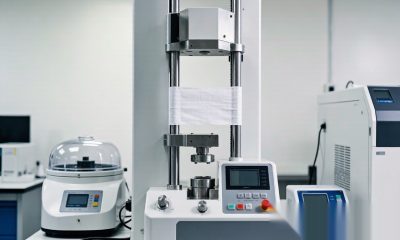
Tensile strength is measured per ASTM D751 and reported in pounds per inch (LPI). For industrial tarpaulins, minimum tensile strength should be no less than:
- 220 LPI × 200 LPI (warp × weft) for general-purpose covers
- 350 LPI × 300 LPI for truck curtains and side panels
- 500 LPI × 450 LPI for heavy-duty mining and agricultural applications
Tear resistance (ASTM D2261, Trapezoid method) is equally critical because tears propagate rapidly under stress. A tarpaulin with 15 lbf tear resistance in the warp direction is considered minimum for outdoor use; 25 lbf or higher is preferred for high-wind environments.
4. Seam Strength
The seam is almost always the weakest point in any fabricated tarpaulin. Heat-sealed seams, radio-frequency (RF) welded seams, and glued seams each have different strength profiles. RF welding is the gold standard for PVC tarpaulins because it fuses the coating layers at a molecular level, typically yielding seam strength equal to 85–95% of the base fabric tensile. Glued seams rarely exceed 60% of base fabric strength, and are temperature-sensitive below -10 °C or above 60 °C.
When ordering, ask for a seam pull test report showing residual strength after 500 hours of UV exposure per ASTM G154. A supplier that cannot provide this data is not a qualified industrial partner.
5. Water Penetration Resistance
Hydrostatic pressure resistance (ASTM D3890) measures how much water pressure the tarpaulin can withstand before leaking. For industrial covers, a minimum of 2000 mm H₂O is standard; for marine and water tank applications, 5000 mm H₂O or higher is required.
Safety note: Tarpaulins used to cover hazardous material stockpiles must maintain water resistance even after contact with the stored chemicals. Always verify chemical compatibility before specifying.
6. UV Stability and Weathering Rating
UV degradation causes PVC to become brittle and lose tensile strength over time. Accelerated weathering tests (ASTM G154, 2000 hours) should show less than 15% tensile strength retention loss. Field exposure data is even more valuable — Kezhibo maintains a 5-year outdoor exposure rack in Guangzhou that provides real-world validation of every UV stabilizer package used.
7. Flame Retardancy Classification
Depending on your end-use market, you may need compliance with different flame standards:
- United States: NFPA 701 (small and large scale test), FMVSS 302 for automotive
- European Union: EN 13501-1 (Class B-s1-d0 minimum for industrial interiors)
- International marine: SOLAS Chapter II-2, MSC 61(67)
A non-flame-retardant tarpaulin can be upgraded to a Class B rating by incorporating flame retardant additives into the PVC coating formulation — but this typically adds 8–12% to material cost.
8. Chemical Compatibility
PVC coated fabrics resist most acids, alkalis, and petroleum products, but are vulnerable to certain solvents (MEK, acetone) and plasticizer extraction by continuous contact with aromatic hydrocarbons. For chemical storage covers, always provide the supplier with a complete list of chemicals the tarpaulin will encounter — including cleaning agents that may be used during maintenance.
9. Low-Temperature Flexibility
Cold environments make PVC brittle. A standard general-purpose tarpaulin may crack at -5 °C, while a formulation with an optimized plasticizer package (DOS or DINP combined with a co-plasticizer) can remain flexible down to -30 °C. Specify the lowest expected service temperature and request a cold-crack test per ASTM D2136.
10. Certification and Traceability
For regulated industries (medical, food contact, aerospace), full material traceability is mandatory. Verify that your supplier provides:
- Batch-level test reports (certificate of analysis) for every shipment
- REACH SVHC declaration (current list, updated twice annually)
- RoHS compliance statement
- ISO 9001:2015 quality management documentation
Sustainability Considerations
Modern PVC tarpaulins are increasingly specified with recycled content — typically 15–30% recycled PVC powder mixed with virgin resin, without sacrificing performance. Kezhibo’s green product line incorporates post-consumer PVC recovered from agricultural film, diverting thousands of tons from landfills annually. TPU coatings are also recyclable through specialized chemical depolymerization processes available in Europe and parts of Asia.
CTA: Partner with Kezhibo for Custom-Engineered Tarpaulins
Kezhibo specializes in OEM and ODM tarpaulin manufacturing, with in-house coating lines, RF welding facilities, and a full quality lab. If you have a custom application that requires a tailored formulation — whether an ultra-thick mining cover, a low-temperature military shelter material, or a food-contact compliant membrane — share your specifications with our engineering team. We will provide a formal quotation within 48 hours, backed by third-party test data and material traceability.
Learn more about our industrial tarpaulin product line: PVC Tarpaulin Covers