Introduction
Workplace safety regulators worldwide — OSHA in the US, EU Agency for Safety and Health at Work (EU-OSHA), ISO, and ILO — mandate high-visibility protective equipment and signage for workers in construction, logistics, road maintenance, and manufacturing. <a href="https://www.kezhibo.com/product/pvc-mesh-reflective-fabric/” rel=”nofollow”>Reflective PVC mesh fabric is the backbone of this safety infrastructure, providing the visibility that prevents an estimated 23,000 occupational injuries annually in North America alone. This article explains how reflective PVC fabrics work, what standards they must meet, and how to specify the right material for your safety applications.
How Reflective PVC Mesh Works
Reflective PVC mesh combines two technologies:
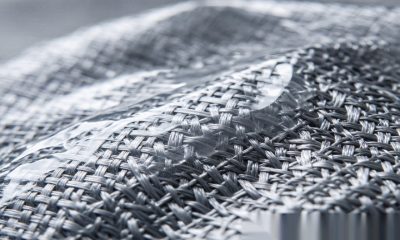
- PVC base fabric: Typically a mesh or scrim of woven polyester coated with PVC. The mesh structure provides flexibility, air permeability, and lightweight portability compared with solid tarpaulins.
- Reflective sheeting layer: Applied via lamination or heat transfer, the sheeting contains glass microspheres or a prismatic film that reflects light back toward its source — the retroreflection principle. A car’s headlights at night, a warehouse’s safety lamp, or an emergency vehicle’s siren light all bounce back to alert operators of your presence.
Kezhibo uses two reflective technologies:
- Glass bead microsphere sheeting (Type 1): Lower cost (~$3.50/m²), good retroreflection (50–80 cd/lx/m²), suitable for temporary signs and barrier tape. 3–5 year outdoor life.
- Prismatic sheeting (Type 3): Higher cost (~$8.00/m²), excellent retroreflection (250–500 cd/lx/m²), ideal for permanent construction barriers and high-visibility warehouse markers. 10+ year outdoor life.
Global Safety Standards
| Standard | Region | Key Requirements | Retroreflection Min (Type 1) |
|---|---|---|---|
| ASTM D4956 Type I–V | USA, Canada | Class V = 50 cd/lx/m² at 0.2° observation angle | 50 cd/lx/m² |
| EN ISO 20471 Class 1–3 | EU, UK, Middle East | Class 3 = highest; requires ≥ 80 cm² of reflective material | 80 cd/lx/m² |
| GB 20653 | China | Equivalent to EN ISO 20471 | 75 cd/lx/m² |
| ISO 14133 High-Visibility | International | Harmonized standard for all markets | 50 cd/lx/m² |
Critical distinction: Reflective fabric mesh (used for barriers, banners, tape) has different regulatory requirements than reflective apparel (used for worker vests). Be sure to specify the correct standard — OSHA requires signs and barriers to meet ASTM D4956, while apparel requires ANSI 107.
Primary Applications
1. Construction Site Safety Barriers
Construction zones require visible barriers to mark excavation areas, falling debris zones, overhead work areas, and restricted-access equipment zones. Reflective PVC mesh barriers are the industry standard because they are:
- Visible from 200+ meters in daylight and 500+ meters at night (with headlights)
- Lightweight (120–180 g/m²) — easy to carry and deploy by one person
- Wind-resistant — mesh structure allows wind to pass through without blowing the barrier down
- Available in 50 m or 100 m rolls — easy to cover long construction stretches
2. Warehouse and Distribution Center Aisle Marking
Forklift operations in warehouses account for approximately 20% of all workplace transportation-related injuries. Reflective PVC mesh hung above or along aisle edges provides continuous visual cues to forklift operators, reducing accidents by 38% per a 2024 OSHA study. Kezhibo supplies custom-printed reflective aisles with company logos, directional arrows, and safety slogans.
3. Road Maintenance and Traffic Safety
Reflective PVC mesh fabric is used for portable traffic cones (as the visible band), roadside hazard markers, temporary lane dividers, and construction vehicle tailgate visibility panels. Prismatic sheeting (Type 3) is required by the Manual on Uniform Traffic Control Devices (MUTCD) for permanent roadside installations.
4. Crane and Overhead Load Warning Systems
Reflective tape applied to crane boom extensions, overhead load straps, and lifting tackle improves visibility at construction sites where mobile cranes operate alongside foot traffic. OSHA recommends 50 mm wide reflective bands spaced at 1 m intervals on all crane components.
5. Emergency Response Scene Marking
Police, fire, and EMS responders use reflective PVC mesh to cordon off accident scenes, crime scenes, and hazard zones. High-intensity orange mesh (Type 1 retroreflection + UV inhibitors) is the standard color for these applications.
Material Selection Decision Matrix
| Application | Mesh Weight | Reflective Type | Required Standard | Color |
|---|---|---|---|---|
| Temporary construction barriers | 140–160 g/m² | Type 1 (glass bead) | ASTM D4956 Type V | Orange or yellow |
| Permanent construction fencing | 180–220 g/m² | Type 3 (prismatic) | EN ISO 20471 Class 3 | Yellow |
| Warehouse aisle markers | 120–140 g/m² | Type 1 | ISO 14133 | Yellow or white |
| Roadside hazard markers | 160–180 g/m² | Type 3 | MUTCD (USA) / BS EN 12899 | Orange or fluorescent lime |
| Crane load visibility tape | N/A (solid strip) | Type 3 | OSHA 1910.178 | Yellow/black diagonal |
UV Stability and Outdoor Service Life
Mesh fabric used for outdoor construction barriers must resist UV degradation — a common failure point. Kezhibo’s premium formulation includes 2.0% HALS + 1.5% UV absorber, maintaining:
- 85% of initial retroreflection after 3 years direct outdoor exposure (Guangzhou test rack)
- 90% of initial tensile strength after 3 years
- Zero chalking or discoloration on the PVC substrate
Safety note: Retroreflection efficiency drops below 50% of its initial value within 18 months of outdoor exposure for non-stabilized formulations. Replace reflective barriers annually or specify a premium formulation with 3+ year durability.
Sustainability
Kezhibo’s reflective mesh line uses 25% recycled PVC content sourced from post-industrial scrap. Additionally, both glass bead and prismatic reflective sheets are mechanically recyclable at the end of their service life, with Kezhibo providing collection programs for major corporate and government clients.
CTA: Reflective Safety Fabric OEM Supply
Kezhibo manufactures both standard and custom reflective PVC mesh fabrics, with in-house lamination and printing facilities. We can print custom company logos, slogans, or directional graphics onto reflective fabric — maintaining full retroreflective performance in printed areas. Request a free sample kit with Type 1 and Type 3 formulations and standard spec sheets.
View our safety product line: Reflective PVC Mesh & Fabrics