Water-activated concrete blanket is replacing poured concrete — and PVC geomembrane is its natural partner
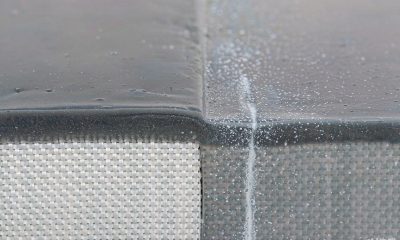
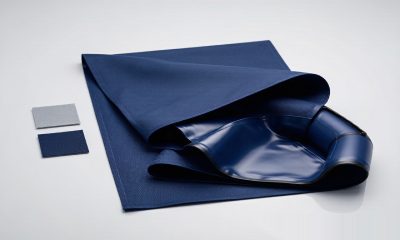
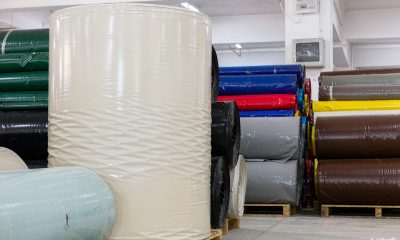
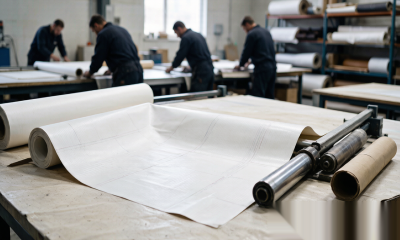
On 4 November 2026, a Chinese industrial supply portal listed a flexible concrete protection mat that arrives as a roll and hardens after watering, reaching most of its strength within 24 hours. The product — variously called concrete blanket or concrete cloth — is a three-dimensional fibre skeleton filled with dry cement powder. It is not a PVC-coated fabric. The point where the two materials meet is in slope protection: a PVC geomembrane underneath blocks seepage, a cement blanket on top resists scour, and together they form a two-layer anti-seepage and protection system. That combination has become noticeably more common this year in irrigation channels, fish-pond banks and solar-farm slopes.
Reading the specification: thickness, weight, width
Suppliers quote thicknesses from 6 mm to 12 mm and standard widths of 1–4 m, with roll length cut to suit the job. Weight per square metre is the usual selection handle: 10 kg, 17 kg and 18 kg grades are listed around RMB 12 per square metre, varying with specification and volume. The decision rule is flow volume and velocity. A 6 or 8 mm light grade suits ordinary drainage ditches and green slopes; 8 or 10 mm suits pond banks and permanently flowing channels; main riverbanks, steep drops and temporary vehicle access call for 10 or 12 mm heavy grades. Solar sites add a UV requirement — an 18 kg Yunnan product is explicitly advertised as UV-resistant.
- Curing: initial set occurs shortly after watering, with roughly 80% of design strength at 24 hours; cold or windy conditions require adjusted water volume and curing.
- Installation: no mixing, formwork or vibration — the roll is unrolled by hand, which suits mountainous slopes where machinery cannot reach.
- Claimed savings: suppliers cite 60–70% shorter programmes, 95% less material and over 50% less labour. These are vendor figures and should be checked on a trial section.
- Seams: panel overlaps follow the maker’s instructions; corners and irregular slopes can be covered by cutting the roll to shape.
Why a membrane underneath is not optional
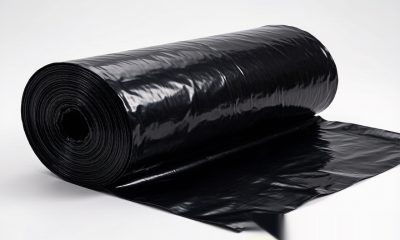
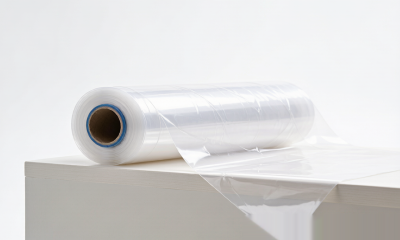
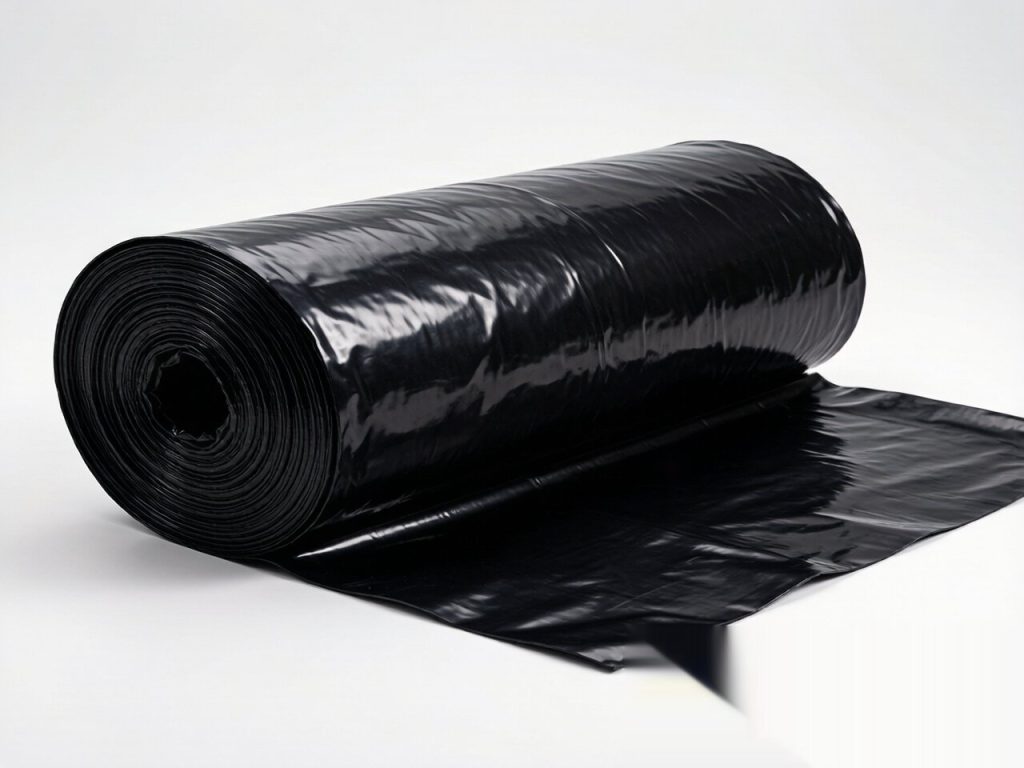
A concrete blanket solves surface scour, not deep seepage. In channels and ponds, water passing beneath the mat softens the subgrade and the whole structure loses stability. Published product descriptions therefore specify a PVC or HDPE geomembrane below to form a double barrier: the membrane delivers near-zero permeability, the mat delivers scour and freeze-thaw resistance. Product literature puts service life in the 15–20 year range and requires sharp stones to be removed before laying so the membrane is not punctured. For buyers this means two separate acceptance regimes — air or vacuum testing of membrane welds, and thickness/strength sampling of the cured blanket.
How it differs from geotextile tubes
Another option in the same protection family is the geotextile tube: high-water-content slurry is pumped into a sewn tube, water passes through the fabric’s equivalent opening while particles are retained, and gravity dewatering consolidates the fill. Tubes suit dredging, tailings sludge and cofferdams, are typically woven PP or polyester with nominal tensile strength of 7,000–30,000 N/m, have no connection to PVC, and do not provide anti-seepage. A cell that must hold water still needs a membrane. The dividing line is straightforward: permanent hardened surface points to a concrete blanket; sludge volume reduction or a cofferdam points to a tube; zero leakage points to a membrane. Projects often use all three.
Market direction
Urban black-odour water remediation, irrigation district upgrades and solar-site slope protection are all expanding in 2026, benefiting fast-install flexible mats that generate little construction waste. One caution: concrete blankets remain largely supplier-driven, and the standards framework is less mature than for geomembranes. Ask for third-party test reports rather than relying on a “national standard engineering grade” phrase on a product page.
Sources
https://www.jdzj.com/jiage/5_38484077.html | https://biz.co188.com/content_product_64017858.html | https://wap.huangye88.com/item/a04695dvg72880.html | https://b2b.baidu.com/land/b46d024f423afefdde720fcdb97f564a
FAQ
Is a concrete blanket made of PVC?
No. The blanket is a 3D fibre network holding dry cement powder, hardened by hydration. PVC appears as the underlying anti-seepage membrane in a composite build-up; the two should not be conflated.
Can it carry flowing water after 24 hours?
About 80% of design strength at 24 hours is a vendor claim, not full cure. Permanently flowing or high-velocity channels need the maker’s extended curing guidance and a trial section to verify scour resistance.
Concrete blanket or geotextile tube?
Choose a blanket for a permanent hardened, scour-resistant face; a tube for sludge dewatering, cofferdams or temporary protection. Where zero leakage is required, both need a membrane underneath.