
Roofing Membranes
Roofing membranes in the coated-fabric family are reinforced polymer sheets for flat and low-slope roofs, tensile roof structures, and protective roof covers. The reinforced construction — polyester base fabric with coated faces — gives these membranes a working advantage on spans and movements that rigid sheets handle poorly: they flex with thermal cycles, weld into seamless fields, and can span between supports in tensile roof designs.
Key Selection Angles
Exposure class — fully exposed membranes need top-tier UV and heat-aging packages; covered systems (under green roofs, ballast, or finishes) can weight puncture resistance and root behaviour instead.
Seam strategy — welded seams are the system’s strength; confirm the membrane welds with the equipment your crew runs and that details (upstands, drains, penetrations) are pre-planned.
Movement accommodation — elongation and tear values predict how the membrane handles substrate joints and thermal cycling.
Fire requirements — roofing is regulated; match the membrane’s certified class to the project’s code references.
Practical Notes from the Field
Most roofing membrane problems trace to three avoidable causes: substrate preparation shortcuts, detail work rushed at penetrations, and material chosen on price without checking weld compatibility. A specification that addresses all three — smooth substrate, dedicated detail material, verified weld parameters — outperforms a thicker membrane applied carelessly.
Kezhibo supplies reinforced roofing membrane fabrics produced on knife-coating lines, with climate-tuned UV packages and FR-certified options through our custom manufacturing services. ISO 9001 certified production and export logistics across European and Asian markets support both distributors and contracting firms. Share the roof build-up, exposure, and local code references; we will propose a membrane specification with datasheets and samples.
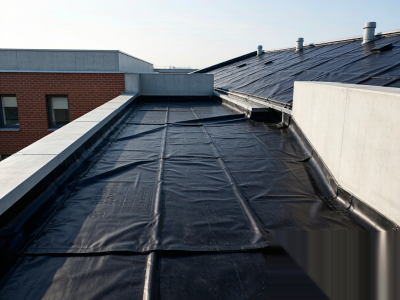
PVC roof waterproofing membrane
Durable, flexible, and reliable waterproofing solution for flat roofs and low-slope structures.