TL;DR
On 28 October 2026, Visqueen launched its Ultimate Self Adhesive Membrane — the first BBA-certified self-adhesive tanking system engineered specifically for hydrocarbon and VOC-contaminated brownfield sites. Unlike conventional gas barriers that only address radon or methane, this multi-threat membrane combines groundwater resistance, hazardous gas protection, hydrocarbon containment, and VOC ingress prevention into a single 1.5m × 15m roll, streamlining specification for UK construction teams racing to deliver on tight brownfield housing targets.
What Is the Visqueen Ultimate Self Adhesive Membrane and Why Does It Matter for 2026?
Land scarcity in the UK is accelerating brownfield development — the government’s 2025 Land Value Tax reform further incentivises bringing previously contaminated sites back into productive use. But these sites carry legacy pollution: disused industrial plots often contain residual hydrocarbons from fuel storage, volatile organic compounds (VOCs) from chemical processing, and hazardous ground gases including radon, methane, and carbon dioxide (NBS, Oct 2026).
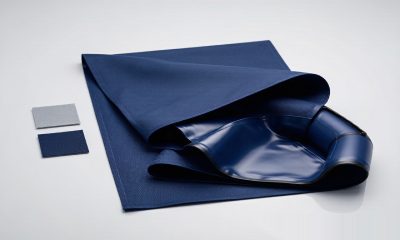
Visqueen’s new membrane answers this with a dual-performance solution. As the latest addition to their non-foil gas barrier range, it integrates a cross-laminated HDPE protective film with a polymer-modified bitumen adhesive layer — delivering both structural waterproofing and chemical resistance in one product. For specifiers, this means moving from a multi-layer specification (separate gas barrier + tanking + primer) to a simplified two-component system: the membrane itself plus Visqueen Liquid Gas Membrane primer.
| Specification | Performance | Standard |
|---|---|---|
| Barrier Type | Type A (Tanking Membrane) | BS 8102:2022 |
| VOC Resistance | Prevents ingress of harmful VOCs | BS 8485:2015 + A1:2019 |
| Gas Protection | Radon, methane, CO₂ barrier | BR 211:2015 |
| Hydrocarbon Resistance | Heat-welded laps required | Visqueen internal certification |
| Installation Method | Self-adhesive + heat-welded seams | BBA 15/5208 |
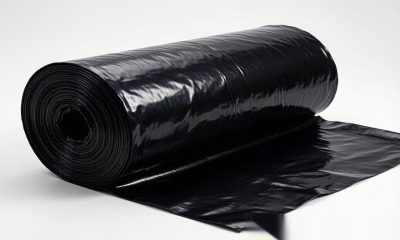
| Roll Dimensions | 1.5m × 15m (22.5 m² per roll) | Visqueen product spec |
For industrial membrane suppliers and PVC roof waterproofing membrane specifiers, this product represents a significant category expansion. While traditional PVC geomembranes excel at large-scale containment, the Visqueen product targets a different market segment: below-ground building protection where both waterproofing and chemical barrier performance are non-negotiable.
How Does It Compare to Traditional Gas Barriers and Tanking Systems?
Conventional approach: projects on contaminated ground typically specify three separate layers: (1) a low-permeability gas barrier membrane, (2) a tanking membrane for structural waterproofing, and (3) jointing tapes or primers for lap sealing. Each layer carries its own material cost, labour cost, and quality control risk.
The Visqueen Ultimate Self Adhesive Membrane consolidates these functions. Here’s how it stacks up:
- Coverage Efficiency: At 1.5m width versus typical 1.2m standard tanking membranes, the roll covers 25% more ground per pass, reducing on-site joints by approximately 20% for equivalent coverage.
- Installation Speed: Self-adhesive backing eliminates the need for bonding agents — installers simply peel and stick, then heat-weld the laps for hydrocarbon-grade protection. Visqueen’s installation guide suggests a 30-40% faster application rate compared to torch-on or loose-laid alternatives.
- Substrate Compatibility: The membrane adheres directly to concrete, flush-pointed blockwork, flush-pointed brickwork, weather-defence sheathing boards, and steelwork — both vertically and horizontally. No separate priming required on most substrates when used with Visqueen Liquid Gas Membrane.
What Certification and Regulatory Standards Apply?
The membrane carries three key third-party approvals that matter for specifiers and building control:
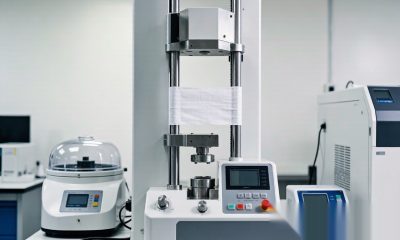
- BBA Agrément Certificate 15/5208 — The British Board of Agrément has certified the membrane for its intended use as a combined gas barrier and waterproof tanking system. This is the gold standard for UK construction product certification, requiring rigorous field testing and ongoing surveillance audits.
- BS 8102:2022 Type A Barrier Membrane — Classified as a positive-side barrier membrane, the highest performance category below ground.
- BS 8485:2015 + A1:2019 Conformance — Meets the latest specification for ground gas protection membranes, which now explicitly calls out VOC resistance as a required performance characteristic in Annex A1.
“As brownfield development accelerates, the supply gap for high-performance barrier systems becomes acute,” notes the NBS technical analysis of the launch. “Specifiers need solutions that address multiple contaminants without compromising installation speed or long-term durability.” This is precisely where products like PVC geomembrane for containment and Visqueen’s building-focused barrier can complement each other — one for large-scale environmental containment, the other for precision architectural waterproofing on contaminated land.
What Are the Practical Implications for Construction Teams?
Three practical takeaways emerge from Visqueen’s product launch:
1. Single-source specification is now viable. Instead of coordinating with multiple suppliers for gas barriers, tanking, and primers, specifiers can now address all contaminated-ground requirements through one product family. This simplifies tender processes and reduces contractual interfaces.
2. Heat-welding becomes a critical skill investment. While the self-adhesive layer handles general installation, hydrocarbon resistance specifically requires heat-welded laps. This means groundworkers and waterproofing contractors may need additional training or certification to deploy the full performance envelope of the membrane.
3. Brownfield viability improves incrementally. Every square metre of contaminated ground that can now be developed with a lower-specification barrier is a win for housing density targets. Visqueen’s membrane doesn’t solve the remediation problem, but it reduces the incremental cost of building on remediated sites.
Sources & Verification
- NBS Knowledge: Visqueen launches Ultimate Self Adhesive Membrane (28 Oct 2026)
- BBA Certification: BBA 15/5208 PS1 Issue 5
- Visqueen BAF Certificate: Visqueen Ultimate GeoSeal BAF-18-056-P-A-UK
- British Standards: BS 8102:2022 (Tanking), BS 8485:2015+A1:2019 (Ground Gas), BR 211:2015