
# PVC Coated Fabric Dimensional Stability and Thermal Shrinkage: EN 15977 and Verification Methods
## What Is Dimensional Stability in PVC Coated Fabric and Why Does It Matter?
**Dimensional stability in PVC coated fabric refers to the material’s ability to maintain its original width, length, and flatness under temperature changes and mechanical tension. PVC coated polyester fabric serves within a range of minus thirty to plus seventy degrees Celsius, and dimensional change at elevated processing temperatures is permanent.**
– Service temperature range: -30 to +70 degrees Celsius (general PVC coated fabric, KB Chapter 2.1)
– Dimensional stability standard: EN 15977 (KB Chapter 2.2)
– Irreversible shrinkage occurs when processing temperatures exceed the PVC softening point
## How Is Thermal Shrinkage Tested and What Standards Apply?
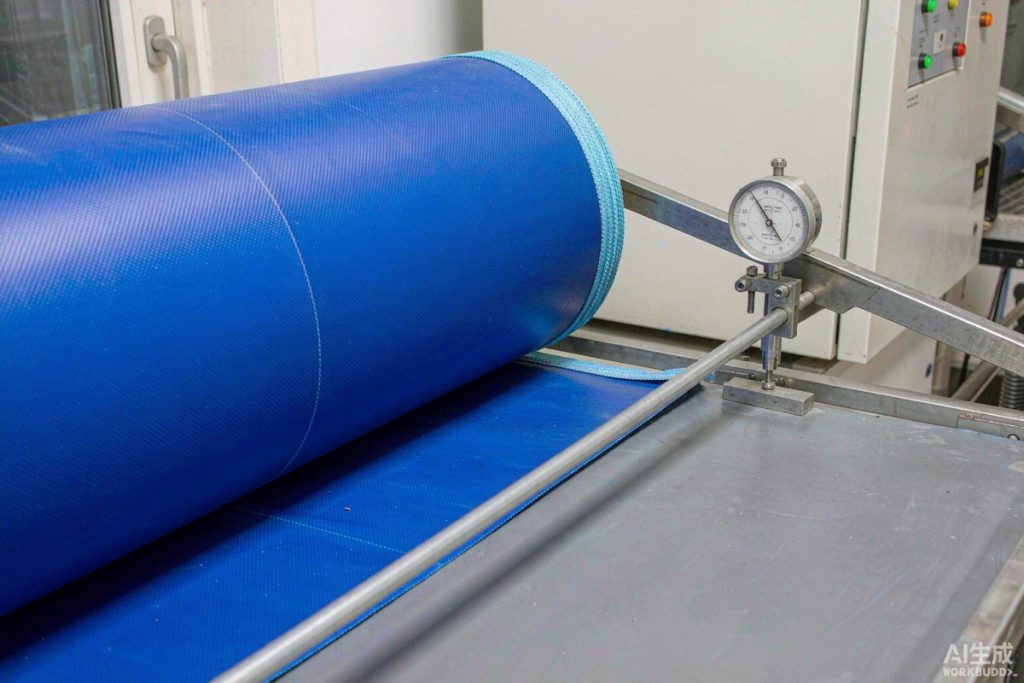
**Thermal shrinkage testing subjects PVC coated fabric specimens to a defined elevated temperature, then measures dimensional change in warp and weft as a percentage of the original gauge length. The relevant standard is EN 15977, and EN ISO 2286-2 provides supplementary width measurement before and after conditioning.**
– Primary test standard: EN 15977 (dimensional stability, KB Chapter 2.2)
– Supporting measurement: EN ISO 2286-2 (mass per unit area and width, KB Chapter 2.2)
– Result: linear shrinkage percentage in warp and weft directions
## What Shrinkage Values Are Acceptable for Different Applications?
**Acceptable shrinkage limits depend on the end use: precision applications such as architectural membrane roofs and printed truck side curtains demand tighter tolerances because minor width loss distorts panel alignment. The knowledge base does not publish a universal shrinkage threshold; buyers should require the tested value per EN 15977.**
– Architectural membrane: tight tolerances, 1000-1600 gsm grade (KB Chapter 3.1)
– Truck side curtain: EN 12641-2 mechanical minimums at -25 degrees Celsius (KB Chapter 2.1)
– General tarpaulin: moderate tolerance acceptable, 550-900 gsm (KB Chapter 3.2)
## How Does Shrinkage Affect Welding and Fabrication Quality?
**When PVC coated fabric shrinks after cutting, panel dimensions no longer match the nesting layout, and welded seams planned with a specific overlap may be too narrow for full-strength bonding. The geomembrane weld overlap is one hundred to one hundred fifty millimetres, and small shrinkage per metre can reduce the bonded area.**
– Geomembrane weld overlap: 100-150 mm (KB Chapter 3.4)
– Welding methods: hot-air, hot-wedge, RF, solvent; extrusion not recommended for PVC (KB Chapter 3.4)
– RF welding: dimensional distortion causes inconsistent energy delivery and weak seams
## How Can Buyers Verify Dimensional Stability Before Placing a Bulk Order?
**Buyers should request a dimensional stability test report citing EN 15977 alongside the fabric specification sheet, and for critical applications should commission a witness test on a production lot sample. The report should record conditioning temperature, dwell time, and measured shrinkage in both warp and weft as a percentage.**
– Request EN 15977 test report from supplier (KB Chapter 2.2)
– Verify with fabrication trial using actual welding equipment (KB Chapter 4, step 6)
– Cross-check with EN ISO 2286-2 width measurement before and after conditioning
## FAQ
**Q: What is the standard test for PVC coated fabric dimensional stability?**
A: EN 15977 is the standard test method for evaluating dimensional stability of PVC coated fabric under thermal conditioning. It measures the linear shrinkage or growth in warp and weft directions after exposure to a defined elevated temperature, providing a quantitative percentage that buyers can compare against their fabrication tolerances. The test should be performed on conditioned specimens using standard atmospheric conditions, and the reported value should include both the conditioning parameters and the measured dimensional change in each direction. EN ISO 2286-2 provides supplementary width measurement data.
**Q: How much shrinkage is normal for PVC coated fabric?**
A: The knowledge base does not publish a single universal shrinkage threshold for all PVC coated fabric product lines, because acceptable dimensional change depends on the end application and its fabrication requirements. Precision applications such as architectural membrane roofs and printed truck side curtains require tighter dimensional control than general-purpose tarpaulins. Buyers should obtain the actual EN 15977 tested value from the supplier and compare it against the dimensional tolerances specified in their fabrication drawings, rather than relying on a generic industry rule of thumb.
**Q: Does PVC coated fabric shrink in cold weather?**
A: PVC coated fabric is designed for a service temperature range of minus thirty to plus seventy degrees Celsius, and dimensional stability testing per EN 15977 primarily evaluates behaviour at elevated temperatures rather than cold-weather shrinkage. At low temperatures, the more critical concern is flexibility and crack resistance rather than dimensional change. EN 12641-2 for truck side curtains specifies mechanical performance at minus twenty-five degrees Celsius, requiring tensile strength of at least 2700 N/5cm and tear of at least 130 N, which indirectly confirms dimensional and mechanical stability in cold conditions.
**Q: Can thermal shrinkage cause welding defects?**
A: Yes. When PVC coated fabric shrinks after cutting, the planned weld overlap may be reduced below the specified width. For geomembrane applications the overlap is typically one hundred to one hundred fifty millimetres, and even a small percentage of shrinkage per metre can narrow the effective bonded area. Additionally, dimensional distortion causes the fabric to lift off the welding bed during high-frequency welding, resulting in inconsistent energy delivery and potentially weak or incomplete seams. A dimensional stability test report should be reviewed before commencing fabrication.
**Q: What is the difference between dimensional stability and thermal shrinkage?**
A: Dimensional stability is the broader property describing a fabric’s ability to maintain its original dimensions under all environmental and processing conditions, including temperature changes, mechanical tension, and humidity. Thermal shrinkage is a specific component of dimensional stability, measuring the irreversible linear change that occurs when the material is heated above a threshold temperature. EN 15977 evaluates overall dimensional stability, with thermal conditioning being a primary test condition because elevated temperature is the most common cause of dimensional change in PVC coated fabric.
**Q: How does dimensional stability affect printed truck side curtains?**
A: Printed truck side curtains require precise panel dimensions because the printed graphics must align with the panel edges, and any shrinkage distorts the visual layout. European truck side curtains are typically 880 to 1100 gsm with 1000-1300D polyester scrim in 18×18 to 30×30 weave, and they must comply with EN 12641-2. If the fabric shrinks after printing or welding, the curtain may not fit the trailer frame correctly, and the printed image may appear stretched or compressed. A dimensional stability test report should be obtained before production.
**Q: Is EN 15977 the only standard for dimensional stability?**
A: EN 15977 is the primary standard specifically referenced for dimensional stability of PVC coated fabric in the project knowledge base. However, dimensional verification also involves EN ISO 2286-2 for mass per unit area and width measurement, which can be used before and after thermal conditioning to provide supplementary data. For specific product lines such as architectural membrane or geomembrane, additional application standards may impose their own dimensional requirements that complement the general EN 15977 test.
**Q: Should I re-test dimensional stability after long-term storage?**
A: PVC coated fabric roll storage guidelines specify a temperature range of ten to thirty-five degrees Celsius and relative humidity below seventy percent, with a shelf life of twelve to twenty-four months. After extended storage, particularly if conditions have exceeded these limits, the fabric may experience dimensional changes that affect welding and fabrication performance. Re-testing should include tensile, peel, and Shore A hardness measurements in addition to dimensional stability, based on whether the storage conditions were maintained within the specified range throughout the storage period.
## FAQ (ZH)
**问:PVC涂层布尺寸稳定性的测试标准是什么?**
答:EN 15977是评估PVC涂层布在热条件下尺寸稳定性的标准测试方法。它测量经向和纬向在暴露于规定高温后的线性收缩或伸长率,提供定量百分比供买家与制造公差比对。测试应在标准大气条件下对处理过的样品进行,报告值应包括处理参数和各方向的测量尺寸变化。EN ISO 2286-2提供补充幅宽测量数据,两者配合使用可获得完整的尺寸验证。
**问:PVC涂层布的正常收缩率是多少?**
答:知识库未发布适用于所有PVC涂层布产品线的通用收缩率阈值,因为可接受的尺寸变化取决于终端用途及其加工要求。拉伸膜结构和印刷卡车侧帘等精密应用对尺寸控制的要求比普通篷布更严格。买家应从供应商处获取实际EN 15977测试值,并与加工图纸中规定的尺寸公差进行比对,而非依赖通用的行业经验值。
**问:PVC涂层布在寒冷天气会收缩吗?**
答:PVC涂层布的设计使用温度范围为零下三十至零上七十摄氏度,EN 15977尺寸稳定性测试主要评估高温下的表现而非寒冷天气的收缩。在低温下,更关键的问题是柔韧性和抗裂性而非尺寸变化。卡车侧帘标准EN 12641-2规定零下二十五摄氏度下的力学性能,要求拉伸强度不低于2700 N/5cm、撕裂不低于130 N,间接确认了在寒冷条件下的尺寸和力学稳定性。
**问:热收缩会导致焊接缺陷吗?**
答:会。当PVC涂层布裁切后发生收缩,计划的焊接搭接宽度可能减小到规定值以下。土工膜应用的搭接通常为一百至一百五十毫米,每米即使很小的收缩百分比都会缩小有效粘合面积。此外,尺寸变形会导致材料在高频焊接台上翘起,造成能量传递不一致,可能产生弱焊或不完整焊缝。在开始加工前应审查尺寸稳定性测试报告。
**问:尺寸稳定性和热收缩有什么区别?**
答:尺寸稳定性是更广泛的概念,描述织物在所有环境和加工条件下保持原始尺寸的能力,包括温度变化、机械张力和湿度。热收缩是尺寸稳定性的一个特定组成部分,测量材料被加热到阈值温度以上时发生的不可逆线性变化。EN 15977评估整体尺寸稳定性,热处理是主要测试条件,因为高温是PVC涂层布尺寸变化的最常见原因。
**问:尺寸稳定性如何影响印刷卡车侧帘?**
答:印刷卡车侧帘要求精确的面板尺寸,因为印刷图形必须与面板边缘对齐,任何收缩都会扭曲视觉布局。欧洲卡车侧帘通常为880至1100 gsm、1000-1300D涤纶基布、18×18至30×30组织,须符合EN 12641-2。如果面料在印刷或焊接后收缩,侧帘可能无法正确安装在挂车框架上,印刷图像可能显得拉伸或压缩。生产前应获取尺寸稳定性测试报告。
**问:EN 15977是尺寸稳定性的唯一标准吗?**
答:EN 15977是项目知识库中专门引用的PVC涂层布尺寸稳定性主要标准。但尺寸验证还涉及EN ISO 2286-2,用于单位面积质量和幅宽测量,可在热处理前后使用以提供补充数据。对于拉伸膜或土工膜等特定产品线,额外的应用标准可能有自己的尺寸要求,与EN 15977通用测试互为补充。
**问:长期储存后需要重新测试尺寸稳定性吗?**
答:PVC涂层布卷材储存指南规定温度为十至三十五摄氏度、相对湿度低于百分之七十、保质期十二至二十四个月。长期储存后,特别是条件超出规定范围时,面料可能发生尺寸变化影响焊接和加工性能。重新测试应包括拉伸、剥离和Shore A硬度测量以及尺寸稳定性,具体取决于储存条件是否始终保持在规定范围内。












