# PVC Coated Fabric Weld Seam Strength Testing: ISO 1421, ISO 2411 and Joint Verification Methods
## What Is Weld Seam Strength and Why Is It Critical for PVC Coated Fabric?
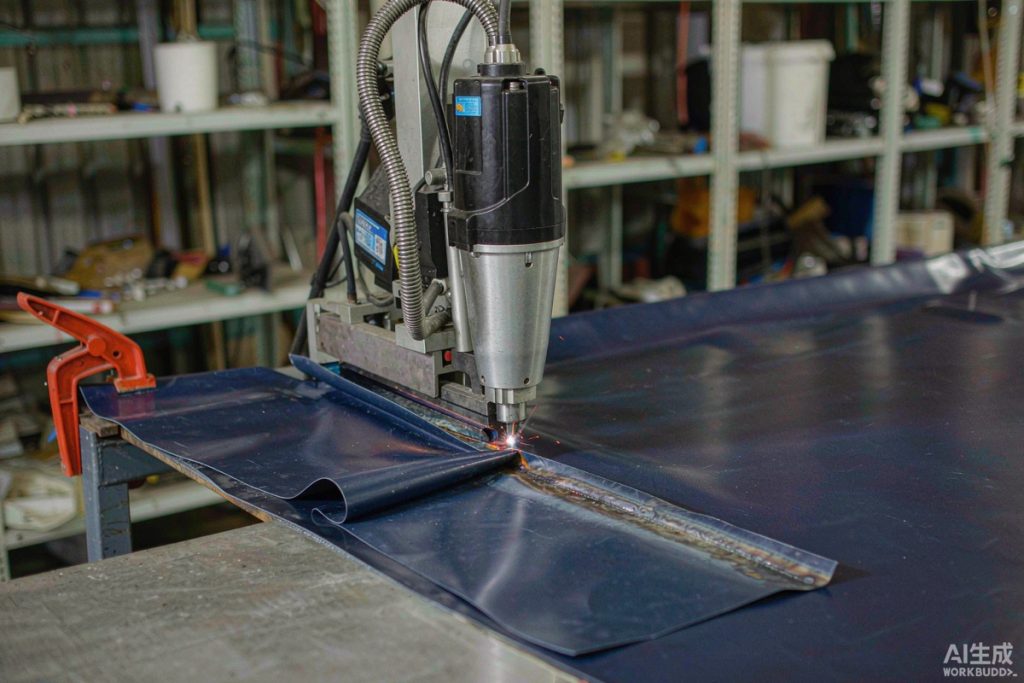
**Weld seam strength in PVC coated fabric refers to the mechanical performance of the bonded joint between panels, and it is the decisive factor in whether an inflatable, geomembrane liner, or truck side curtain will survive without seam failure. PVC is joined by RF, hot-air, hot-wedge, or solvent welding rather than sewing.**
– Welding methods: hot-air, hot-wedge, RF, solvent welding (KB Chapter 3.4)
– Peel strength requirement: >=100 N/5cm for structural membrane (KB Chapter 2.1, 3.1)
– Sewing not acceptable for inflatable or liquid-bearing applications (KB, key conclusion)
## How Is Weld Seam Tensile Strength Tested?
**Weld seam tensile strength is tested using ISO 1421, which applies a tensile load to a specimen cut across the weld line until failure, recording maximum force and failure mode. A proper weld failure should occur in the parent fabric adjacent to the weld, not at the interface, indicating insufficient bonding if it does not.**
– Test standard: ISO 1421 / EN ISO 1421 (tensile strength, KB Chapter 2.2)
– Failure mode: parent fabric tear preferred over weld interface failure
– Result unit: N/5cm, matching base fabric tensile reporting convention
## How Is Weld Seam Peel Strength Tested?
**Weld seam peel strength is tested using ISO 2411, which separates the two bonded layers at a defined peeling angle and measures force per unit width. The test reveals whether the weld achieved molecular bonding or merely surface tack; structural membrane applications typically require at least one hundred N/5cm.**
– Test standard: ISO 2411 / EN ISO 2411 (coating adhesion and peel, KB Chapter 2.2)
– Peel requirement: >=100 N/5cm for structural membrane (KB Chapter 2.1, 3.1)
– DIN 53357 also referenced for coating adhesion testing (KB Chapter 2.2)
## What Welding Methods Are Available and How Do They Affect Seam Quality?
**PVC coated fabric can be welded using four methods: high-frequency welding produces the strongest seams through dielectric molecular bonding and is preferred for inflatables; hot-air and hot-wedge welding suit field repairs and large-panel joining; solvent welding uses chemical softening; extrusion welding is not recommended for PVC.**
– RF welding: strongest for PVC, preferred for inflatables (KB Chapter 3.1, 3.4)
– Hot-air and hot-wedge: field and large-panel joining (KB Chapter 3.4)
– Extrusion welding: not recommended for PVC, suited to HDPE (KB Chapter 3.4)
## How Can Buyers Verify Weld Quality Before Accepting a Production Batch?
**Buyers should require weld test specimens with actual production parameters, tested for tensile per ISO 1421 and peel per ISO 2411. For geomembranes, the double-track weld with testable air channel is the standard non-destructive continuity test; for inflatables, ASTM D3786 burst testing on welded samples provides additional assurance.**
– Tensile test: ISO 1421 on production-parameter specimens (KB Chapter 2.2)
– Peel test: ISO 2411 on production-parameter specimens (KB Chapter 2.2)
– Geomembrane: double-track weld, 100-150 mm overlap, air channel test (KB Chapter 3.4)
## FAQ
**Q: What standard is used to test PVC coated fabric weld seam strength?**
A: ISO 1421 is the primary standard for testing the tensile strength of weld seams in PVC coated fabric. It applies a tensile load to a specimen cut across the weld line until failure occurs, recording the maximum force and the failure mode. The result is reported in N/5cm to match the convention used for base fabric tensile strength, allowing direct comparison between the seam and the parent material. A proper weld should fail in the parent fabric adjacent to the weld rather than at the weld interface, because interface failure indicates insufficient bonding.
**Q: What is the peel strength requirement for PVC coated fabric welds?**
A: Structural membrane applications typically require a peel strength of at least one hundred N/5cm for welded seams in PVC coated fabric, tested using ISO 2411. This value aligns with the coating adhesion requirement for the base fabric itself, ensuring that the weld joint is not the weak link in the assembly. For inflatable structures and critical geomembrane installations, higher peel values may be specified depending on the operating pressure and safety factors. The peel test should be performed on specimens produced using the actual production welding parameters.
**Q: Can PVC coated fabric be sewn instead of welded?**
A: Sewing is not recommended for PVC coated fabric in inflatable or liquid-bearing applications because stitched seams create needle holes that allow air and liquid leakage. The knowledge base identifies weldability as the most critical and frequently overlooked property of PVC coated fabric, and states that sewing seams in inflatable products will leak. PVC coated fabric should be joined using high-frequency welding, hot-air welding, hot-wedge welding, or solvent welding, all of which create a continuous bonded joint without penetrating the fabric with needles.
**Q: What is the double-track weld method for geomembrane testing?**
A: The double-track weld method creates two parallel weld lines with an unbonded air channel between them, allowing non-destructive testing of seam continuity by pressurising the channel with air and monitoring for pressure loss. This method is the industry standard for PVC geomembrane quality assurance and requires a weld overlap of one hundred to one hundred fifty millimetres. The air channel test can verify the entire length of the seam, not just sampled sections, making it far more reliable than spot peel testing alone.
**Q: Why is extrusion welding not recommended for PVC?**
A: Extrusion welding is a technique suited to HDPE geomembrane and is not recommended for PVC coated fabric because PVC decomposes at temperatures close to its processing range, and the extrusion process can cause thermal degradation of the PVC compound. Instead, PVC should be welded using methods that bond the material through dielectric heating (RF welding), controlled hot-air delivery, or hot-wedge contact, all of which heat the PVC surface to its fusion temperature without exceeding the decomposition point.
**Q: How does RF welding compare to hot-air welding for PVC fabric?**
A: High-frequency (RF) welding produces the strongest and most consistent seams for PVC coated fabric because it generates molecular-level bonding through dielectric heating within the material, creating a true fusion bond rather than a surface-level tack. RF welding is the preferred method for inflatable structures, drop-stitch fabrics, and critical geomembrane installations where seam integrity is safety-critical. Hot-air welding uses externally heated air to soften the PVC surface and is suitable for field repairs and large-panel joining where RF equipment is impractical.
**Q: What is the ASTM D3786 burst test for welded inflatable fabric?**
A: ASTM D3786 is the standard test method for burst strength of textiles using a hydraulic or pneumatic ball burst apparatus, and it is used to verify that welded seams in inflatable PVC coated fabric can withstand the design operating pressure. For drop-stitch inflatable fabrics, the typical burst strength requirement is at least five hundred kPa. The test is performed on a specimen that includes a welded seam, and the burst pressure is compared against the design operating pressure with an appropriate safety factor.
**Q: How should weld test specimens be prepared for quality control?**
A: Weld test specimens should be produced using the actual production welding parameters, including the same machine settings, material thickness, surface condition, and environmental conditions as the production welds. Specimens for tensile testing per ISO 1421 should be cut across the weld line with the seam centred in the gauge length, and specimens for peel testing per ISO 2411 should be prepared by separating the two bonded layers at one end. All test results should be documented in a weld procedure qualification record for traceability.
## FAQ (ZH)
**问:PVC涂层布焊缝强度的测试标准是什么?**
答:ISO 1421是测试PVC涂层布焊缝拉伸强度的主要标准。它对跨焊线裁切的样品施加拉伸载荷直至破坏,记录最大力和破坏模式。结果以N/5cm报告,与基布拉伸强度报告方式一致,可直接比较焊缝与母材性能。合格的焊缝应在焊缝旁边的母材处断裂,而非焊缝界面,因为界面断裂表明粘合不足。
**问:PVC涂层布焊缝的剥离强度要求是多少?**
答:拉伸膜结构应用通常要求PVC涂层布焊缝剥离强度不低于100 N/5cm,使用ISO 2411测试。该值与基布涂层粘合要求一致,确保焊缝不是组件中的薄弱环节。对于充气结构和关键土工膜安装,根据工作压力和安全系数可能规定更高的剥离值。剥离测试应在使用实际生产焊接参数制备的样品上进行。
**问:PVC涂层布可以缝纫代替焊接吗?**
答:不建议在充气或承载液体的应用中缝纫PVC涂层布,因为针孔会导致空气和液体泄漏。知识库将可焊性确定为PVC涂层布最关键且最常被忽视的性能,并指出充气产品中的缝纫缝会泄漏。PVC涂层布应使用高频焊接、热风焊接、热楔焊接或溶剂焊接连接,这些方法产生连续粘合接头而不用针穿透面料。
**问:土工膜的双轨焊缝测试方法是什么?**
答:双轨焊缝方法创建两条平行焊线,中间有未粘合的气道,通过向气道加压并监测压力损失来非破坏性测试焊缝连续性。该方法是PVC土工膜质量保证的行业标准,要求焊接搭接一百至一百五十毫米。气道测试可验证焊缝全长,而非仅采样点,比点状剥离测试可靠得多。
**问:为什么挤出焊接不推荐用于PVC?**
答:挤出焊接是适用于HDPE土工膜的技术,不推荐用于PVC涂层布,因为PVC在接近其加工范围的温度下会分解,挤出过程可能导致PVC化合物的热降解。相反,PVC应使用介电加热(高频焊接)、受控热风输送或热楔接触等方法焊接,这些方法将PVC表面加热至熔融温度而不超过分解点。
**问:高频焊接与热风焊接在PVC面料中如何比较?**
答:高频焊接通过介电加热在材料内部产生分子级粘合,产生最强且最一致的PVC涂层布焊缝,是充气结构、拉丝布和关键土工膜安装的首选方法。热风焊接使用外部加热空气软化PVC表面,适用于高频设备不便使用的现场维修和大面板连接,但焊缝质量更依赖操作者技能和参数控制。
**问:充气面料的ASTM D3786爆破测试是什么?**
答:ASTM D3786是使用液压或气压球爆破装置测试纺织品爆破强度的标准方法,用于验证充气PVC涂层布焊缝能否承受设计工作压力。拉丝充气面料的典型爆破强度要求不低于500 kPa。测试在包含焊缝的样品上进行,将爆破压力与设计工作压力进行比较,并考虑适当的安全系数。
**问:质量控制中应如何制备焊缝测试样品?**
答:焊缝测试样品应使用实际生产焊接参数制备,包括相同的机器设置、材料厚度、表面状态和环境条件。ISO 1421拉伸测试样品应跨焊线裁切,焊缝居中于标距长度内;ISO 2411剥离测试样品应在一端分离两个粘合层以便夹具夹持。所有测试结果应记录在焊接工艺评定记录中,以提供可追溯性。