
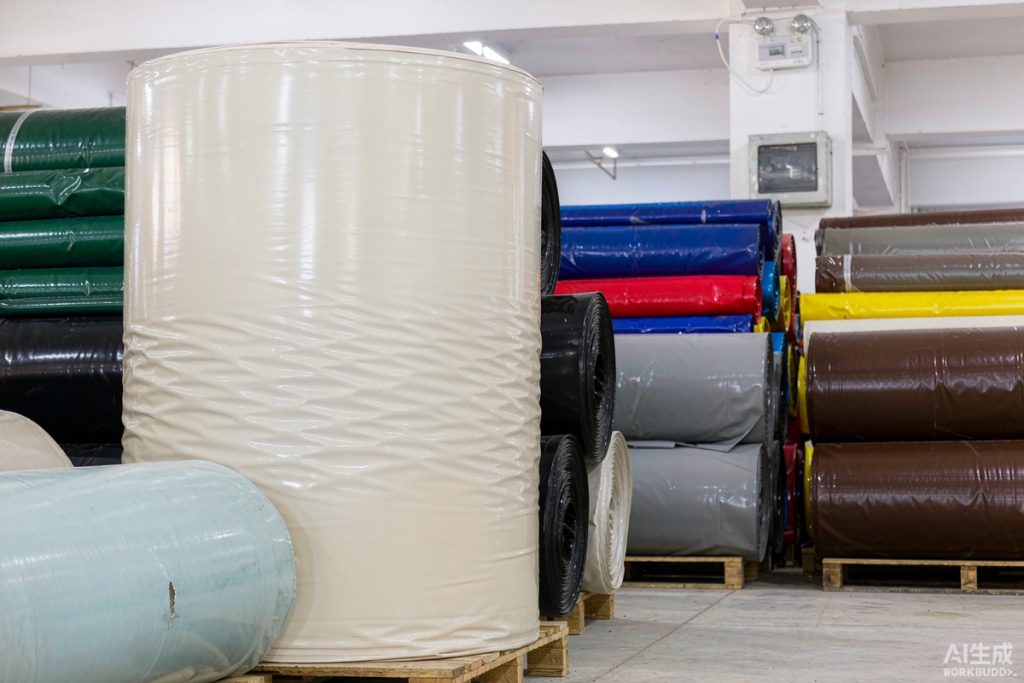
Noise barriers beside highways, metro lines and factories are shifting from pure metal panels to composite structures — metal backing, an acoustic core, and a PVC or polyester facing. Specifying the right material comes down to three things: the noise reduction coefficient (NRC), fire performance and weatherable service life. One Chinese acoustic material, for example, advertises an average NRC of 0.75, a core available in metal, cloth, PET and PVC, Class A fire behaviour and customisable thickness (Jdzj, 2026-11-05). Those figures sketch the entry bar for engineering procurement in 2026.
Why Demand Is Climbing
A recent Chinese noise-barrier industry report lays out the drivers clearly. Highway barrier demand is saturating and shifting toward replacement of existing installations. Urban rail — metro and light rail — and intercity railways keep growing. Industrial noise control, especially around power plants, chemical works and steel mills, is forecast to rise about 15% year on year in 2026. In the civil sector, installation rates around housing estates and schools are climbing, pushed by strict enforcement of environmental noise-quality standards and growing public awareness (Inwwin, 2026). Exports look promising too: the report projects 1.5 billion USD in Chinese noise-barrier exports in 2026, mainly to Southeast Asia, the Middle East and Africa.
Reading Acoustic Performance: NRC and Test Methods
The noise reduction coefficient averages absorption across the 250–2000 Hz octave bands. An NRC of 0.75 means the material absorbs roughly three quarters of incident sound energy in the frequency range dominated by speech and machinery. For a buyer, what matters as much as the number is whether the test method is comparable:
- ISO 354: the reverberation-room method for sound absorption, the laboratory baseline for comparison.
- ISO 16283 series: field measurement of building and envelope sound insulation, closer to real in-service performance.
- EN ISO 354 / ASTM C423: the mainstream European and American reverberation methods, frequently requested as reports on export projects.
- Construction matters equally. Micro-perforated panels, polyester fibre, glass wool and composite layers each absorb differently; a PVC facing mainly delivers waterproofing, UV resistance and cleanability rather than absorption itself.
Internationally, the principles set by the US EPA’s 1972 National Environmental Policy Act noise programme still shape state building-acoustic codes. Japan’s Noise Regulation Law manages environmental noise by zone, and ISO and IEC continue refining acoustic test standards to give global trade a common performance language (Renrendoc, 2026).
Material Architecture: What the PVC Facing Actually Does
Take a barrier apart and you usually find a rear structural layer, a middle acoustic core, and a road-facing skin. PVC-coated fabric or membrane goes on the outside to shed rain, resist UV, meet flame requirements and allow washing — dust and exhaust from traffic or industry settle continuously on barrier faces, and a wipeable skin materially extends the maintenance interval. The core governs absorption. Industry patent filings grew about 12% annually through 2025–2026, concentrated in noise-structure optimisation, new composite materials and smart monitoring integration; active noise control is being piloted in premium settings, and BIM is increasingly used in barrier engineering (Inwwin, 2026).
Market and Trends: Green, Smart, Regional
On policy, local noise regulations now require new projects to install barriers alongside construction and set deadlines for retrofitting older ones; subsidies and green finance favour low-carbon, recyclable materials. Under dual-carbon goals, energy-efficient smart barriers are gaining traction, with the sector explicitly steered toward greener, smarter development (Inwwin, 2026). At the global level, a 2026–2032 PVC noise-barrier forecast positions the product at the intersection of acoustic engineering, transport investment, urban planning, environmental governance and material sustainability, arguing that durable acoustic infrastructure requires integrated decisions across those fields (GII, 2026). A separate roadside-barrier report notes that tariffs and supply-chain pressure are pushing local manufacturing and regional supplier diversification.
Specification Checklist
- Confirm which standard an NRC value was tested under (ISO 354 or ASTM C423), and request the full spectrum rather than a single average.
- Match the fire rating — Class A or B1 is common for tunnels and industrial sites — to the project’s fire code.
- Specify the UV and weatherability of the PVC facing, especially in high-sun, high-salt coastal or desert locations.
- Pin down core type and thickness; absorption comes from there, not the facing.
- For replacement projects on existing lines, plan installation and removal around limited possession windows.
FAQ
Does a PVC facing reduce noise by itself?
No. PVC-coated fabric provides waterproofing, UV resistance, flame performance and cleanability; absorption comes from the core material such as polyester fibre, micro-perforated panels or a porous layer. Treat the acoustic core and the weatherable facing as two separate specifications.
Is an NRC of 0.75 good?
For traffic and industrial barriers, 0.75 is a strong figure — roughly three quarters of incident energy absorbed in the 250–2000 Hz bands. Still check low-frequency behaviour on the spectrum and confirm the test method matches the project specification.
How often does a barrier’s PVC facing need replacement?
It depends on UV intensity, fouling and mechanical damage. A quality PVC-coated facing generally lasts 8–15 years. Regular washing preserves appearance and flame performance; industrial dust zones need more frequent cleaning.












