
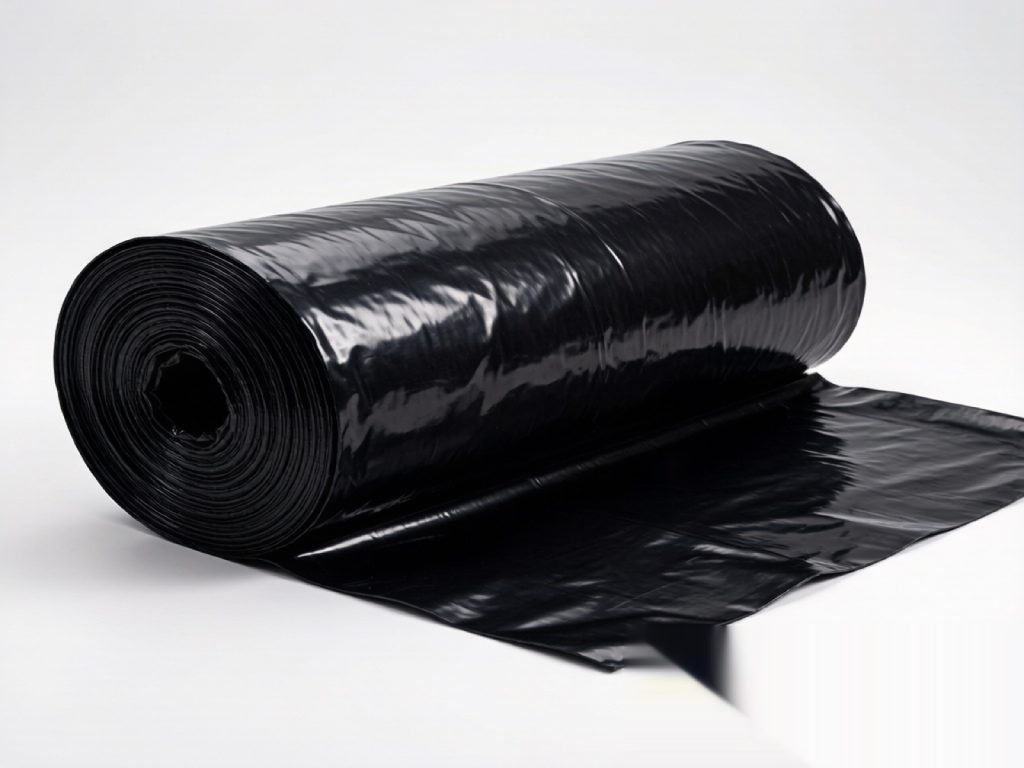
Two trends run in parallel in the November 2026 geosynthetics briefing: sensor-enabled geogrids and optical-fibre monitoring geotextiles have entered pilot use, collecting real-time settlement and stress data along the Sichuan-Tibet railway and on mountain slopes; at the same time, composite geomembrane quotations fell 2–4% from October, with two-fabric-one-membrane 600 g/m² now at RMB 5.2–5.6 per square metre. Anti-seepage materials are shifting from install-and-forget commodities toward measurable engineering assets.
Smart geosynthetics: from reinforcement carrier to monitoring carrier
According to the November 2026 industry briefing, sensor-enabled smart geogrids and optical-fibre monitoring geotextiles have entered pilot applications that collect real-time subgrade settlement and stress data, with trials on the Sichuan-Tibet railway and mountain high slopes. The materials are moving beyond separation and reinforcement into engineering-health monitoring (http://www.ljtugongbu.com/news/112.html). The same briefing notes faster commercialisation of biodegradable geosynthetics: PLA-based biodegradable weed-control geotextiles and natural-fibre eco-bags are being trialled in agriculture and riverbank protection, while recycled-polyester geotextiles gain ground and green-building certification plus carbon-footprint accounting become scoring factors in large tenders.
A concrete procurement signal comes from the Sichuan Public Resource Trading Information Network. A tender published on 16 October 2026 for monitoring services on the Bomi–Ranwu railway covers 134.5 km with a bridge-and-tunnel ratio of 83.7%, and explicitly includes tunnel health monitoring, special bridge structural monitoring, and automated monitoring of high slopes and geological hazards (https://ggzyjy.sc.gov.cn/jyxx/002001/002001001/20261016/352b3ab7-ba76-4b0f-ade9-747e805f5127.html). Here monitoring capability is written into the scope of work, not treated as an optional extra.
How monitoring functions are built in
Published information from monitoring-equipment suppliers offers a reference. One approach combines distributed optical-fibre sensing with wireless ad-hoc networking to form a three-dimensional dynamic grid over the structure; terminals meet IP65/IP67/IP68 protection and operate from −40℃ to 85℃. Tunnel schemes place monitoring sections every five to ten metres in high-risk zones. The same material also cites JTG/T 3603—2026 requirements for automated data collection rates and BIM digital delivery (https://www.bdsrtk.com/list_14/1287.html). A caveat: these figures describe monitoring hardware, not geotextile product standards. Buyers should request third-party test reports for the actual material.
The price window for winter water-conservancy work
Shandong supplier data shows composite geomembrane quotations in mid-November 2026 down 2–4% from October. Two-fabric-one-membrane 600 g/m² moved from RMB 5.6–6.0/m² in September and 5.4–5.8 in October to 5.2–5.6 now, with December forecast at 5.1–5.6. The drivers are an LDPE film-grade price roughly RMB 300–500 per tonne below September, year-end cash-flow discounting, and the start of concentrated water-conservancy tenders in November (http://www.yjtugong.com/zhsh.asp?id=566).
The product itself is an impermeable composite of geotextile and geomembrane, supplied as one-fabric-one-membrane or two-fabric-one-membrane, in widths of 4–6 m and weights of 200–1500 g/m². Winter installation has two hard constraints: raise welding temperature and allow generous overlap; avoid forcibly unfolding the membrane below −10℃, where the film becomes brittle and can be damaged.
What to specify before chasing the lowest price
Set the design criteria first. Define membrane polymer — HDPE, LLDPE or PVC — thickness and permeability, peel strength, field welding method and leak-detection approach, and the current editions cited in test reports. For long-buried water projects, also ask about the anti-ageing additive package and low-temperature embrittlement temperature, since those determine whether installation can continue below −10℃. If monitoring is required, list sensing accuracy, data transmission and power lifespan as separate line items.
The tender document from the Bomi–Ranwu project is useful here because it shows what owners now demand from bidders: an ISO-style quality management certificate, environmental and occupational-health management systems, and recognised qualifications in geotechnical engineering, surveying or bridge-and-tunnel testing. For a materials supplier, the lesson is that a test report alone rarely wins a monitoring-linked job. Package the product data with installation method statements, seam trial results and a data interface description. Suppliers that can hand an engineer both the liner and the evidence that it will perform are the ones shortlisted for this class of infrastructure work.
Price is still a factor, but the November figures should be read as a window rather than a trend. A 2–4% monthly move driven by PE feedstock and year-end cash needs can reverse when January restocking begins. The briefing itself notes a possible 3–5% rebound if PE prices recover before the Spring Festival. Contracting in December with a price-adjustment clause protects both buyer and seller against that swing.
FAQ
Is the November price drop driven by raw material or demand?
Mainly raw material. PE ex-factory prices have been cut repeatedly, with LDPE film-grade about RMB 300–500 per tonne below September, and suppliers are discounting to close out the year. Demand is entering the winter repair season, but large-scale stocking is expected only in December.
Can composite geomembrane really not be installed below −10℃?
Suppliers advise against forcibly unfolding at such temperatures because the film becomes brittle. When winter work is unavoidable, raise welding temperature, leave adequate overlap, and prefer products with anti-ageing additives and test reports covering low-temperature performance.
Can smart geotextile replace manual monitoring?
Not yet. Public information places smart geosynthetics at the pilot stage, mainly supplying continuous data. Equipment providers also stress the need for defined thresholds and manual verification. Treat it as a data supplement, not a replacement for acceptance testing.












