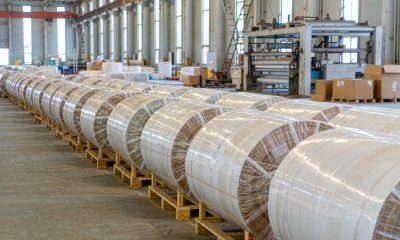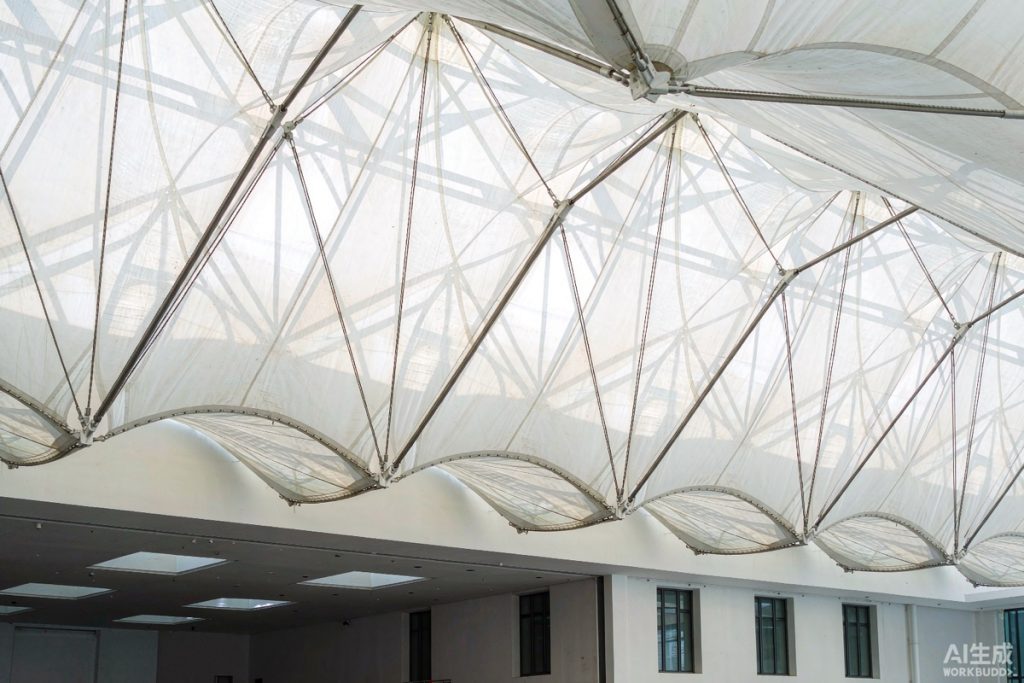
At the seventh China New Materials Industry Development Conference, held in Nanjing on 5 November 2026, Nanjing Fiberglass Research Institute showed a fine glass-yarn material worth noticing. Ultra-thin glass cloth is moving into architectural membranes, fireproof cloth and high-temperature filter bags. It is not PVC, but as a reinforcement substrate it is widening the options available to PVC-coated composite producers.
Conference context: Nanjing again, after eight years
This was the first time the national-level event returned to Nanjing since its inaugural edition there in 2018. More than 50 academicians and over a thousand delegates from universities, industry and investment attended, with seven focus areas including energy, information and medical materials. A concrete materials science model named “Concrete Truth” was released by the State Key Laboratory of Performance Evolution and Control for Engineering Structures together with Southeast University, Sobute and Alibaba Cloud. The 27th China International New Materials Expo ran alongside, with more than 30 Nanjing-based companies exhibiting (https://finance.sina.com.cn/roll/2026-11-05/doc-inixsvxw6012076.shtml).
Why fine yarn works as lightweight reinforcement
The yarn is described as flexible and bendable, strong in tension and able to tolerate relatively high temperatures. Those traits allow it to be woven into ultra-thin glass cloth for circuit-board substrates and lightweight aviation or low-altitude equipment components, processed into specialty sewing thread for high-temperature bag filters, fireproof cloth and architectural membranes, or blended with high-performance fibres for cut-resistant protective fabric.
For the coated-fabric industry, the point is not that glass beats polyester. It is division of labour. Polyester scrim offers toughness, price and a mature PVC adhesion system; glass fibre offers dimensional stability and heat resistance. Using glass yarn where low elongation and heat matter, and polyester where folding and impact resistance matter, often beats a single-substrate design. One caveat: the conference report does not describe any specific PVC-glass combination, so the discussion here is materials logic rather than a verified product conclusion.
Applications: from fireproof cloth to architectural membrane
Fireproof cloth is the most direct landing zone. The ninth International Symposium on Flame Retardant Materials and Technologies (ISFRMT 2026) took place in Guangzhou on 14–16 November 2026 under the theme “Flame Retardant, Safe, Green”, covering halogen-free systems, high-performance polymer flame retardancy, energy-storage and electrical safety, and public-building materials (https://caifuhao.eastmoney.com/news/20261113174843978828180). In these applications, the substrate’s heat resistance determines how much integrity remains after the coating fails.
Architectural membrane is the other intersection. PVC-coated polyester relies on thermoplastic welding for continuous seams, while glass substrates are more often paired with PTFE or silicone systems. Data from the two families should not be mixed: welding parameters, pretension and minimum bend radius all differ.
Market and trend: a regional cluster takes shape
New materials are a priority under Nanjing’s “1026” industrial system. The city’s new-material output exceeded RMB 250 billion in 2025, built on chemical, advanced metal, inorganic non-metallic and frontier material segments. A textile-industry brief published the same week listed the institute’s fine yarn among representative achievements spanning ultra-thin cloth and specialty sewing thread (https://tpu-ptfe.com/post/37492.html). For buyers, clustered supply like this tends to shorten sampling cycles and lower minimum order quantities.
What to ask before you specify
Ask in this order: which coating system — PVC, PTFE or silicone; which substrate — polyester, glass or a blend; which seaming method — high-frequency, hot-air or stitched; the continuous and short-term temperature limits; and whether third-party fire-performance reports exist. Only after the system is clear does it make sense to compare weight and unit price.
One more question belongs on the list: what happens at the end of service? Glass-reinforced composites and PVC-coated polyester take different routes through recycling, and neither should be assumed to be accepted by a general plastics stream. Ask the supplier whether take-back or a documented disposal route exists, and record it in the project file. On public buildings, that answer increasingly forms part of procurement scoring rather than an afterthought.
FAQ
Can glass-reinforced fabric use the same welding settings as PVC-coated polyester?
Do not assume so. PVC-coated polyester is commonly welded with hot air or high-frequency energy, while glass substrates are more often paired with PTFE or silicone systems and different seam constructions. Run a weld trial and test seam strength first.
Is glass substrate always better than polyester for outdoor membrane structures?
No. Glass offers dimensional stability and heat resistance, but usually loses on folding and impact resistance. Suitability depends on span, pretension, temperature and installation method, and should be confirmed by the structural engineer.
Where do the figures in this article come from?
Conference and industry figures come from Shanghai Securities News on 5 November 2026; symposium details from the ISFRMT 2026 announcement; and the textile brief from Composite Fabric Network. The PVC-related discussion is materials reasoning — the reports do not publish test data for a PVC-glass composite product.