
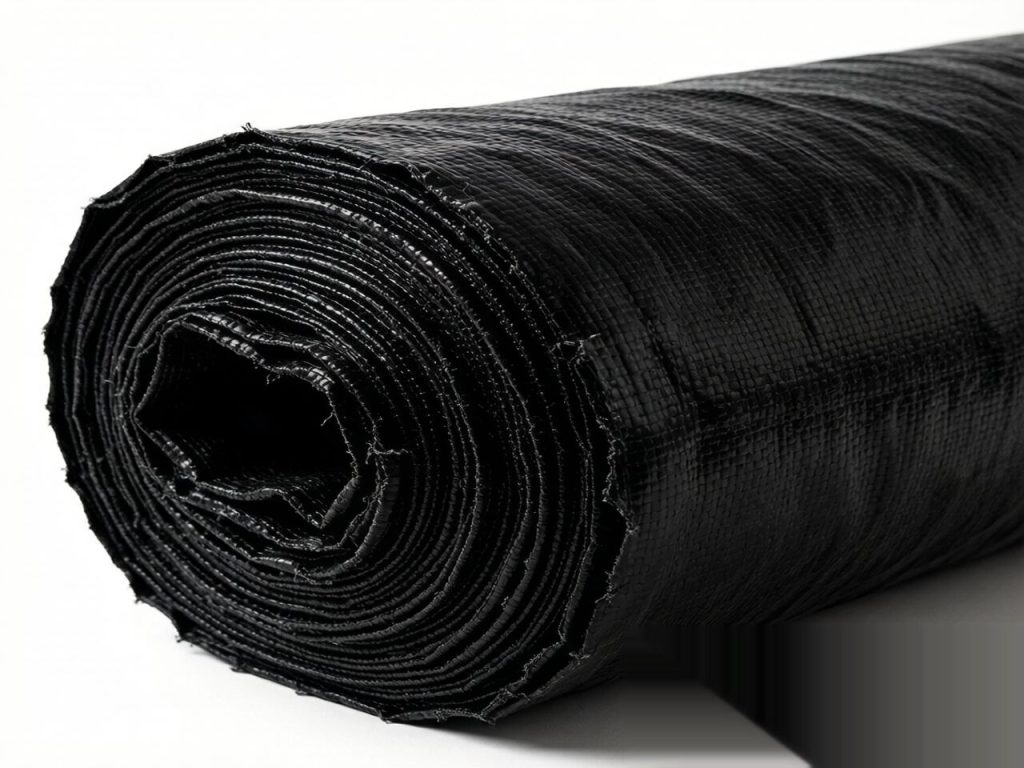
Choosing a dump-truck roll tarp comes down to one question: does the load need to stay dry? Sand, soil, salt, cement, grain and general aggregate call for 18 oz (about 610 g/m²) PVC-coated polyester. Sharp demolition debris calls for 8.1 oz wire mesh. Gravel and coarse stone call for 11 oz mesh. Hot-mix asphalt calls for a 14 oz RFL (resorcinol-formaldehyde-latex) heat-resistant cover. Treat it as a classification exercise, not a price ranking.
Four materials, four boundaries
A 2026 pull-tarp guide from Tongyuan lays out a practical comparison that covers most dump-body jobs:
- PVC-coated polyester, 18 oz/yd² (about 610 g/m²): waterproof and the default for salt, sand, soil, cement, grain and general aggregate. It is heavy, the least breathable, stiffens in cold weather and can lift in wind if tension is low, so reinforced hems and proper tensioning matter.
- Wire mesh, 8.1 oz/yd²: not waterproof, but about 95% closed with strong puncture and tear resistance, suited to sharp construction and demolition waste.
- 11 oz mesh: not waterproof and only about 51% closed — too open for fine sand, but suitable for gravel and coarse stone, where airflow also reduces the parachute effect at speed.
- Asphalt tarp, 14 oz/yd² with RFL coating: hydrophobic but not a general cover, rated to 400°F (about 204°C) for hot-mix hauling only.
The guide’s rule of thumb is worth keeping: the finer the particle, the denser the mesh needs to be, and cargo sold by weight or condition is rarely a good match for mesh (https://tytarp.com/zh-CN/blog/pull-tarp/).
Why dry loads almost always mean PVC
Salt cakes when wet, cement starts to set, and soil becomes unusable. Once that happens, the loss far exceeds the price difference in the tarp. A high-density PVC coating forms a continuous film that resists water even under prolonged soaking or heavy rain, while adding weather resistance — the backdrop to rising industrial-tarp demand as extreme weather becomes more frequent in 2026 (https://wiki.1688.com/en/tarpaulin/WKfzu39dxgwglc). The trade-off is cold-weather stiffness: allow extra take-up in the tensioning system and never skip reinforced corners and hems.
Mesh is not a cheaper PVC
Using mesh as a budget waterproof cover is a common mistake. It is light, easy on the motor and behaves well in wind, but its open structure cannot keep water out. The reverse error is equally costly: standard PVC can soften or stick when carrying hot mix, so asphalt haulers use a heat-rated cover and check the plant’s discharge temperature against the tarp’s rating before ordering (https://tytarp.com/zh-CN/blog/pull-tarp/). Material-to-cargo mismatches usually surface in the first season as sticking, tearing or water-damaged loads.
Specification and installation details
Chinese supplier listings updated in November 2026 provide a reference point: a heavy PVC knife-coated truck cover quotes 680 g/m², strength 3600, 3 m width and 8–10 mm thickness with a 0.4 kW electric motor (https://b2b.baidu.com/land/29dfba7e0d1c25b794571a552cd04c68). A second listing for automatic dump-truck retractable covers uses the same heavy knife-coated PVC and emphasises UV ageing resistance and custom sizes (https://b2b.baidu.com/land/53db7b27cd5f6b6d3ff462b859b7ae6c).
The most common installation failure is skipping the squareness check. Measure both body diagonals first — unequal lengths make the tarp track sideways — then set roller height and perform the initial tensioning. Choose aluminium or brass eyelets by duty cycle, with brass preferred for frequent operation. These steps are unglamorous but decide whether the cover wears evenly or tears at one corner.
Buying checklist and FAQ
- Define the cargo and particle size first, then work back to the material — not the other way round.
- On PVC grades, specify weight, scrim denier, width, eyelet material and cold flexibility.
- List heat resistance separately for asphalt service and ask for the test conditions behind the number.
- Request a written description of hem and corner reinforcement, the most common failure point on roll tarps.
FAQ
Does an 18 oz PVC tarp stiffening in winter mean it is defective?
No, it is an inherent property of PVC. Specify a cold-flexible formulation in northern regions and allow take-up in the tensioning system. For sustained work below −20℃, ask the supplier for low-temperature bend-test data.
Can mesh double as a rainy-day cover?
No. The 8.1 oz wire mesh and 11 oz mesh are about 95% and 51% closed respectively and are not waterproof. Use a PVC grade for cargo sold by weight or condition.
Why not use standard PVC over hot asphalt?
Hot-mix temperatures can soften or stick to standard PVC. Asphalt service calls for a 14 oz RFL-coated tarp rated to about 400°F (204℃), checked against actual plant discharge temperature.












