Skip to content

PVC vs. TPU vs. TPO Coated Fabric: Key Differences Explained

August 5, 2026 kezhibo News
Pvc Tpu Tpo Coated - KeZhiBo

Coated fabrics are everywhere — in truck covers, inflatable structures, roofing membranes and advertising banners. The three most common polymers used are PVC, TPU and TPO. Here is how they compare.

PVC — The Versatile Workhorse

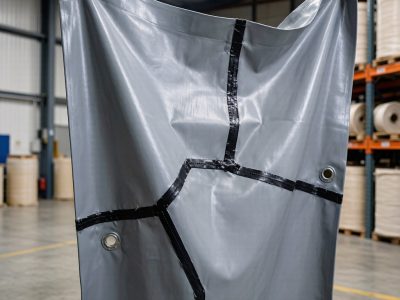
PVC coated fabric offers the best balance of strength, weather resistance and cost. It is the default choice for tarpaulins, truck covers, banners and architectural membranes. Additives such as UV stabilizers and flame retardants allow PVC to be tailored to demanding applications.

TPU — The Eco-Friendly Performer

Thermoplastic polyurethane is halogen-free and plasticizer-free, making it fully recyclable and safe for sensitive uses. It remains flexible at very low temperatures and offers outstanding abrasion resistance. TPU is the material of choice for premium inflatables, water storage and medical applications — but at a higher cost than PVC.

TPO — The Weathering Specialist

Thermoplastic polyolefin combines rubber-like elasticity with the processability of thermoplastics. Its exceptional resistance to ozone, chemicals and weathering makes it ideal for single-ply roofing membranes and heavy industrial covers.

How to Choose

  • Need the best value and proven durability? Choose PVC.
  • Need low-temperature flexibility, recyclability or skin safety? Choose TPU.
  • Need maximum weathering performance for roofing and industrial use? Choose TPO.

Our technical team can advise on the optimal material for your application — contact us with your requirements.
A practical way to close this comparison: audit your last three fabric failures, real or feared. If they were tears at grommets and hems under wind load, PVC's formulation range — and its price — probably still wins; the fix is usually a heavier grade or better hem engineering, not a different polymer. If failures were abrasion through the coating in a high-cycle application, that is TPU's home ground, and no amount of PVC weight will economically match it. If the failures were environmental — coating hardened and crazed after two summers, plasticizer migrated into contact materials — TPO's chemistry answers precisely that problem.

Welding deserves a sentence of its own, because it decides who can fabricate the material. PVC's broad compatibility with hot-air, hot-wedge, and high-frequency equipment means any fabricator on earth can seam it. TPU welds well too but prefers specific parameters; TPO behavior differs again. If your project depends on field fabrication by a local crew, confirm the material-equipment pairing before the material ships — this single check prevents the most common premium-polymer disappointment.

Cost, stated honestly: PVC remains the rational default for general outdoor duty, and pretending otherwise serves nobody. TPU and TPO earn their premium in applications where PVC demonstrably fails or where specification requires their specific properties. The comparison articles on this site exist so that your choice is driven by duty cycle, not by whichever polymer the salesperson happens to stock.

What is the difference between PVC, TPU, and TPO coated fabrics?

PVC is the cost-effective general-purpose choice for outdoor covers and banners. TPU offers superior abrasion resistance, elasticity, and low-temperature flexibility for mechanically demanding uses. TPO provides stronger weathering and broader chemical tolerance with an improved environmental profile for long-life exterior applications.

Which coated fabric should I choose for outdoor use?

For general outdoor duty, PVC remains the rational default. Choose TPU when the failure mode is mechanical (abrasion, repeated flexing, cold service), and TPO when it is environmental (long UV exposure, ozone, or chemical contact that degrades PVC plasticizers).

Do TPU and TPO coated fabrics weld like PVC?

All three are weldable, but parameters differ: PVC works with the widest range of equipment (hot air, hot wedge, high frequency), while TPU and TPO need matching parameters. Confirm material-equipment compatibility with your fabricator before ordering.