Introduction
PVC geomembranes are among the most reliable waterproofing materials used in civil and environmental engineering — when specified and installed correctly. But when they fail, the consequences are costly: a leaking landfill liner can result in environmental contamination fines exceeding $1 million, while a failed aquaculture pond liner can wipe out an entire harvest. Kezhibo’s engineering team has analyzed more than 200 geomembrane failure cases globally. This article distills the five most common causes of failure and the proven engineering solutions to prevent each.
Failure #1: Mechanical Puncture from Subgrade or Overburden
Root Cause: Small angular particles (gravel, broken concrete, sharp rock) in the subgrade or overburden punch through the geomembrane under hydraulic pressure or settlement. The failure manifests as discrete pinhole leaks, often clustered in areas where the subgrade was improperly prepared.
Prevention Engineering:
- Subgrade preparation must remove all particles larger than 15 mm diameter, followed by rolling and compacting to achieve > 95% Proctor density
- A 200–300 gsm non-woven geotextile cushion layer between subgrade and geomembrane distributes point loads
- Thickness must be calculated using GRI-GM17 puncture analysis with a minimum factor of safety of 3.0
- Overburden must avoid angular rock fragments — use rounded river rock or graded gravel
Case study: A shrimp farm in Thailand experienced 40% pond water loss within 6 months. Investigation revealed 187 punctures, all caused by 20–30 mm angular gravel used as subgrade fill without geotextile cushion. Resolution: 0.5 mm geomembrane replaced with 0.8 mm, 300 gsm geotextile installed, gravel replaced with graded sand.
Failure #2: Seam Delamination
Root Cause: Thermal or solvent-based seam welding was performed incorrectly — too low a temperature, insufficient overlap, or contaminated surfaces — causing the seam to peel apart under hydraulic pressure or temperature cycling.
Prevention Engineering:
- RF welding: 15–20 mm overlap minimum; temperature 120–140 °C; pressure 0.3–0.5 MPa; dwell time 0.5–1.0 seconds per linear meter
- Thermal (hot-air) welding: 10 cm overlap minimum; air temperature 220–250 °C; travel speed no faster than 3 m/min
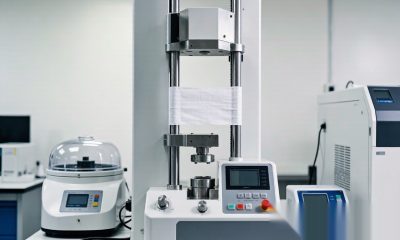
- All seams must be pull-tested per ASTM D7246: minimum 70% of base fabric tensile strength
- Seam integrity verified with vacuum box or electrical leak detection within 48 hours of installation
Failure #3: UV Degradation (Above-Ground Applications)
Root Cause: The geomembrane was formulated without adequate UV stabilizers (HALS and UV absorbers), or was left exposed for too long before final cover was placed. PVC resin undergoes photo-oxidation from UV-B radiation, breaking polymer bonds and reducing tensile strength.
Prevention Engineering:
- Above-ground geomembranes require 2.0–3.0% HALS (by weight of PVC) + 1.0–1.5% UV absorber (benzotriazole or benzophenone class)
- Carbon black loading of 2–3% provides the most cost-effective UV protection, but darkens the membrane — titanium dioxide alternatives available where color is required
- For buried applications, UV stabilizers can be reduced to 0.5–1.0% since soil cover eliminates direct exposure
- Field exposure tests per ASTM G154 (2000 hours) should show < 15% tensile strength retention loss
Failure #4: Chemical Attack and Plasticizer Extraction
Root Cause: The geomembrane was not formulated for compatibility with the stored or contained chemical. Certain chemicals extract plasticizers from PVC, causing embrittlement and shrinkage, while others cause polymer chain scission.
Prevention Engineering:
| Chemical Category | PVC Compatibility | Solution |
|---|---|---|
| Dilute acids (H₂SO₄, HCl, acetic) | Excellent (up to 10% concentration) | Standard formulation |
| Dilute alkalis (NaOH, KOH) | Excellent (up to 20% concentration) | Standard formulation |
| Petroleum fuels (gasoline, diesel) | Poor — plasticizer extraction | Use aromatic-resistant formulation or TPU alternative |
| Aromatic solvents (benzene, toluene) | Very poor | Switch to HDPE or EPDM |
| Salts and brines | Excellent | Standard formulation |
| Pesticides and herbicides | Variable | Consult manufacturer with specific chemical list |
| Fertilizers (nitrogen-based) | Good | Standard formulation |
Failure #5: Improper Installation — Expansion and Contraction
Root Cause: PVC expands and contracts significantly with temperature changes — approximately 0.018 mm/mm/°C, or 36 mm over a 100-meter run for a 20 °C temperature swing. If installed too tightly in cold weather or anchored without expansion joints, thermal stress causes splitting at seams and anchor trenches.
Prevention Engineering:
- Install during moderate temperatures (15–25 °C) to minimize seasonal expansion/contraction
- Leave 1.5–2.0% slack in the geomembrane during installation to accommodate summer expansion
- Anchor trenches must be designed with expansion joint gaps to allow longitudinal movement
- Use of geotextile underlay reduces friction that restricts free movement
Comprehensive Prevention Strategy
The single most effective prevention step is to work with a geomembrane supplier that provides engineering support — not just material. Kezhibo conducts 3rd-party failure analysis consultations for free with its OEM/ODM partners. We provide:
- Site-specific thickness and formulation recommendations
- Installation supervision by certified technicians
- Post-installation non-destructive testing (vacuum box, electrical spark)
- Long-term monitoring recommendations
Safety and sustainability note: A failed geomembrane not only creates remediation costs but also risks environmental contamination. Proper engineering from the start is the most cost-effective and environmentally responsible approach.
CTA: Geomembrane Engineering Support
If you have an existing geomembrane specification that you want reviewed, or a new project where you need engineering guidance, contact Kezhibo’s geomembrane technical team. We provide free site-specific recommendations backed by 15+ years of field data from 40+ countries.
Download the geomembrane engineering datasheet: PVC Geomembrane Products