Introduction
When specifying an airtight fabric for critical applications — inflatable flood barriers, military command shelters, portable medical facilities, or water bladder tanks — the choice between TPU (thermoplastic polyurethane) and PVC (polyvinyl chloride) is one of the most consequential decisions you will make. Both materials have genuine strengths and weaknesses, and the wrong choice can lead to catastrophic failure in as little as 3–5 years. This article provides head-to-head performance data from Kezhibo’s 10-year accelerated aging and real-world exposure testing program.
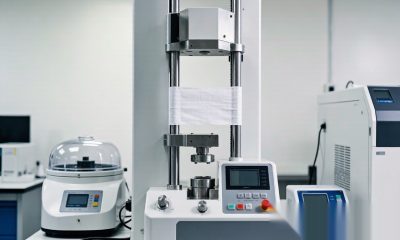
Accelerated Aging Test Protocol
To predict long-term durability, Kezhibo runs three complementary test suites on every <a href="https://www.kezhibo.com/product/pvc-airtight-fabric/” rel=”nofollow”>airtight fabric formulation:
- Xenon Arc Weathering (ASTM G155): 2000 hours simulated outdoor UV exposure (approximately 3–5 years real-world in Guangzhou, China)
- Hydrolysis Chamber (ISO 6270-2): 1000 hours at 85 °C / 85% relative humidity (accelerates 5–7 years of tropical outdoor exposure)
- Freeze-Thaw Cycling (ASTM D1630): 100 cycles between -40 °C and +70 °C (simulates 3–4 years of continental extreme climates)
Performance Comparison After Accelerated Aging
| Property | Condition | PVC (550 gsm) | TPU Polyether (500 gsm) | TPU Polyester (500 gsm) |
|---|---|---|---|---|
| Tensile Strength | Initial | 280/250 N/5cm | 420/380 N/5cm | 450/400 N/5cm |
| — After Xenon 2000h | Retained % | 82% | 94% | 89% |
| — After Hydrolysis | Retained % | 91% | 96% | 72% |
| — After Freeze-Thaw | Retained % | 86% | 95% | 90% |
| Permeability | Initial | 0.5 cm³/m²/day | 0.2 cm³/m²/day | 0.2 cm³/m²/day |
| — After Hydrolysis | Increase | +8% | +3% | +45% |
| Seam Strength | Initial | 92% of base | 90% of base | 91% of base |
| — After Xenon 2000h | Retained % | 78% | 88% | 82% |
| Ozone Resistance | ASTM D1171 | Pass (crack-free @ 100h) | Pass | Pass |
| Cold Crack Temperature | ASTM D2136 | -15 °C | -40 °C | -35 °C |
TPU: The Clear Winner for Hydrolysis Resistance
The most striking difference between TPU and PVC airtight fabrics emerges in hydrolysis testing — the most relevant aging mechanism for any fabric that will spend its life in warm, humid, or aquatic environments. Polyester-based TPUs (the less expensive grade) hydrolyze aggressively, losing 28% of tensile strength in just 1000 accelerated hours. This is why polyether-based TPUs are always specified for marine or tropical applications.
PVC fares better than polyester TPU but worse than polyether TPU in hydrolysis — the plasticizer system used in PVC coatings can undergo some chemical breakdown in extreme humidity, though formulations with epoxy soybean oil (ESBO) co-plasticizer minimize this effect.
UV and Ozone Resistance
Both materials perform well in accelerated UV testing when formulated properly. The difference is in how they fail:
- PVC UV failure: Chalking (white powdery surface layer from titanium dioxide pigment) followed by progressive plasticizer migration and embrittlement. With proper HALS stabilizers, PVC maintains > 80% tensile strength after 2000 hours.
- TPU UV failure: Surface micro-cracking and discoloration (yellowing from aromatic diisocyanate breakdown). Polyether TPUs formulated with aliphatic diisocyanates have superior UV stability (94% retained after 2000h) but cost approximately 20% more.
Ozone resistance — critical for outdoor applications near industrial or urban areas — is equally strong for both materials when formulated with antiozonant additives. Both pass ASTM D1171 without cracking at 100 hours of 50 ppm ozone exposure.
Cold Weather Performance — TPU Dominates
This is the single biggest differentiator for cold-climate applications. Standard PVC coatings with conventional plasticizers (DOP, DINP) become brittle below -10 °C. Even with optimized cold-grade formulations using DOA or DINA, PVC reaches its limit at approximately -25 °C.
Polyether TPUs maintain flexibility and tensile strength down to -50 °C without any formulation modification, making them the material of choice for Arctic operations, high-altitude mountain rescue equipment, and winter military applications.
Cost Trade-Off Analysis
TPU typically costs 1.6–2.2× more than PVC per square meter. But when lifecycle costs are considered, the picture changes:
| Application / Metric | PVC Airtight Fabric | TPU Airtight Fabric |
|---|---|---|
| Material Cost (per m²) | $6.50 | $13.50 |
| Typical Service Life (temperate, indoor) | 7 years | 12 years |
| Typical Service Life (tropical outdoor) | 4–5 years | 8–10 years |
| Typical Service Life (arctic cold) | 2–3 years | 10+ years |
| Lifecycle Cost (per m²/year, temperate) | $0.93 | $1.13 |
| Lifecycle Cost (per m²/year, tropical) | $1.44 | $1.69 |
| Lifecycle Cost (per m²/year, arctic) | $2.60 | $1.35 |
For extreme cold or critical long-service-life applications, TPU actually becomes more cost-effective over time. For temperate indoor applications, PVC is the better choice.
Sustainability Considerations
TPU manufacturing generates significantly less chlorinated waste than PVC (TPU contains no chlorine). However, both materials are recyclable — PVC via mechanical recycling into granules, TPU via depolymerization to recover polyols and isocyanates. Kezhibo collects scrap from both TPU and PVC production and recycles 100% of edge trimmings and off-spec rolls back into raw material.
Decision Matrix: Which Fabric for Your Application?
- Choose TPU (polyether) if: Tropical/marine environment, > 10-year lifespan required, cold temperatures below -20 °C, military or medical use
- Choose PVC if: Temperate or mild climate, 5–7-year acceptable lifespan, strict budget constraints, indoor or sheltered use
- Never choose polyester TPU if: The application involves continuous water immersion or humidity above 85% — hydrolysis failure is guaranteed within 5 years
CTA: Airtight Fabric Sample Kit
Kezhibo stocks both PVC and polyether TPU airtight fabrics in standard widths and weights. For OEM/ODM clients, we offer a free sample kit with both materials, complete with test data from our most recent accelerated aging program. Request technical sheets, accelerated aging reports, or a custom formulation quote by contacting our engineering team.
Compare our product lines: TPU Airtight Fabrics