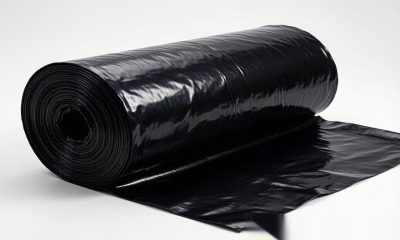
Flame retardancy is one of the few fabric properties that is both a safety requirement and a legal one. Industrial tarpaulins used on construction sites, temporary structures, storage tents and public events are routinely checked against recognised fire-test standards before they are accepted on site. Yet “flame retardant” is not a single, universal rating. This article explains the most commonly referenced standards, what they actually measure, and how to choose the right grade without over- or under-specifying.
Why Flame Retardancy Is Non-Negotiable
A tarpaulin that ignites easily or spreads flame quickly turns a minor incident into a major one. In enclosed or crowded environments — a marquee at a festival, a temporary wall on a building site, a cover over stored goods — the fabric’s fire behaviour directly affects evacuation time and property loss. Many jurisdictions and insurers now require evidence that specified fabrics meet a published test standard before occupancy or use is permitted.
The Common Test Standards Explained
Several test methods are referenced across the industry. They are not interchangeable, and a fabric qualified to one may still need separate verification for another:
- CPAI-84. Widely referenced for camping and temporary recreational tents and their components, focused on burn and flame-spread resistance of the assembled product.
- NFPA 701. A commonly cited method for hanging textiles and decorative materials, measuring ignition resistance and flame spread on vertically oriented fabric samples.
- EN 13501-1. The European classification system that places materials into classes such as A, B, C with additional smoke and droplet parameters; for textiles this often appears as a B-s2,d0 type rating.
- DIN 4102 B1. A long-established German classification for “difficult-to-ignite” building materials, frequently requested on continental European projects.
- BS 7837. A British standard for the flame retardancy of tensile membranes and similar structures used in temporary buildings.
Kezhibo’s flame-retardant tarpaulin range is produced to meet common international benchmarks, with test reports available to support specification. We recommend confirming the exact standard required by your local authority, insurer or end client before ordering.
What These Tests Actually Measure
Despite different procedures, most FR fabric tests answer the same core questions: does the material ignite readily, how far and how fast does flame travel, does it produce flaming droplets, and how much smoke develops? A material that passes one standard may still fail another because the sample orientation, ignition source or pass threshold differs. That is why simply asking for “FR” is not enough — the spec should name the standard and class.
How Coating Chemistry Drives FR Performance
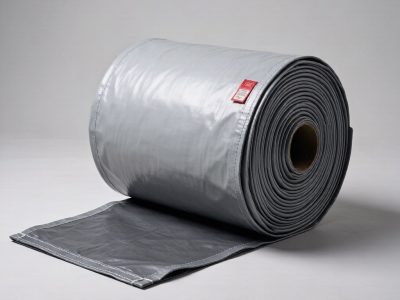
On a PVC-coated polyester tarpaulin, flame retardancy comes from both the coating formulation and the base cloth. Flame-retarding additives are built into the PVC compound during coating, and the coating weight, thickness and continuity all influence how the fabric behaves near a flame. Thinner, unevenly coated fabrics can perform inconsistently, which is why consistent knife-coating control matters for FR grades. Kezhibo applies FR compounds on automated lines where dosing and gauging are held in a closed loop, so the finished roll meets the same specification from edge to edge.
Matching the Grade to the End Use
The right FR grade depends on where and how the tarpaulin is used:
- Building-site enclosures and scaffolding wraps. Often require a named class under EN 13501 or DIN 4102; check local site rules.
- Event marquees and public gatherings. Typically screened against CPAI-84 or a national tent standard, with documentation retained for the venue licence.
- Warehouse and logistics covers. Benefit from a durable FR treatment that survives folding, abrasion and repeated deployment.
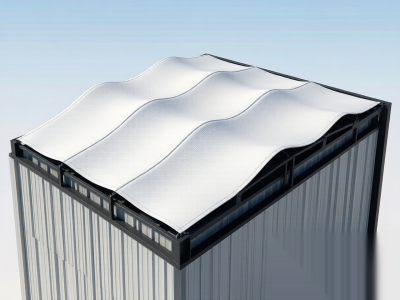
For general industrial covers, browse our industrial tarpaulin range; for structured temporary buildings, see architectural fabrics.
Documentation, Test Reports and Specification Support
Selecting the right grade early avoids rework, rejected deliveries and safety risk. Kezhibo provides test reports and technical documentation to help specifiers and buyers demonstrate compliance to the relevant standard. Because requirements vary by country and application, we advise naming the target standard in every enquiry so the supplied grade and paperwork line up with the project’s obligations.
How to Read a Flame-Retardancy Test Report
A credible FR document should state the exact standard and class, the sample construction (base cloth, coating weight, any topcoat), and the test laboratory and date. Watch for two red flags: a report that names only a generic “flame retardant” claim with no standard, and a certificate issued for a different fabric weight than the one you intend to buy. Because coating weight and chemistry drive the result, a certificate for a 500 gsm fabric may not cover the 900 gsm version you specified.
Maintenance and Re-Treatment
FR performance can decline with heavy soiling, repeated washing or long UV exposure, depending on the treatment chemistry. For tarpaulins that are laundered or deployed for many seasons, ask the supplier about re-treatment options and the expected service life of the FR property. Kezhibo advises buyers to retain the original test report with the asset record and to re-test a sample if a cover is being redeployed into a higher-risk environment after years of service.
FR, Sustainability and Trade-offs
Flame retardancy and recyclability can pull in different directions, because some FR additive systems complicate end-of-life reprocessing. For temporary structures that are replaced frequently, a durable FR treatment may be the right call even if recycling is harder; for long-life or single-owner assets, it is worth asking whether a halogen-free or more separable construction better fits the owner’s sustainability commitments. Kezhibo can advise on FR chemistry options and their relative reprocessing profiles so the choice is made with eyes open rather than by default. Naming both the fire class and the sustainability goal in the enquiry lets us propose the grade that satisfies both without over-specifying cost.
If you need help matching a flame-retardant tarpaulin to a specific standard or class, contact our sales team with the standard reference and intended use, and we will recommend a qualified grade with supporting documentation.