
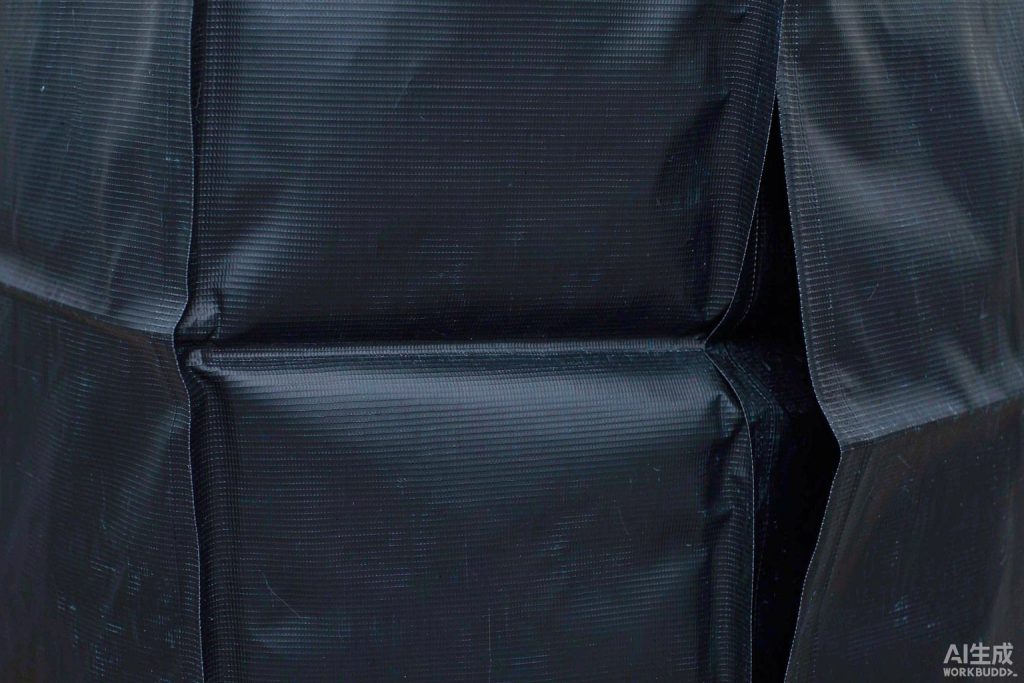
What is anti-wick yarn in PVC coated fabric?
Anti-wick yarn is a polyester yarn treated so water cannot climb along the filament by capillary action into the scrim, which matters because untreated yarn at a cut edge or seam lets moisture track inward and start delamination, so tension-membrane and inflatable builds specify anti-wick yarn to protect the bond line from hidden water ingress.
- Anti-wick yarn stops capillary wicking into the scrim (KB §1.3 按结构与表面处理).
- Untreated edges let moisture track inward and delaminate (KB §3.1 常见误区).
- Tension-membrane and inflatable builds specify it to protect seams (KB §3.1/§3.4).
Why does wicking cause seam delamination?
Capillary wicking draws water along the yarn like a wick and, once inside the PVC-polyester interface, hydrostatic and thermal cycling break the coating bond, so a seam that looked sound fails months later; anti-wick yarn at cut edges and welded seams removes the pathway before the panel is even installed.
- Wicking breaks the coating–yarn bond over time (KB §1.3 / §3.1).
- Failures appear months later, after installation (KB §3.1 常见误区).
- Specify at cut edges and seams before install (KB §4 选型决策框架).
When do I need anti-microbial treatment?
Anti-microbial protection is a finish that limits fungal or bacterial growth on the fabric surface, cited under EN ISO 846 microbial resistance, and it is worth specifying for humid, shaded or wet-stored conditions such as awnings, agricultural covers and marine use, while a cleanable PVDF face already resists the soiling that feeds microbes.
- EN ISO 846 covers microbial resistance (KB §2.2 性能—测试方法对照表).
- Specify for humid / shaded / marine / agricultural use (KB §3.2/§3.4).
- PVDF self-cleaning reduces soiling that feeds microbes (KB §1.3 表面处理).
How do I verify anti-wick and anti-microbial claims?
Verify anti-wick by asking the mill for the yarn-treatment confirmation and, for anti-microbial, a third-party EN ISO 846 report with the test organism and inhibition rate, because generic “anti-microbial” or “anti-wick” labels on a spec sheet are not evidence and the claim should match the actual yarn lot and finish used in production.
- Ask the mill for yarn-treatment confirmation (KB §4 step 7).
- Anti-microbial: third-party EN ISO 846 with organism and rate (KB §2.2).
- Generic labels are not evidence; match to lot and finish (KB §附录 复核清单).
FAQ
Is anti-wick the same as waterproof?
No. Anti-wick stops water from climbing along the yarn inside the fabric, while waterproof (or water-resistant) describes the coated surface blocking penetration; a fabric can be coated waterproof yet still wick moisture along an untreated cut edge, which is why anti-wick yarn is specified at seams and hems specifically.
Do I need anti-wick yarn for a truck side curtain?
For European truck curtains built to EN 12641-2, the seam and bond integrity matter more than wicking, but any curtain with cut edges exposed to road spray benefits from anti-wick yarn; specify it when the panel is welded from rolls with exposed scrim edges or used in consistently wet conditions.
What does EN ISO 846 test for?
EN ISO 846 evaluates the resistance of plastics and coated textiles to fungi and bacteria, reporting whether the material supports microbial growth and, for treated goods, the inhibition rate against a named organism; it is the standard buyers cite when they ask for anti-microbial confirmation on a PVC fabric.
Will anti-microbial treatment wash off?
Durable anti-microbial finishes are built into the coating or yarn and resist normal cleaning, but effectiveness depends on the chemistry and wash frequency; always request the EN ISO 846 report with test conditions rather than assuming the claim survives field cleaning, and avoid harsh solvents that can strip the finish.
Does anti-wick yarn affect welding?
Anti-wick treatment is on the yarn surface and is chosen to remain weldable, so it should not stop RF, hot-air or hot-wedge seams; confirm weldability with the mill and run a sample peel test, because a poorly matched treatment could interfere with the coating bond at the seam.
Is anti-microbial safe for potable water tanks?
Only specify anti-microbial or any additive for potable use after you confirm the relevant contact-certification (for example NSF/ANSI 61 in some markets); EN ISO 846 proves microbial resistance but not food-contact safety, so confirm the specific potable certification before using the fabric for drinking-water containment.
Can I add anti-microbial to an existing fabric?
Anti-microbial is a finish applied during coating or as a post-treatment, not something added to a finished roll later, so it must be specified at manufacture; if you already hold stock without it, the realistic route is a re-coat or a new production run rather than a field treatment.
How much does anti-wick yarn cost extra?
The premium is product-specific and depends on the yarn treatment and order volume, so quote it as a line item confirmed with the mill rather than assuming a fixed percentage; for long-life outdoor or inflatable builds the delamination risk it removes usually justifies the small added cost.












