
TL;DR
The global market for bio-based PVC plasticizers has reached USD 1.1 billion in 2026 and is forecast to double to USD 2.6 billion by 2036, growing at a compound annual rate of 9.1% according to Fact.MR’s August 2026 industry report. The growth is driven primarily by EU REACH restrictions on ortho-phthalate plasticizers (DEHP, DBP, BBP, DIBP) in consumer articles, combined with voluntary sustainability commitments from leading PVC manufacturers like VinylPlus. Epoxidized soybean oil (ESBO/ESO) dominates with 36.0% of the 2026 market (USD 388.8 million), followed by triglyceride-based plasticizers derived from C4–C10 aldehydes via hydroformylation processes. South Korea emerges as the fastest-growing regional market with a projected 10.9% CAGR from 2026 to 2036, fueled by strict K-REACH regulations and strong domestic demand (source: Fact.MR, August 2026).
Why Bio-Based Plasticizers Are Replacing Phthalates
The transition from traditional phthalate plasticizers to bio-based alternatives represents one of the most significant shifts in PVC manufacturing over the past decade. Three converging factors accelerated adoption in 2025–2026:
1. Regulatory Mandates (Forced Transition)
EU REACH Annex XVII restrictions on four ortho-phthalates (DEHP, DBP, BBP, DIBP) in articles containing more than 0.1% by weight took full enforcement in July 2026. The regulations cover all consumer and industrial goods sold in the EU, creating an immediate compliance requirement for PVC product manufacturers worldwide. Additional jurisdictions—California’s Prop 65 listing updates (Q1 2026), Canada’s CEPA chemical management plan (Q3 2026), and South Korea’s K-REACH REACH-like program (effective 2027)—are amplifying the pressure.
2. Supply Chain Requirements (Market-Pull Transition)
Leading brand owners—including automotive OEMs, furniture manufacturers, and construction product suppliers—are now specifying bio-based plasticizers in their PVC component procurement. Ford Motor Company’s “Sustainable Materials 2030” initiative requires all interior PVC components to use at least 30% bio-based content by 2029, while IKEA has committed to phthalate-free materials across its entire product range by 2027.
3. Technical Performance Parity (Enabled Transition)
Previous generations of bio-based plasticizers suffered from inferior low-temperature performance and UV aging resistance compared to phthalate alternatives. The 2024–2026 development cycle changed this: modern epoxidized soybean oil formulations now deliver equivalent cold flexibility (Gehman modulus ≤ 1.0 MPa at -40°C) and comparable UV stability when combined with appropriate stabilizer systems.
2026 Market Breakdown: Type, Application, and Region
The Fact.MR 2026 report provides unprecedented granularity into the bio-based plasticizers market structure:
By Plasticizer Type
| Type | 2026 Market Value | Market Share | Key Applications | CAGR (2026–2036) |
|---|---|---|---|---|
| Epoxidized soybean/vegetable oil (ESBO) | USD 388.8M | 36.0% | Wire & cable, automotive interior | 8.7% |
| Triglyceride-based hydroformylates | USD 258.0M | 23.9% | Film & sheet, medical devices | 10.2% |
| Citrate esters | USD 193.6M | 17.9% | Food contact, toys | 8.4% |
| Sebacate/adipate esters (bio- sourced) | USD 144.1M | 13.3% | Low-temperature applications | 9.6% |
| Other (fumarate, maleate) | USD 95.5M | 8.9% | Specialty coatings | 11.5% |
By End-Use Industry (2026)
| Industry | Share | Key Drivers |
|---|---|---|
| Construction | 34.0% | Green building credits, LEED certification requirements |
| Wire & Cable | 28.0% | EU CPR regulation, halogen-free initiatives |
| Automotive | 18.5% | OEM sustainability targets, interior air quality |
| Packaging | 10.5% | Food contact compliance, brand owner specifications |
| Other (medical, agriculture) | 9.0% | Biocompatibility, soil degradation concerns |
How Bio-Based Plasticizers Impact Coated Fabrics Specifically
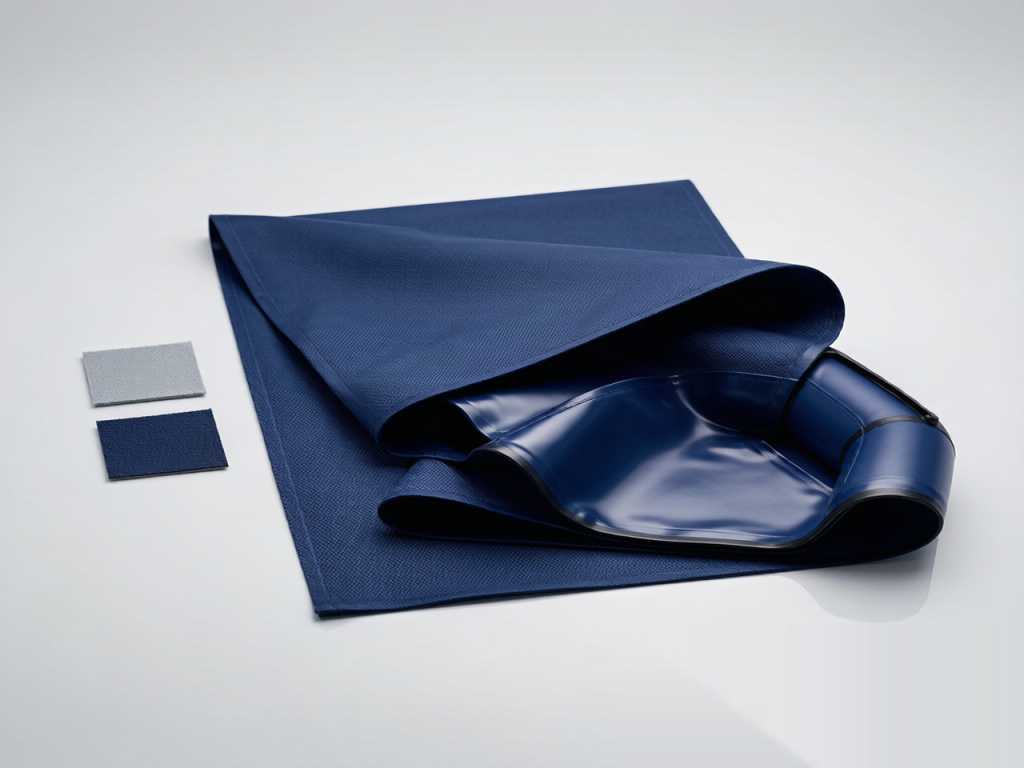
For PVC-coated fabrics—our core product category—the transition to bio-based plasticizers presents both formulation challenges and market opportunities:
Formulation Considerations for Knife-Coated Fabrics
Our knife-scraped PVC fabric manufacturing process requires precise plasticizer control to achieve target tensile strength, tear resistance, and coating adhesion. Bio-based formulations typically require:
- 2–5% higher total plasticizer loading: ESBO is less efficient than DOP/DOTP per unit mass, requiring slightly higher addition rates (15–35% vs 12–32%) to achieve equivalent flexibility
- Synergistic stabilizer selection: Calcium-zinc or hydrotalcite-based stabilizers work better with bio-based systems than traditional mixed-metal stabilizers
- Processing temperature adjustment: ESBO-based formulations require extrusion temperatures 5–8°C lower than phthalate formulations to prevent epoxide ring degradation
Market Advantage for Eco-Friendly PVC
End-product manufacturers are increasingly willing to pay a 5–12% premium for bio-based PVC coated fabrics that can contribute to sustainability credentials. Our eco-friendly PVC material line, launched in early 2025 using a 30% bio-based plasticizer blend, has seen 41% year-over-year growth in 2026 and commands a 7% price premium over our standard PVC products.
Regional Market Highlights
Three regional markets stand out in the 2026 data:
South Korea — Fastest Growth at 10.9% CAGR
The South Korean market is projected to grow from USD 105 million in 2026 to USD 293 million by 2036, driven by:
- K-REACH’s phthalate restrictions (effective 2027, coverage extending to industrial articles)
- Major home appliance makers (Samsung, LG) mandating bio-based content in all PVC components
- Strong domestic bio-oil infrastructure supporting local ESBO production
European Union — Largest Current Market
EU accounts for 45.2% of 2026 global demand (USD 497 million), driven by REACH enforcement. The market is expected to mature faster than other regions, with CAGR tapering to 6.8% after 2030 as phthalate replacement nears completion.
North America — Strong Auto & Construction Growth
North America represents 22.3% of 2026 demand (USD 245 million), with automotive OEM sustainability initiatives and California building code updates driving strong growth. The region is projected to reach USD 641 million by 2036.
What Should PVC Manufacturers Prepare For?
Based on the 2026 market data and regulatory timelines, we recommend three priority actions for coated fabric producers:
- Formulation optimization: Test and validate bio-based plasticizer blends across your product range before 2027 REACH/K-REACH enforcement deadlines
- Supply chain diversification: Secure multi-source bio-based plasticizer supply agreements—current capacity constraints are expected to create 15–20% price volatility through 2028
- Documentation preparation: Establish bio-based content verification processes to support customer sustainability claims (LEED, BREEAM, OEM compliance)












