
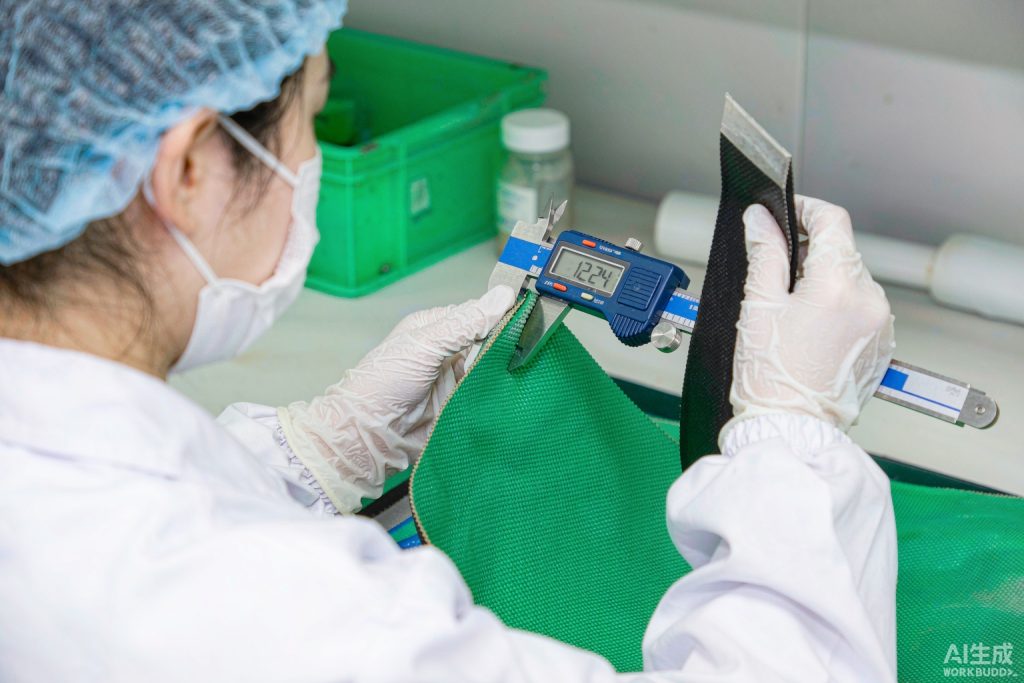
What tests should a PVC coated fabric test report include?
A credible PVC coated fabric test report should list the method standard beside every value—ISO 1421 for tensile, ISO 4674 for tear, ISO 2411 for coating adhesion and EN ISO 4892-2 for accelerated weathering—because a number without its test method and sample condition is not comparable across mills or against your own written specification.
- Tensile and tear: ISO 1421 / ISO 4674 with specimen width and grip distance stated (KB §2.2 性能—测试方法对照表).
- Coating adhesion (peel): ISO 2411, normally ≥100 N/5cm for structural grades (KB §2.1/§2.2).
- Accelerated weathering: EN ISO 4892-2 (xenon) with radiant exposure and retention % reported (KB §2.2).
How do I verify tensile and tear strength numbers?
Tensile is read as force per 5 cm width (N/5cm), not per cm, and the warp and weft values are reported separately; a 1000×1000D scrim typically shows 1950–4300 N/5cm for tarpaulin grades, so compare like-for-like widths and note the test temperature because cold values at −25℃ can be 30% lower than at 23℃.
- Report warp/weft separately in N/5cm (KB §2.1 单位说明).
- EN 12641-2 truck curtain: ≥4000 N/5cm at 23℃, ≥2700 at −25℃ (KB §2.1 关键标准下限).
- Always note specimen width and gauge length on the sheet (KB §2.2 ISO 1421).
What does the UV and weathering result actually tell me?
A UV or weathering result is only meaningful with exposure hours, light source and retained property stated—EN ISO 4892-2 at 2000 h with ≥80% tensile retention and ISO 105-B02 grade 7–8 colour fastness is a typical acceptance set, and the report must name its weatherability class to map onto the 3–5 or 7–12 year warranty band.
- EN ISO 4892-2/-3 with exposure hours and retained % (KB §2.2 UV/气候老化).
- Colour fastness ISO 105-B02 typical 7–8 (KB §2.2 耐光/色牢).
- Map result to warranty class per the supplier test report (KB §1.3 / §4 step 7).
How do I spot a misleading or incomplete report?
Watch for reports that show only favourable properties, omit the method standard, or mix units; a complete third-party report states the lab, standard, sample condition and pass thresholds, and you should cross-check the values against your specification before quoting rather than trusting a single headline number from a marketing sheet.
- Demand method + lab + sample condition on every value (KB §4 选型决策框架 step 7).
- Cross-check to spec, not just range, before quoting (KB §4 / §附录 复核清单).
- Third-party report preferred over in-house marketing data (KB §附录 可信度与来源).
FAQ
What is the most important line in a fabric test report?
The single most important line is the one that pairs each value with its test method and sample condition; a tensile figure with no ISO 1421 reference and no specimen width cannot be compared to your specification. Always read the method column first, then the number, because the method defines what the number actually means.
What does N/5cm mean on a coated fabric spec?
N/5cm means newtons of force measured across a 5 cm wide strip, which is the standard width for coated-fabric tensile and peel tests. It is not the same as N/cm, and converting wrongly changes a quote by a factor of five; confirm the width is stated before you compare two suppliers’ sheets.
How many hours of UV testing equal one year outdoors?
There is no fixed conversion, because xenon and fluorescent UV rigs age fabric faster or slower than real weather depending on spectrum and temperature; EN ISO 4892-2 at 2000 h with a stated retention % is a comparable acceptance point, but map it to the supplier’s rated warranty class rather than assuming a simple hours-to-years ratio.
Is ISO 1421 the same as ASTM D751?
They are broadly equivalent tensile methods from different bodies—ISO 1421 is the international/EU standard and ASTM D751 is the US coated-fabric method—but grip distance, rate and conditioning differ, so values are not automatically interchangeable. Quote the method your buyer’s specification names and avoid mixing the two on one sheet.
Why do both tear and tensile numbers matter?
Tensile tells you how much steady load the panel resists, while tear (ISO 4674) tells you how far a cut or puncture propagates under stress; a high tensile but low tear fabric can still fail at a small nick. For tarpaulins and side curtains both are specified, so check the lower one against your real risk.
What coating adhesion value should I expect?
For structural PVC coated fabric, coating adhesion by ISO 2411 is normally ≥100 N/5cm, and EN 12641-2 truck curtains require exactly that threshold; lighter banner grades sit lower. If a report shows adhesion without the method or width, ask for the ISO 2411 figure before you accept the roll.
How do I compare two suppliers’ reports fairly?
Compare only like-for-like: same method, same specimen width, same temperature and same property, read against your specification rather than the supplier’s marketing range. A number quoted without its standard is not evidence, so request the full third-party report and check the lab name before you shortlist a mill.
Do I need a test report for every colour or batch?
You need the method and values that back your specification, and for colour-critical or fire-rated builds a batch-specific report is wise because pigments and FR add-ons shift results; at minimum keep the mill’s type-test report on file and request batch verification when the application is safety-related or long-life outdoor.












