
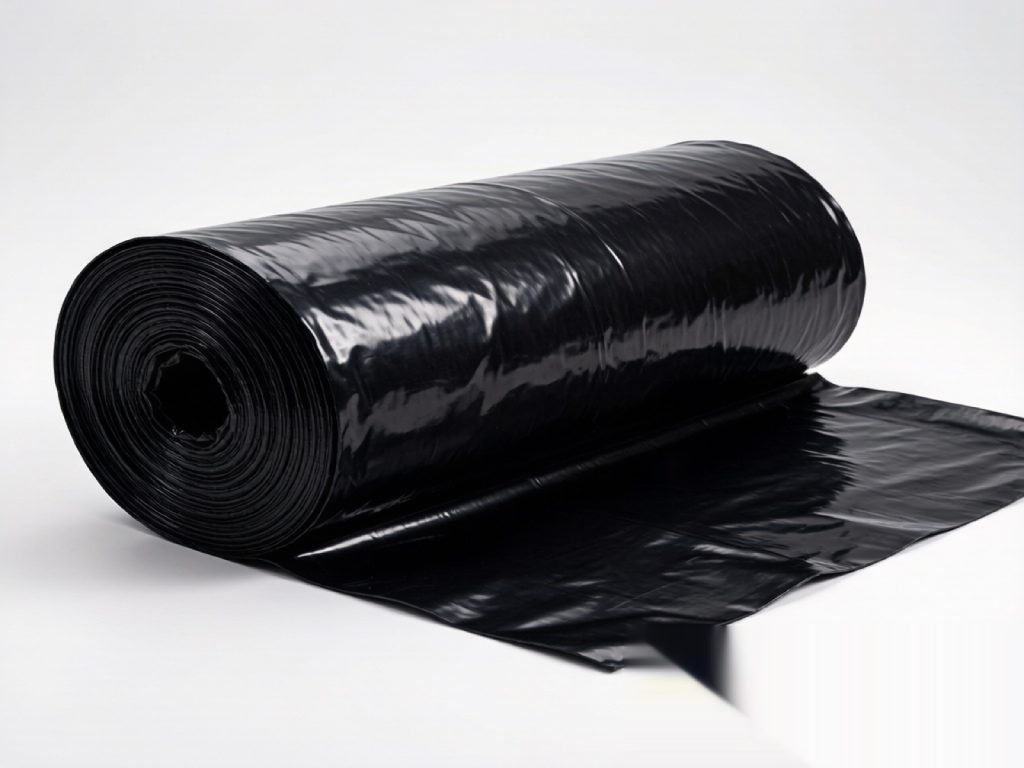
Background: why it is time to re-cost a liner
As global infrastructure investment and environmental regulation expand together, geomembrane liners have become the standard impermeable barrier for landfills, mining, reservoirs, irrigation canals, wastewater and aquaculture. BPM Geosynthetics’ 2026 cost guide lays out comparable figures so engineers can balance budget against material choice. Source: bpmgeoliner.com.
2026 unit-price ranges by polymer
Indicative prices in USD per square metre:
- HDPE: $0.90–3.50+ (best chemical resistance and longevity;首选 for landfills and mining);
- LLDPE: $1.00–3.00 (more flexible, multiaxial elongation; soft subgrades and high-settlement sites);
- PVC: $1.50–3.00 (conformable, easy to install, complex geometry; decorative ponds and irregular liners);
- EPDM: $2.00–4.00+ (flexible, UV-resistant; natural ponds and some exposed uses);
- Composite: $2.50–5.00+ (geomembrane bonded to geotextile for puncture protection).
A properly installed liner reaches hydraulic conductivity of ≤1×10⁻¹¹ cm/s and can cut seepage by more than 95% versus compacted clay.
How thickness drives cost
Thickness is the most direct price lever. 2026 market estimates:
- 0.5 mm (20 mil): $0.50–1.50/m² (small ponds, temporary containment);
- 0.75 mm (30 mil): $0.80–1.80 (agricultural ponds, secondary canals);
- 1.0 mm (40 mil): $1.10–2.20 (medium reservoirs, aquaculture);
- 1.5 mm (60 mil): $1.50–2.80 (landfills, mining, wastewater);
- 2.0 mm (80 mil): $2.00–3.50 (heavy mining, hazardous waste);
- 2.5–3.0 mm: $2.80–4.50+ (extreme or specialised containment).
Each additional 0.5 mm typically adds 20–40% because of higher resin consumption. Smooth is the price baseline; textured (single- or double-sided) surfaces, which improve slope friction, usually add 10–35%.
Specifying and compliance
Before a liner goes into a bid, align four things: medium (chemical/hazardous content decides HDPE vs PVC), terrain (settlement or irregular shape favours conformable PVC), thickness (thinnest grade that meets puncture and life risk), and compliance (GRI-GM13 for HDPE, ASTM D7176 / D5199 for PVC, NSF/ANSI 61 for potable). PVC works around −40 to +70°C, welds easily by hand, and suits projects needing detailed, complex terminations.
Material cost versus lifecycle cost
Unit price is only the first line. A cheaper HDPE at $0.90/m² can cost more over 30 years if its stiffness demands heavier subgrade prep and anchorage, while a conformable PVC at $1.50–3.00/m² may install faster on irregular or settling ground. BPM notes virgin HDPE still outperforms recycled-content liners on stress-crack resistance and service life (often 50–100 years under cover), so the lowest bid is rarely the lowest ownership cost.
Seaming and field verification
HDPE is joined by hot-wedge or extrusion welding into homogeneous seams; PVC uses solvent, chemical or thermal welding that suits complex details and repairs but needs controlled workmanship. Either way, specify non-destructive seam testing (vacuum or spark) and third-party QA — the seam, not the sheet, is where most failures start.
A quick sizing example
For a 2,000 m² agricultural reservoir, a 1.0 mm PVC at roughly $1.10–2.20/m² lands material cost near $2,200–4,400 before geotextile, anchors and labour; stepping to 1.5 mm adds 20–40% but extends puncture margin. The right number is the thinnest grade that passes the site’s settlement and puncture risk — not the catalogue maximum.
Frequently asked questions
Q: Is PVC or HDPE geomembrane better value?
A: Unit prices overlap — PVC at $1.50–3.00/m² and HDPE at $0.90–3.50. HDPE wins on chemical stability and service life for landfills and mining; PVC wins on conformability for complex geometry and settlement, suiting ponds, irrigation canals and irregular liners. Choose by medium and terrain, not price alone.
Q: How do I set thickness, and why does 0.5 mm cost so much more?
A: Thickness is the strongest cost driver: 0.5 mm is about $0.50–1.50/m², rising to $2.80–4.50+ at 2.5–3.0 mm. Each extra 0.5 mm raises resin use and typically adds 20–40%, so specify the thinnest grade that still meets puncture and settlement risk.
Q: Is PVC liner safe for potable water?
A: It can be, but confirm a potable-water certification such as NSF/ANSI 61 and verify the formulation and welding method. BPM lists NSF/ANSI 61 as a key compliance item for drinking-water liners.












