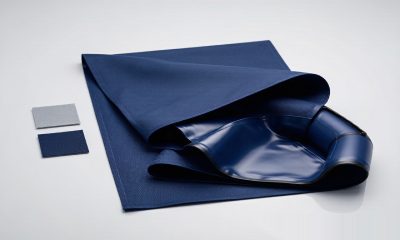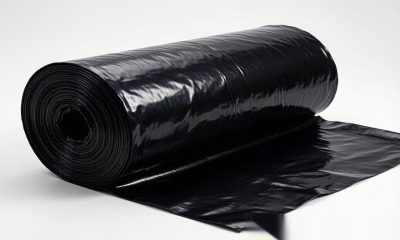
Short answer: PVC single-ply roofing is a thermoplastic sheet, usually 50-80 mils thick, fastened or adhered over insulation and then hot-air welded at the seams. The weld fuses the sheets into one monolithic surface – stronger than the membrane itself – which is why PVC beats adhesive-seamed EPDM and equals TPO on seam integrity for low-slope commercial roofs.
What PVC roofing actually is
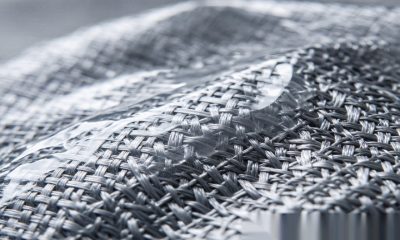
A PVC roof membrane is a three-part composite: a top PVC layer loaded with UV stabilizers and reflective white pigment, a central reinforcing scrim of polyester or fiberglass, and a bottom PVC layer with plasticizers for flexibility. RC Roofing’s technical overview describes this layering and notes that commercial sheets must meet ASTM D4434, which classifies them as Type II (fiber-reinforced), Type III (fabric-reinforced, the most common in high-performance jobs) and Type IV (with added polymers for extreme environments) (rcroofingllc.com).
The seam is the whole point
Low-slope roofs fail at seams. EPDM relies on splice tape and adhesive that can dry and delaminate; PVC and TPO are heat-welded. A hot-air welder runs between overlapping sheets at roughly 900-1100 degrees F, melting the PVC so it fuses at the molecular level, then a silicone roller consolidates the bond. The Roofing Brief and RC Roofing both report the resulting seam is often stronger than the surrounding sheet. Crews probe every cooled seam and pull test coupons before sign-off (theroofingbrief.com, rcroofingllc.com).
Where PVC wins and where it does not
PVC’s chlorinated chemistry shrugs off oils, animal fats, jet fuel and mild acids – exactly what lands on restaurant, food-processing and airport-hangar roofs. That grease resistance is the classic reason to pick PVC over TPO, which handles extreme heat better. WD Waterproofing’s WD007 (to ASTM D4434/D4434M) lists 357 MPa tensile, zero penetration under 0.3 MPa for 120 minutes, and wide 3.0 m rolls that cut seam count (wd-waterproofing.com). Desheng’s sheet ranges 0.5-2 mm, to ASTM D4434 and EN 13956, with a stated 20+ year roof and up to 50 year below-grade life (deshengmaterials, Made-in-China).
The installation sequence that actually holds
Life is set by workmanship. The deck must drain at 1/4:12 or more under IRC R905.13.1 and meet ASTM D4434 under R905.13.2. In practice: inspect and repair the deck; fasten cover board and polyiso insulation for a smooth substrate; roll and mechanically fasten or fully adhere the PVC; hot-air weld every lap; weld flashing up walls, curbs and pipe boots with prefabricated corners; then probe-test welds, terminations and drainage before sign-off. Because it is a single-ply system, PVC competes with built-up roofs and other membranes such as EPDM and TPO (ASTM D6878), not with shingles.
Fire rating and insurance
PVC’s chlorine content makes the sheet hard to ignite and self-extinguishing once the heat source is removed. That helps a building reach a Class A fire rating, which can lower commercial property insurance premiums. For grease-venting restaurants, food plants and hangars, this grease resistance plus self-extinguish behavior is often the deciding factor over TPO.
Reinforced versus KEE: reading the data sheet
When you read a PVC roofing data sheet, the reinforcement and the plasticizer tell you more than the mil thickness. A polyester or fiberglass scrim sets dimensional stability and puncture resistance; the plasticizer sets long-term flexibility. Plain PVC can lose plasticizer over decades, shrinking and cracking – worst in cold climates. KEE-modified sheets (ASTM D6754, e.g. FiberTite) hold flexibility far longer. So a buyer comparing two 60-mil membranes should ask which ASTM the sheet is made to, not just the number on the box.
Width also drives installed cost. WD Waterproofing’s 3.0 m rolls and Desheng’s 1-4 m rolls cut the number of seams, and fewer seams mean fewer places to leak and less labor. For a large distribution-center roof, that difference can outweigh a small per-roll price gap, which is why specifiers weigh roll width alongside tensile and weld data.
Specifying it in 2026
Two standards matter: ASTM D4434 for standard PVC and ASTM D6754 for KEE (ketone ethylene ester) membranes such as FiberTite. KEE-modified PVC (for example Carlisle Sure-Flex KEE HP with DuPont Elvaloy KEE, or GAF EverGuard PVC KEE) resists plasticizer migration, the mechanism that eventually brittles plain PVC. The IRC (R905.13) requires at least 1/4:12 slope and ASTM D4434 compliance, and installed cost runs about 9-14 US dollars per square foot. Sika dates its fabric-reinforced Sarnafil PVC membrane to 1962 – a 60-year field record (theroofingbrief.com).
Frequently asked questions
- Q: PVC or TPO for a flat roof? A: Choose PVC where grease, oil or chemical exhaust is present (restaurants, plants); TPO performs better in extreme heat. Both are heat-welded thermoplastics.
- Q: How long does a PVC roof last? A: Typically 20-30 years, with maker terms up to 30 years; below-grade installations can reach 50 years.
- Q: Which standard governs it? A: ASTM D4434 for standard PVC, ASTM D6754 for KEE membranes, EN 13956 in Europe, and IRC R905.13 for slope and compliance.