The bottom line
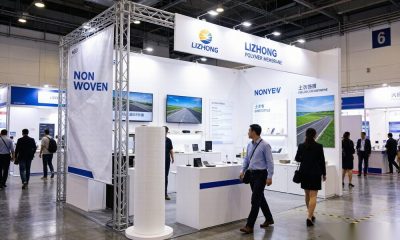
From September 15–17, 2026, the 28th Shanghai International Advertising Expo (SIGN CHINA 2026·Shanghai) ran at the Shanghai New International Expo Centre (2345 Longyang Road, Pudong), collocated with LED CHINA, Digital Signage China and Digital Printing China as a ‘4 shows in 1 venue’ platform drawing buyers from over 100 countries and regions. The conversation around PVC banner fabric moved from ‘brighter’ to ‘more accurate, more matte, more sustainable’ — dull-matte composite PVC/PP banners, grey-back PET/PP banners and printable reflective materials stole the spotlight.
Background: a real demand recovery in ad materials
Zhejiang Shawei Digital showed its full product portfolio at the booth, and its foreign-trade manager said demand for reliable, high-quality advertising materials is recovering strongly. For print service providers and sign makers, sourcing stable-quality banner fabric in one stop matters more than pure price comparison. The exhibitor roster — Zhejiang Ganglong New Materials, Shanghai Naer Industrial, Zhejiang Hailide Composite New Materials, Haining Jinmao Warp Knitting and others — shows how concentrated the ad-material chain is in East China.
How it works: why matte and grey-back are trending
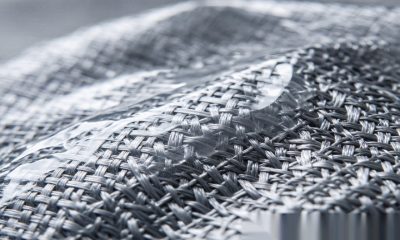
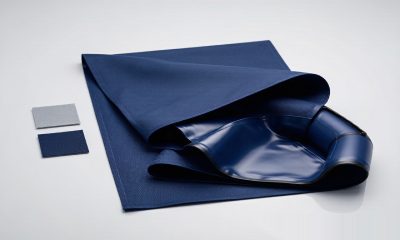
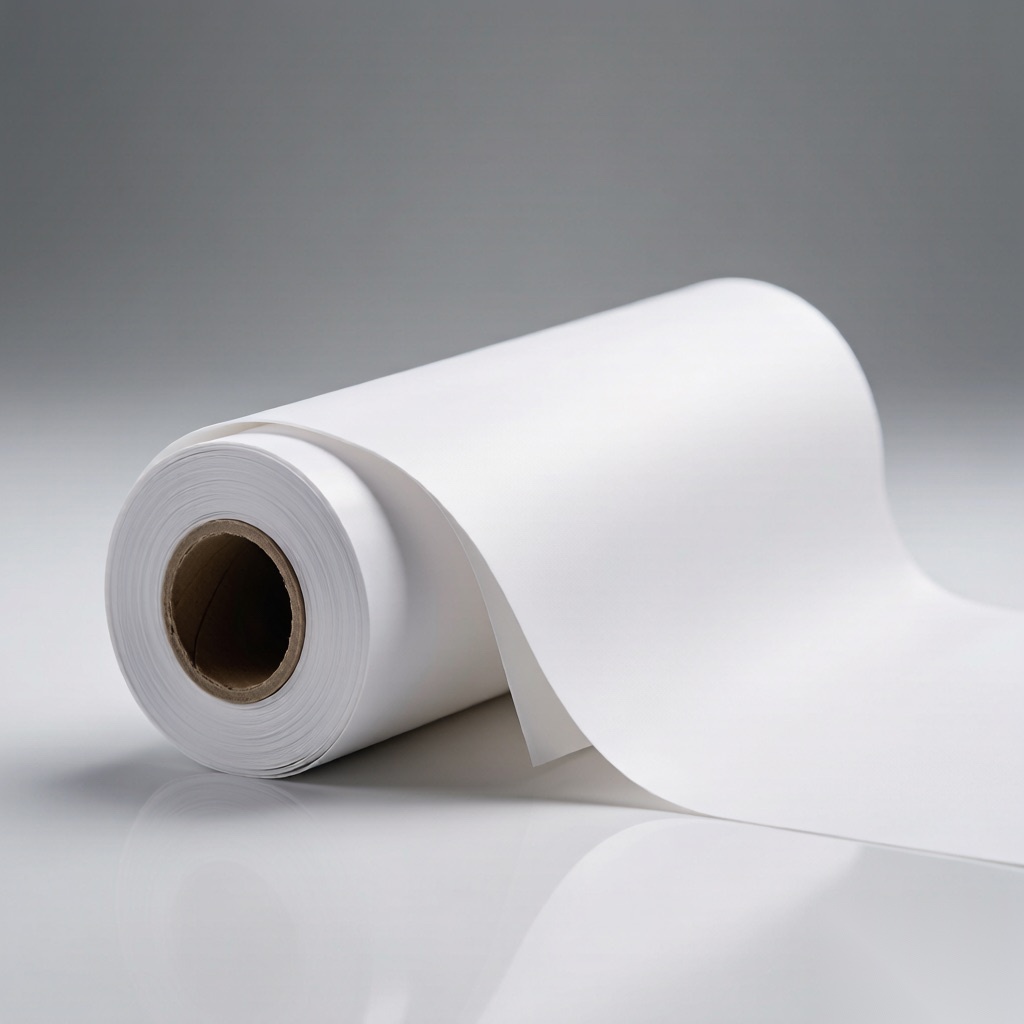
Traditional frontlit banner fabric commonly runs about 440 g/m² in a knife-coated spec, while backlit (lightbox) fabric sits around 510–610 g/m². The new ‘dull matte composite PVC/PP banner’ uses a matte composite layer to cut glare and improve color fidelity and close-up appearance; ‘grey back PET/PP banner’ uses a grey backing to block show-through, cleaning up wall-mounted or double-sided graphics. The reflective series — reflective flex, digital transfer film, printable reflective vinyl — brings safety and high visibility into signage.
Print technology is the other half of the story. Solvent and eco-solvent inks still dominate high-volume outdoor work for durability, but water-based (latex, UV-curable) inks are gaining because they cut VOC at the printer and pair naturally with recyclable PP/PET composite substrates. A substrate that prints cleanly on a water-based head is therefore more than an eco badge — it is a future-proofing choice as municipal VOC rules tighten.
Where it is used: from lightboxes to vehicles to walls
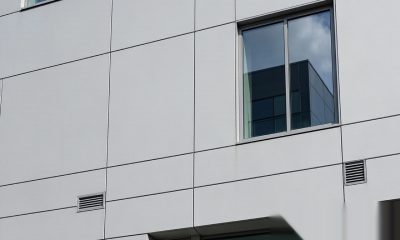
Banner fabric covers outdoor billboards, lightboxes, vehicle-wrap film, cultural-creative prints and decorative murals. Each use stresses a different property: lightboxes need uniform backlight transmission and no hot spots; vehicle wraps need conformability and weather resistance; wall murals need flatness and no show-through. That is exactly why grey-back and matte variants are no longer niche.
Market and trend: green printing and water-based ink
At the same time, SIGN Istanbul (September 23–26, Istanbul) flagged next-generation eco-friendly textile-printing equipment as a highlight, emphasizing water-saving, power-saving, low-consumable digital textile-printing for Turkey’s apparel export industry. Whether domestic or at the Eurasia crossroads, low-VOC, water-based ink and recyclable substrates are shifting from nice-to-have to a purchasing gate.
Finishing and installation details buyers miss
Specifying the roll is only half the job. Hemming, grommet spacing, welded versus stitched edges and the liner’s dimensional stability under tension all decide how the graphic looks after a month outdoors. For lightboxes, confirm the substrate’s light transmission percentage and that the print is backlit-calibrated; for outdoor billboards, confirm UV stability and a recommended lamination if the campaign runs beyond a season.
Spec checklist for buyers
① Match to light source: frontlit knife-coated (~440 g/m²) for external light, backlit (510–610 g/m²) for lightboxes. ② Prefer matte composite for close-view and indoor premium graphics to cut glare. ③ Use grey-back PET/PP for wall or double-sided graphics to stop show-through. ④ Consider printable reflective for night or safety scenes. ⑤ Ask suppliers for water-based-ink compatibility and recycled-substrate ratio instead of chasing unit price.
Durability and the recycling question
Outdoor banner life is set less by the print than by the substrate and UV stability; a frontlit PVC knife-coated banner typically serves a single season to a year outdoors before weathering, while laminated PP/PET composites trade some weldability for a cleaner end-of-life stream. There is no perfect answer — PVC welds and lasts, PP/PET recycles more readily — so the honest recommendation is to match the substrate to whether the graphic is short-lived promotional or a longer-term architectural install. For buyers, that means keeping two substrate specs on the shelf rather than forcing one material to do every job.
FAQ
Q1: What is the difference between matte composite and glossy banner?
A1: The matte layer cuts glare and improves close-up color fidelity and texture, better for indoor, near-view and premium brand graphics; glossy reflects strongly, more eye-catching at distance but prone to hotspot glare up close.
Q2: What problem does grey-back PET/PP banner solve?
A2: The grey backing blocks light passing through the material, preventing wall color or back-side graphics from showing through, so the image stays clean and uniform.
Q3: How do I choose an eco-friendly banner fabric?
A3: Prefer specs compatible with water-based ink and recyclable substrates such as PP/PET composites, and request the supplier’s VOC and recycled-content data rather than focusing only on price.
Sources: Zhejiang Shawei Digital official news (SIGN CHINA 2026 Shanghai), Digital Printing China / Sign China show reports.