The bottom line
In 2026, PVC coated fabric remains a steadily expanding, demand-critical market. Across research houses: the global PVC fabric market passed USD 18.5 billion at end-2025 and is expected near USD 19.35 billion in 2026 (+4.6% YoY); the broader polymer coated fabrics market grows from USD 25.12 billion in 2026 to USD 35.82 billion by 2033 (CAGR 5.2%), with PVC still holding about 37% of the polymer segment. Growth rides on transportation, architectural membranes and protective clothing, while sustainable formulations move from selling point to entry ticket.
Background: why this market is stable
PVC coated fabric bonds a woven or knitted substrate — mostly polyester, some nylon — with a PVC coating to gain water resistance, abrasion resistance, weatherability and long life. It serves truck tarps, industrial covers, protective clothing, roofing membranes, awnings, advertising banners and agriculture. Its cost-efficiency and weldability keep it hard to displace in transportation (about 33% of polymer coated fabric use) and construction.
How it works: the product split
By substrate, polyester-based PVC fabric held about 58% of the global share in 2025 (57–59% in 2026), leading on dimensional stability and price; nylon-based gains in extreme-environment abrasion and light weight, with its segment growing about 6.5% in 2026 across aerospace and high-end outdoor. By function, flame-retardant, waterproof-breathable and antibacterial grades keep rising. China is the largest producer-consumer: about 62% of global PVC fabric output (~2.1 million tonnes) in 2025, projected 2.18 million tonnes in 2026 (+3.8%), with high-end functional demand growing over 8% a year.
Where growth comes from
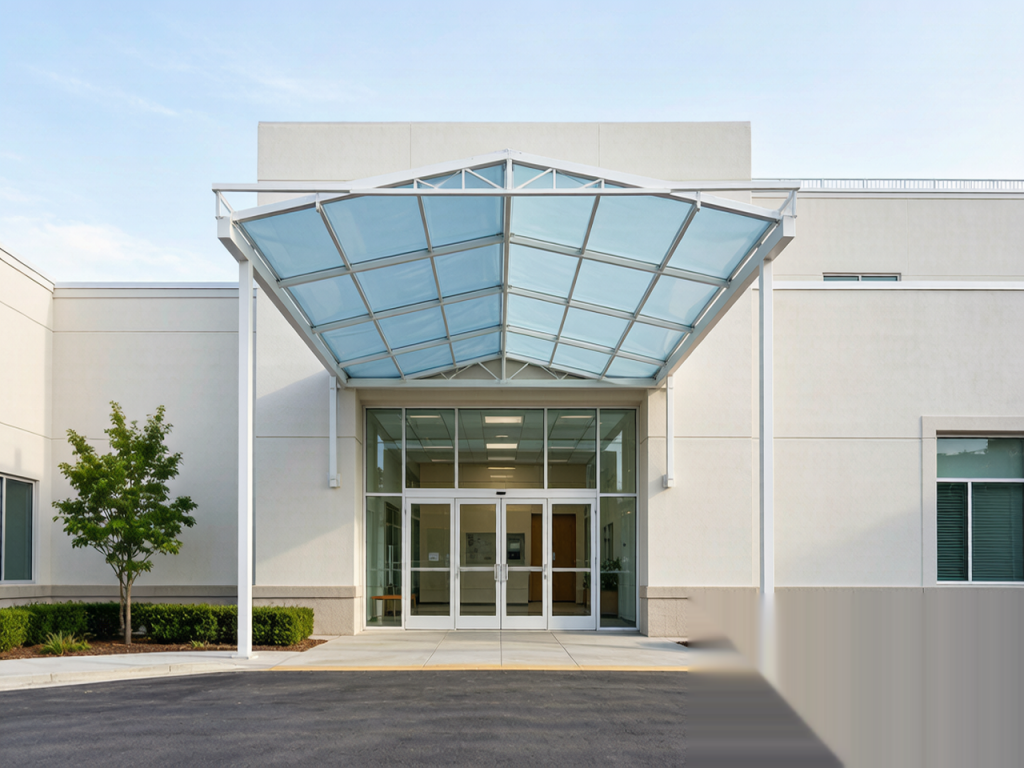
① Transportation: vehicle interiors, rail seating, aircraft cabins, marine upholstery, truck covers — global vehicle output hit 96.4 million units in 2025 (+3.9%). ② Construction and tensile membranes: large-span canopies, parking shades, temporary pavilions. ③ Protective clothing and industrial covers. Asia-Pacific takes about 44% of polymer coated fabrics in 2026 as the largest region; North America is mature; Europe is regulation-driven toward phthalate-free and low-emission.
Competitive landscape and price signals
The field is concentrated at the top — Sioen Industries, Continental, Serge Ferrari, SRF and a long tail of regional coaters. That matters to buyers because resin-linked pricing is volatile: PVC resin swings move through to fabric quotes within a quarter, so dual-sourcing and framework agreements beat spot buying. The differentiator buyers actually feel is not price per square meter but consistency of tensile, tear and weldability lot to lot, which is where vertically integrated players protect their margin and their customers’ yield.
Market and trend: sustainability is the fault line
Europe recycled about 765,972 tonnes of PVC in 2025 (+5.7% vs 2024), with converters registering 508,109 tonnes of recycled PVC uptake — circularity is accelerating. At the same time, brand de-PVC/PFAS moves push demand for mono-material, recyclable alternatives (see our PP coated textile piece). For PVC coated fabric makers the realistic path is phthalate-free formulas, low VOC, design-for-recycling and honest end-of-life labeling.
Procurement strategy using the data
Treat the 5.2% CAGR as a tailwind, not a guarantee: demand is shifting toward high-end functional and sustainable grades, so commodity capacity gets squeezed by compliance while premium orders concentrate with suppliers who can document REACH, RoHS and recycled-content. Score total cost — including rejection rate and rework from inconsistent lots — and weight supplier regional capacity and lead time. Asia-Pacific remains the main source, but a second qualified region reduces supply risk when resin or logistics spike.
Spec checklist for buyers
① Match substrate and weight to use: transport/tarp needs high tear strength, architectural membrane needs tensile and weldability, pool needs reinforcement and watertightness. ② Verify flame-retardant and environmental credentials (REACH, RoHS, ASTM D751 mechanical framing). ③ Weigh supplier regional capacity and lead time. ④ Score recyclability and low carbon, not as an afterthought.
Reading price signals as a buyer
Because PVC resin is the cost driver, fabric quotes track the resin within a quarter, and buyers who spot-buy get caught on the peaks. The practical hedge is a framework agreement with a second qualified supplier outside the dominant Asia-Pacific base, plus a specification tight enough that lot-to-lot tensile and weld consistency protect yield. Cheapest per square meter is rarely cheapest per good part.
FAQ
Q1: Is the PVC coated fabric market still worth entering in 2026?
A1: Yes, but the bar is higher. Total demand is still expanding (global +4.6%, polymer coated fabrics CAGR 5.2%), and competition has shifted to high-end functionality and sustainable formulation.
Q2: Why is Asia-Pacific the core production region?
A2: China alone is about 62% of global PVC fabric output (~2.1 million tonnes), with over 75% of capacity in East and South China and a complete downstream chain in automotive, infrastructure and textile processing.
Q3: Will sustainability kill PVC coated fabric?
A3: Not wholesale, but it will reshape share. Suppliers with phthalate-free, low-VOC, recyclable designs capture premium orders; low-end commoditized capacity gets squeezed by compliance and brand gates.
Sources: GEP Research ‘Global and China PVC Fabric Market (2026)’, Coherent Market Insights, IndexBox, Transparency Market Research / Panchit market overview.