Short answer: According to the VinylPlus Progress Report 2026, the European PVC value chain recycled 765,972 tonnes of PVC waste in 2025 – up 5.7 percent from about 725,000 tonnes in 2024. Since 2000 it has recycled 10.3 million tonnes, avoiding an estimated 20.6 million tonnes of CO2. The flexible PVC and membranes category alone accounted for roughly 59,000 tonnes, showing that coated-fabric circularity is moving from slogan to supply chain.
What the numbers mean
VinylPlus is the European PVC industry’s voluntary sustainability commitment. Its 2026 Progress Report, independently verified by SGS and audited by PKF BOFIDI, reports 765,972 tonnes recycled in 2025, a 5.7 percent year-on-year rise. Notably, this happened while the EU’s overall polymer recycling capacity contracted by about 460,000 tonnes – PVC recycling capacity held steady (vinylplus.eu, macplas.it). Cumulative since 2000: 10.3 million tonnes and some 20.6 million tonnes of CO2 avoided.
Where the recyclate goes
Macplas breaks down the 2025 picture by region and stream. Germany, Austria and Switzerland lead with 25 percent of volume; the UK and Ireland 19.3 percent; France 13.6 percent; Benelux 13.6 percent; Scandinavia, Baltics and Poland 11.6 percent; Italy and Greece 11.3 percent. By waste type, pre-consumer (industrial offcuts) was 58.8 percent and post-consumer 41.2 percent. By application, window profiles topped the chart at nearly 417,000 tonnes, followed by flooring at almost 120,000 tonnes, cables around 104,000 tonnes, flexible PVC and membranes about 59,000 tonnes, and pipes about 41,000 tonnes.
- RecoTrace registered uptake: converters logged 508,109 tonnes of recycled PVC in 2025.
- rPVC use rose 3.6 percent year-on-year; the 2030 goal is at least 1 million tonnes of rPVC per year in new products.
- The VinylPlus Sustainability Forum 2026 in Genval, Belgium launched the revised mid-term 2030 Commitment.
Why PVC recycling held steady when others shrank
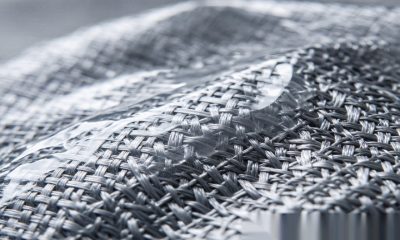
In a year when Europe’s total polymer recycling capacity fell by about 460,000 tonnes, PVC held its ground because of mature collection-sorting-recycling schemes (Recovinyl/PolyREC) and steady end-of-life volumes from construction – window profiles, flooring, cables. That flexible PVC and membranes (coated fabrics, tarpaulins, architectural membranes) now appear as a tracked category means these materials can plug into closed loops going forward.
Translating the tonnage into a purchasing clause
The 765,972 tonnes figure is an industry aggregate, not a per-supplier guarantee. The actionable number for buyers is RecoTrace: 508,109 tonnes of recycled PVC registered as used by converters in 2025, up 3.6 percent. Ask your coated-fabric supplier for a RecoTrace or PolyREC certificate stating the recyclate percentage in the batch, and pair it with a phthalate-free declaration. That converts a marketing claim into auditable evidence – exactly what EU customers and specifiers now expect.
The split between pre-consumer (58.8 percent) and post-consumer (41.2 percent) recyclate also matters. Post-consumer content is harder to source and usually costs more, but it carries more circularity credibility. Buyers chasing credible ‘circular PVC’ claims should specify a minimum post-consumer share rather than accepting any rPVC blend, and should expect the 2030 target of 1 million tonnes per year to tighten supply of verified material.
What it means for coated-fabric buyers
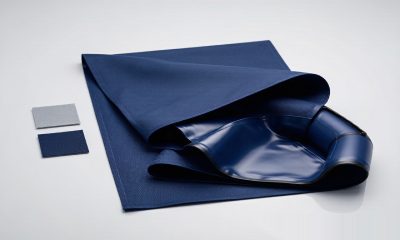
Flexible PVC and membranes being a tracked recycling category means knife-coated fabrics, tarpaulins and architectural membranes can increasingly plug into take-back streams. For buyers, the practical move is to ask suppliers for RecoTrace-traceable recyclate content paired with low-phthalate (REACH-restricted, e.g. DEHP/DINP) formulations – our REACH compliance guide already covers importer duties after the 29th SVHC update. Circularity is shifting from ‘is it green’ to ‘can you prove it with third-party data’.
Trends for 2026
VinylPlus has refocused from raw tonnage toward real-world impact, full life-cycle performance and carbon footprint. For B2B sourcing, the most useful action is to write recyclate percentage and certification (RecoTrace/PolyREC) into contracts, and to make phthalate-free plasticizers the default clause. Coated-fabric makers that want to claim ‘circular PVC’ in the EU will find it hard to compete without traceable evidence.
What circular PVC will demand next
As the 2030 target of 1 million tonnes per year approaches, verified recyclate will get scarcer relative to demand, and buyers who locked supply early will have the edge. Expect procurement to shift from ‘recycled content, yes or no’ to graded claims: percentage, pre- versus post-consumer, and the certifying scheme. For coated-fabric makers, designing products for disassembly and clean-stream take-back – not just adding rPVC – is what will survive scrutiny under EU green-claim rules.
Frequently asked questions
- Q: How much PVC was recycled in Europe in 2025? A: 765,972 tonnes under the VinylPlus framework, up 5.7 percent from about 725,000 tonnes in 2024.
- Q: What does this mean for coated-fabric buyers? A: Flexible PVC and membranes recycled about 59,000 tonnes; you can require RecoTrace-traceable recyclate content and low-phthalate REACH-compliant formulations from suppliers.
- Q: What is the industry target? A: At least 1 million tonnes of recycled PVC per year in new products by 2030; 2025 already delivered 765,972 tonnes recycled and 508,109 tonnes registered as used.