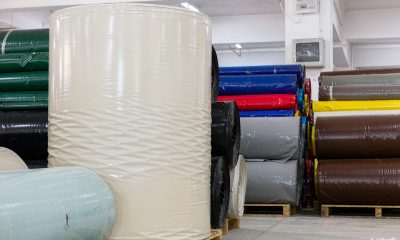
In the fourth quarter of 2026, two forces are converging in the European PVC market: producers are pushing through a second consecutive monthly price increase, and the region’s production map is being redrawn. For companies buying PVC-coated fabric and membrane, both will show up on the quotation sheet. In plain terms, October deals closed 40–70 euros per tonne above September, further increases are on the table for November, and operating rates at European plants sit at roughly 60%.
Why October fell short, yet November brings another hike
European producers went into October seeking increases of up to 150 euros per tonne to offset feedstock and energy costs. Weak demand made the full target unattainable: most deals settled 40–70 euros above September, some suppliers accepted smaller adjustments, and a few trimmed targets to defend market share. What held prices up was cost, not demand — a rising ethylene contract price and stubbornly high utility costs.
For November, producers are preparing another round. Their case rests on persistently high utility expenses and an expected further rise of 50–80 euros per tonne in the next ethylene contract. Suppliers want to pass through at least half of the anticipated monomer increase, with some aiming for the full amount. But October’s negotiations showed initial targets routinely exceed what buyers will accept; year-end destocking and the start of 2027 contract talks will cap gains.
PlasticPortal’s read agrees. Tight supply — driven by production cuts from low Rhine water levels, maintenance in Central Europe and declining imports — pushed PVC increases into the 80–100 euro per tonne band in October, with polyolefins up 40–120 euros and polystyrene up 100–150 euros. Europe has become a net polymer importer over the past four years, leaving little room to negotiate.
The cost drivers: crude, ethylene and chemicals
This is not a PVC-only story. China’s chemical raw material producer price index jumped 12.1% year on year in September 2026, with factory-gate prices up 5.9% on average over the first nine months. Brent crude held above 100 dollars a barrel for most of the year, lifting ethylene, propylene and benzene — the building blocks of PVC, plasticisers and stabilisers. Geopolitical disruption and shipping bottlenecks kept freight and bunker premiums high, while European plants running at reduced rates on expensive gas and electricity tightened supply of calcium-zinc stabilisers, ACR processing aids, CPE impact modifiers and phthalate plasticisers such as DOP.
For coated fabric, resin is only one line item. Plasticisers, stabilisers, flame retardants, the polyester scrim and coating energy are all moving up together, so finished fabric costs can rise by a larger percentage than resin alone.
Supply-side restructuring: where capacity went
The price push sits against a reshaping of European PVC capacity. The milestones worth noting:
- Spolana (Czechia) and Fortischem (Slovakia) have closed, cutting regional capacity.
- Vynova Belgium remains in judicial reorganisation, while Vynova prepares to restart S-PVC production at Beek after output stopped in late 2025.
- Westlake acquired Vynova’s PVC and VCM site at Wilhelmshaven in June 2026. On its Q3 call, Westlake (WLK) said it would consolidate its Cologne sales operations and volume into the regionally advantaged Wilhelmshaven site.
- Kem One has agreed in principle to a recapitalisation and substantial debt reduction, and INEOS Inovyn is reviewing its portfolio, having announced the closure of two chemical units at Rheinberg where PVC operations remain.
That earnings call supplied a key figure: industry-wide commodity PVC resin operating rates in Europe are roughly 60%. Low utilisation reflects both soft demand and a punishing cost environment — European resin profitability is under sustained pressure from weak domestic demand, rising imports and high regional feedstock and energy costs.
A cross-region price comparison
IMARC Group’s November 2026 update gives a clear picture of regional divergence (USD per tonne):
- Q3 2026 (September): USA 575, Japan 564, Germany 836, India 777, Brazil 421.
- Q2 2026 (June): USA 644, Japan 609, Germany 946, India 834, Brazil 455.
Germany fell from 946 in Q2 to 836 in Q3, consistent with softer local construction demand and comfortable import availability. The USA, Japan, India and Brazil all eased from Q2 to Q3, underlining that the increase is regional and cost-driven rather than a synchronised global demand boom. For international buyers, that spread is itself an arbitrage and diversification opportunity.
What coated fabric and membrane buyers should do
- Negotiate resin, plasticiser and flame-retardant costs separately — don’t accept a single “resin went up” line covering every input.
- Track the monthly ethylene contract price; it is the most direct leading indicator for the next PVC quote.
- Seek price-adjustment clauses and caps in long-term contracts, especially with 2027 talks and year-end destocking in play.
- Build a regional supply mix — the Germany–US gap widened over the last two quarters, so diversification dampens volatility.
FAQ
Is this increase demand-led or cost-led?
Cost-led. October deals rose only 40–70 euros over September, far below the initial target of up to 150, with soft volumes and ample inventory. Ethylene contracts and energy costs are the real drivers, not a recovery in end demand.
Does 60% European operating rates mean a shortage?
Not for now. Europe remains a net PVC exporter, with comfortable inventories and continuing import arrivals. Low utilisation reflects high costs and weak demand rather than a physical capacity gap. The real risk is reduced supply flexibility if plants exit permanently.
Is the Westlake–Vynova deal good or bad for buyers?
Neutral near term, potentially positive longer term. Consolidating volume into Wilhelmshaven, with access to low-cost North American feedstock, aims to lower European production costs. But restructuring periods tend to bring supply instability, so keep backup sources qualified.
Sources: Credco Sourcing on October price settlements and November outlook (https://credcosourcing.com/news/european-pvc-producers-prepare-further-price-increases-for-november-despite-weak-demand); PlasticPortal polymer price analysis (https://plasticportal.eu/news/polymer-prices-firm-price-increases-in-november); IMARC Group PVC resin price trend report, updated 5 November 2026 (https://www.imarcgroup.com/pvc-resin-price-trend); JUBANG PVC Chemical on 2026 raw-material inflation (http://m.pvcchemical.com/info/global-chemical-materials-on-an-upward-price-t-103726120.html); TradingKey’s Westlake Q3 2026 earnings call transcript (https://www.tradingkey.com/zh-hant/news/transcripts/262276490-).