
On 5 November 2026, the 28th China Keqiao Textile Expo (Autumn) opened with 42,000 square metres of floor space, 2,000 booths and more than 800 exhibitors. Organisers invited 24 domestic and overseas buying groups, four of them flying in directly. In the same week, loom utilisation in Jiangsu and Zhejiang fell to 52% and polyester filament sales hovered at just 20–30%. That contrast is the signal coating and lamination plants should be reading going into the fourth quarter.
On the show floor: hard numbers beat hand-feel
The expo is themed around chain integration and quality upgrade, with five zones covering new materials, fashion design, intelligent manufacturing, fabrics and embroidery. Major mills including Hengli and Tongkun attended, alongside nearly 20 parallel industry events. On 6 November, the ninth World Textile Merchants Congress released its 2027 textile industry trend outlook (https://www.ctn1986.com/index.php?a=show&c=content&id=127461).
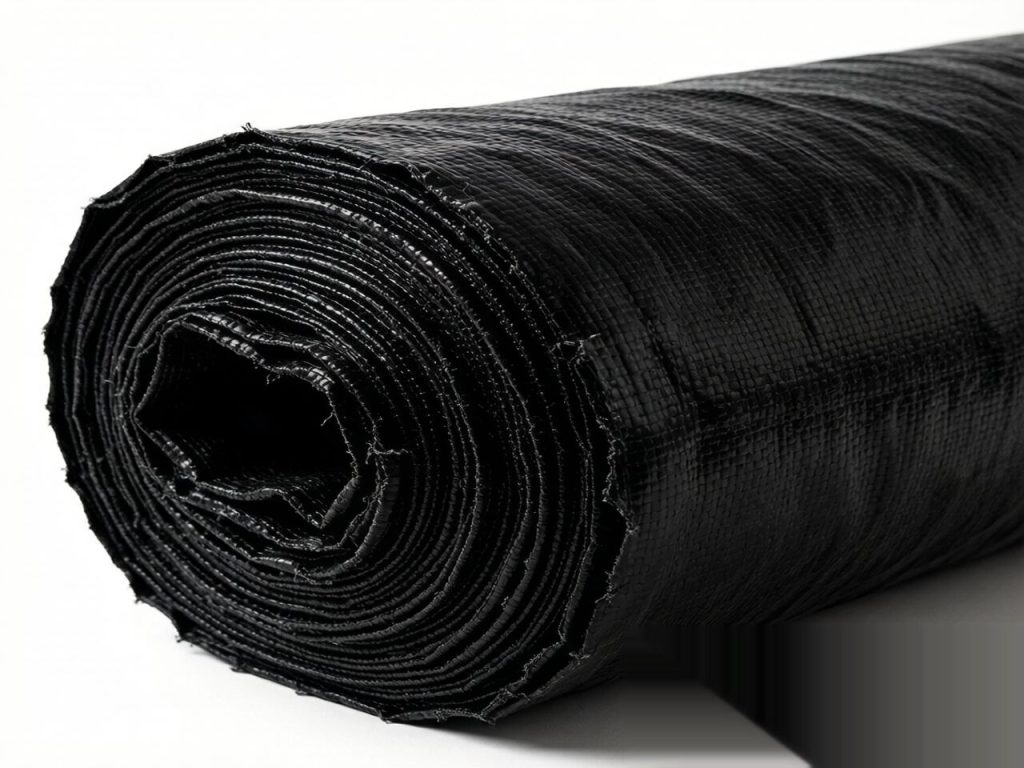
More relevant to tarpaulin buyers were the functional composites shown by Haining warp-knit enterprises at phase three of the 140th Canton Fair. According to China Business News on 4 November, Huasheng Technology presented fabrics for heavy-duty outdoor use — truck covers and container side curtains — built around tensile strength, tear resistance and coating adhesion, with anti-fouling, UV resistance and wide-temperature performance. Its drop-stitch air-mat fabric forms a three-dimensional support structure that, once inflated, serves paddle boards, gymnastics mats and inflatable pools. The company holds 13 granted invention patents and has helped draft more than ten standards.
The trade-off is explicit: heavy-duty cover fabrics compete on cross-section structure and peel strength, not surface finish. At the other end of the spectrum, Xilinmen published mattress-fabric patent CN123005588A, arranging hollow zones in a transverse Z pattern so airflow takes a tortuous path between two mesh layers and extends the reaction time for formaldehyde (https://tpu-ptfe.com/post/37492.html).
52% utilisation: a negotiating window, not a stocking signal
The 5 November futures briefing from Tonghuashun recorded PTA operating rates at 72.2%, up four percentage points, with social inventory at 1.7645 million tonnes, up 32,100 tonnes, and polyester utilisation at 76.2%. Loom utilisation in Jiangsu and Zhejiang slipped to about 52%, texturing to 61%, polyester yarn to 48.5%, and filament sales were estimated at only 20–30% by mid-afternoon. Mills are working through earlier stock while downstream buyers keep replenishment cycles to three to five days.
For PVC coating and lamination plants this cuts two ways. Base fabric and film prices are negotiable because upstream sellers are more eager to move goods than downstream buyers are to buy. But downstream is equally unwilling to hold inventory, so every extra tonne of raw material carries price risk. A practical rule is to cover on-machine orders plus roughly half a month of consumption, and to keep price-adjustment clauses in quotations.
Three steps for evaluating composite samples
Differences in composite fabric live in the cross-section, not the face. Ask the supplier to cut a strip so you can see which layer carries the film, how thick it is, and whether adhesive is full-coat or discontinuous. Ask which adhesive chemistry is used — waterborne, hot-melt or solvent-based — because that determines odour, wash durability and export compliance. Finally, ask whether the film is made in-house or purchased; batch-to-batch consistency differs noticeably. That checklist beats collecting a pile of swatch cards.
What to specify for truck covers and side curtains
GSM alone is not a specification. List warp and weft breaking strength, tongue tear, coating adhesion, hydrostatic resistance, low-temperature bend temperature and strength retention after artificial ageing, each with its test method — for example ISO 1421, ISO 4674-1, ISO 2411 and ISO 811. UV and temperature claims need stated exposure hours and pass criteria, otherwise “UV resistant” cannot be inspected.
The timing of this year’s expo adds a second consideration. With loom utilisation at 52% and replenishment cycles shortened to three to five days, mills are quoting on near-term orders rather than building inventory. A buyer who places a large, long-dated order at a show may find that the mill cannot hold the quoted raw-material cost, while a buyer who places nothing may face tighter delivery slots once the fourth-quarter restock begins. Splitting a requirement into a confirmed near-term tranche and a priced option for later delivery is a reasonable compromise. Keep the option’s validity period short enough that both sides can re-price if polyester filament sales recover.
FAQ
Should we stock up on base fabric while utilisation is falling?
Not aggressively. A 52% loom rate means spot supply is easy and buyers have leverage, but downstream replenishment is only three to five days. Covering on-machine orders plus about half a month of use is safer than betting on price direction.
Which three indicators matter most for heavy-duty covers?
Tensile strength, tear resistance and coating adhesion. Failures in outdoor heavy-duty service usually start with tear propagation or coating delamination rather than insufficient initial strength. Always confirm the test method behind each figure.
How do we judge film-layer consistency from a supplier?
Inspect the cross-section, identify the adhesive chemistry, ask whether the film is self-produced, and request test reports from three consecutive batches. In-house film generally holds colour and thickness more consistently, which matters on long runs.












