Material Overview
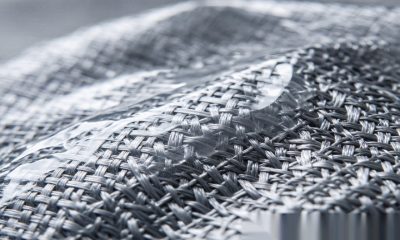
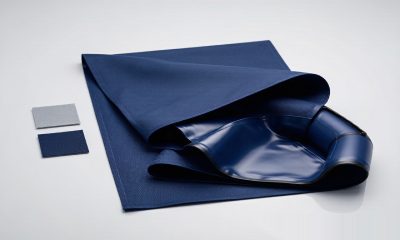
PVC-coated polyester membrane (PVC/PES) is the most cost-effective architectural membrane: typical 0.5–1.2 mm thickness, 1.0–1.5 kg/m², warp/weft tensile ≥3500/3000 N/5cm, 10–15 year design life, B1 fire class and about ¥200–500/m², making it the default for stadiums, atriums and tensile landscape structures.
Membrane Types Compared
A membrane has no bending stiffness; it needs prestress to form a spatial surface while carrying wind and snow loads (geometric non-linear analysis). Three mainstream types: PVC/PES (economic, weldable, ~20% translucency, −40~120°C, B1, co-extruded UV layer); PTFE/GF (A2 class, self-cleaning to DIN 52976 grade 90, 4500/4000 N/5cm, ¥800–2000/m²); ETFE (95% light transmission, ¥1000–3000/m², for transparent domes).
Tensioning Method
PVC’s ductility suits graded tensioning — first to 60% of design stress, rest 24 h to release creep, then 80%, finally 100%; PTFE is pulled once to 90% to avoid brittle cracking. Tension symmetrically and synchronously (opposite edges for rectangles, radial from center for circles), within ≤30 s offset, monitored by tensiometer at ≤±5%. Aluminum clamps at 25–30 N·m; hot-weld seam ≥5 cm wide, peel strength ≥100 N/50mm, ≥80% of base.
Applications
Stadium roofs, commercial atrium skylights, landscape tensile canopies, car sheds, temporary exhibition and storage. Choose on five axes — budget, design life, form complexity, light need, maintenance — PTFE for landmark public buildings, PVC for commercial-temporary, ETFE for optical effects.
Execution and Acceptance
Total-station layout, embedment elevation error ≤3 mm, membrane-gap deviation ≤5 mm; drain slope ≥5% per CECS 158:2015; 1-hour water-spray test after completion. Key QC: cutting tolerance ±2 mm, post-tension stress deviation ≤10%, weld peel strength met.
Selection Checklist
- Size base-fabric weight and thickness to wind/snow and form;
- Prefer self-cleaning and warranty for exposed long-life structures;
- Require weld procedure qualification and tensioning plan;
- Leave 5–10 cm slack for 1%–2% thermal movement at −30~60°C;
- Add ≥3 mm rubber pads where cables touch membrane;
- Use 304/316 stainless bolts.
FAQ
PVC or PTFE membrane?
For tight budgets, complex forms or temporary works pick PVC/PES (¥200–500/m², 10–15 yr); for landmark public buildings needing self-cleaning and 25+ yr life pick PTFE/GF (A2, ¥800–2000/m²).
Why not tension in one pass?
PVC creeps; one-pass tensioning leaves uneven stress, wrinkles and shortens life. Graded tensioning with rest releases internal stress for a flat, drainable surface.
What does membrane acceptance check?
Seam width ≥5 cm and peel ≥100 N/50mm, post-tension stress deviation ≤10%, drain slope ≥5% and a passed spray test, under CECS 158:2015.
Related Products
- Pond & Garden Liner: Heavy-Duty Waterproof Membrane for Ponds & Water
- TPO Coated Fabric for Tarpaulins, Tents, and Geomembranes
- PVC Membrane Structure Material for Tensile Architecture & Industrial
- Architectural PVC Membrane for Tensile Structures & Facades