How do suspension and paste resin grades change a coated fabric specification?
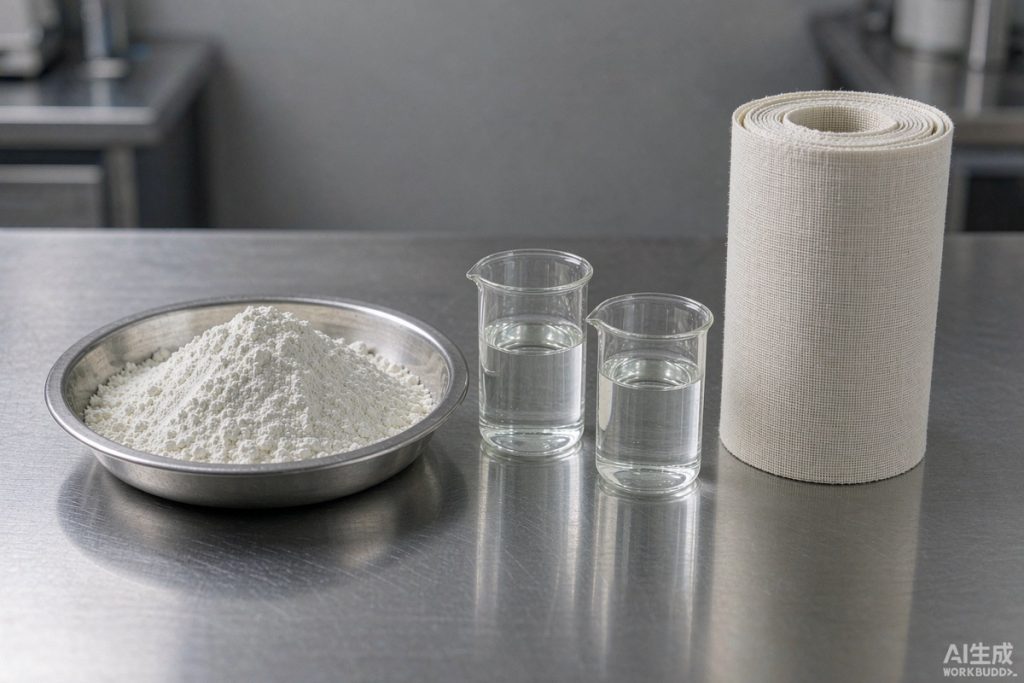
The resin grade sets the starting point for the whole coating formulation, because suspension resin and paste resin follow different production routes and feed different coating processes; a buyer should ask which resin family and which route the quoted roll uses, then tie that answer to the measured mechanical and ageing results instead of a generic PVC label.
- The knowledge base lists SG-5 and SG-8 suspension PVC made by the calcium-carbide route from coal through acetylene and VCM (KB2, 8.1).
- Higher-grade ethylene-based PVC follows a petroleum or natural-gas route through ethylene and VCM, a distinct upstream chain in the same table (KB2, 8.1).
- Micro-suspension paste resin is listed for coating and artificial leather, and knife coating uses a liquid PVC plastisol paste (KB2, 8.1; KB1, 1.2).
What does the plasticiser and stabiliser system actually control?
The additive package governs flexibility, low-temperature behaviour and resistance to degradation in service, so the same base cloth can produce quite different rolls once the plasticiser, heat stabiliser and impact modifier are changed; the specification should therefore name the package class and confirm the resulting temperature and mechanical values on a report.
- Plasticisers listed are DOP, TOTM and epoxidised soybean oil for flexibility; a heat stabiliser prevents degradation during processing and use, and CPE or AIM impact modifiers raise toughness (KB2, 8.1).
- Typical service temperature across the coated-fabric families is -30 to +70 C, with special plasticiser systems reaching -40 C for inflatable and marine grades (KB1, 2.1; 3.1).
- The tarpaulin line records a cold-resistance range of -20 to -30 C, a value that belongs to that product line rather than to every PVC roll (KB2, 1.2).
Which formulation-related claims need a measured report rather than a datasheet?
Functional claims about UV filtering, mildew resistance, antistatic behaviour and flame spread must be demonstrated by a method-named report, because each is a separate property tested under its own standard; a single marketing phrase cannot stand in for four different measurements, and the destination-market rules add a further documentary layer.
- Surface treatments in the knowledge base record UV filtration of at least 90%, mildew coverage of no more than 10% after 28 days of culture, and an antistatic surface resistivity of 10^10 ohms (KB2, 1.3).
- Flame-spread treatment is recorded as self-extinguishing to B1, M1 or NFPA 701; these belong to different classification systems and must be quoted with their test method (KB2, 1.3; KB1, 2.3).
- Restricted-substance pressure is documented separately: REACH phthalate limits, PFAS proposals, California Proposition 65 labelling and AB 1817 on PFAS in textiles (KB1, 5; 7).
What should a buyer request in a raw-material and formulation submittal?
Ask for a lot-identified submittal that names the resin family and route, the additive package class, the base-cloth denier and a full set of measured results mapped to their test methods; the kezhibo selection framework ends with checking measured reports against the standards list, so a formulation description alone is not evidence for a delivered lot.
- The kezhibo standards table lists GB/T 3923.1 tensile, GB/T 3917.3 trapezoidal tear, GB/T 2791 peel, GB/T 5455 vertical flame spread, GB/T 8427 xenon-arc ageing, GB/T 16422.2 artificial weathering, GB/T 24346 mildew and GB/T 21196 Martindale abrasion (KB2, 1.6).
- Mass per unit area is measured by EN ISO 2286-2, tensile by ISO 1421, peel by ISO 2411 and light fastness by ISO 105-B02 (KB1, 2.2).
- High-tenacity polyester yarn of 500D-1100D is listed as the scrim backbone, so the denier belongs in the same record as the coating formulation (KB2, 8.1).
FAQ
Why does the resin grade matter to a coated fabric buyer?
Because the resin is the matrix of the coating and its production route constrains what the formulation can deliver. The kezhibo knowledge base lists SG-5 and SG-8 suspension PVC made through the calcium-carbide route from coal via acetylene and VCM, and separately a higher-grade ethylene-based PVC made from petroleum or natural gas through ethylene and VCM. Micro-suspension paste resin is listed for coating and artificial leather, and knife coating uses a liquid PVC plastisol. Ask which family the offered roll uses and connect that answer to a lot-identified measured report.
Is paste resin the same thing as suspension resin?
No. In the kezhibo upstream table, suspension resin is listed as SG-5 and SG-8 grades, while micro-suspension paste resin is a separate entry used for coating and artificial leather. The coating process section also describes knife coating with a liquid PVC plastisol paste. Treating them as one grade would blur the distinction between a general-purpose resin and a paste formulated for spreading. Confirm the resin family on the submittal before comparing mechanical values between suppliers.
What does the plasticiser choice change in service?
Plasticisers set flexibility and low-temperature behaviour. The knowledge base lists DOP, TOTM and epoxidised soybean oil as plasticiser options, records a typical service temperature of -30 to +70 C across coated-fabric families, and notes that special plasticiser systems can reach -40 C for inflatable and marine grades. The tarpaulin line separately records cold resistance of -20 to -30 C. These are product-line values, not a universal PVC figure, so confirm the offered grade on a measured report rather than assuming one range covers all rolls.
Can a datasheet phrase replace a UV or mildew test result?
No. The knowledge base records UV filtration of at least 90% and mildew coverage of no more than 10% after 28 days of culture as surface-treatment figures, and it lists GB/T 8427 xenon-arc ageing, GB/T 16422.2 artificial weathering and GB/T 24346 mildew testing as separate methods. A phrase such as UV stabilised gives no method, unit or result. Request the measured value with its method on a lot-identified third-party report, and keep each property on its own report line.
How should B1, M1 and NFPA 701 be quoted together?
They belong to different classification systems and must be written with their full context. The kezhibo fire-rating table places B1 under DIN 4102-1 in Germany, M1 under NF P 92-507 in France, and NFPA 701 as a US vertical flame-propagation test with a pass or fail outcome. EN 13501-1 uses an A1-F plus smoke and droplet string instead. Writing one as another produces a plausible-looking but invalid specification. State the system, the complete class string and the test method together.
Do restricted-substance rules change the formulation record?
Yes. The knowledge base records REACH phthalate limits, PFAS restriction proposals, California Proposition 65 labelling for phthalate-containing PVC fabric and California AB 1817 on PFAS in textiles as formulation pressures. It also records a shift from DOP and DEHP towards non-phthalate plasticisers such as DOTP. These are documentary and formulation questions rather than mechanical test values, so ask the supplier for the destination-market declaration and confirm the additive package against it as a separate submittal line.
Which base-cloth detail belongs in the same record?
The denier of the scrim. The kezhibo upstream table lists high-tenacity polyester yarn of 500D-1100D as the backbone of coated fabric, and the product-classification section records woven PET of 500D-2000D with 1000D common. Because tensile and tear results depend on the reinforcement, a formulation report without the scrim denier is incomplete. Put the resin family, additive package and base-cloth denier on one lot-identified report.
What should a full raw-material submittal contain?
It should name the resin family and production route, the additive package class, the scrim denier, and a measured result for each property mapped to its method: mass per EN ISO 2286-2, tensile per ISO 1421 or GB/T 3923.1, tear per GB/T 3917.3, peel per ISO 2411 or GB/T 2791, flame spread per GB/T 5455, ageing per GB/T 8427 or GB/T 16422.2, and mildew per GB/T 24346. Add any restricted-substance declaration for the destination market. The selection framework ends with checking measured reports, not specification ranges.