
TL;DR — Shelter-Rite 8028/9032 Upgrade in 3 Sentences
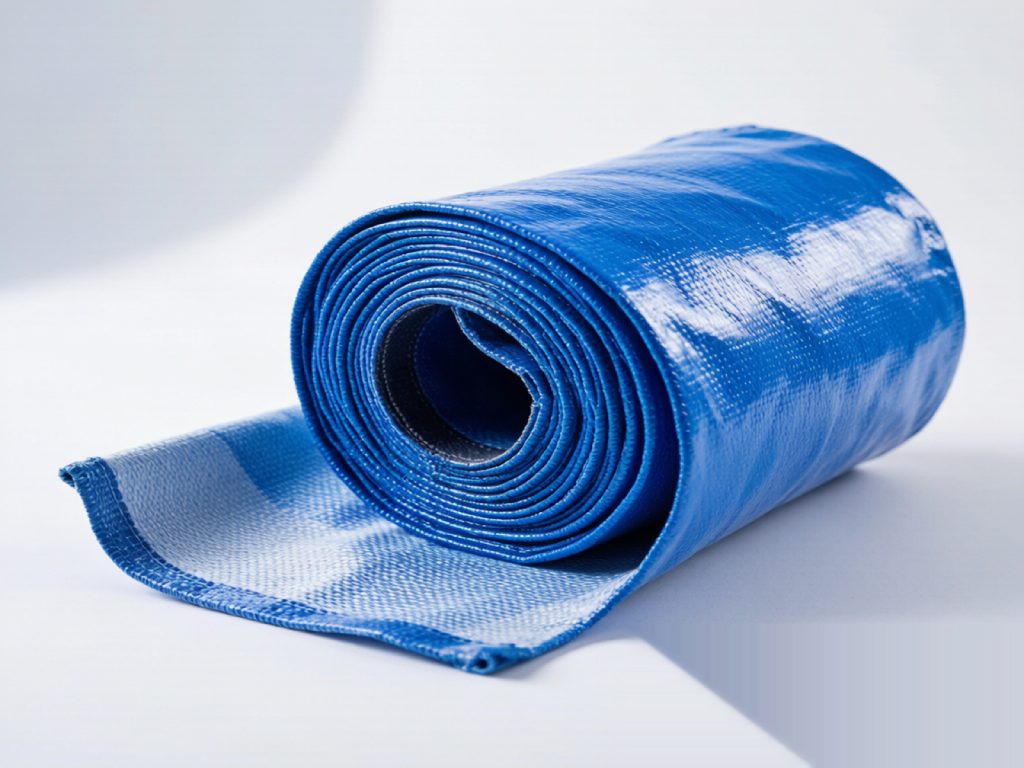
Seaman Corporation announced a significant upgrade to its Shelter-Rite® Architectural Fabrics opaque Styles 8028 and 9032: replacing the traditional black PVC back-coat layer with a black adhesive coat applied directly to the base fabric (source). The result? Weight drops from 32-34 oz/yd² to 28 oz/yd² — a 15-18% reduction — while retaining 99+% sunlight blocking capacity and the full 20-year warranty. Most importantly, the new formulation eliminates or dramatically reduces black compound “flow-out” at weld lines, an aesthetic issue that has plagued opaque tensile structures for decades.
The Core Innovation: Black Adhesive Instead of Black PVC Back-Coat
Traditional opaque architectural fabrics achieve blackout through a sandwiched “blackout layer” — typically a solid black PVC coating applied to the back side of a double-coated polyester fabric. This blackout PVC creates visual opacity but adds significant weight, and during heat-welding operations, the black PVC can “bleed” or “flow out” along weld seams, creating unsightly dark streaks that mar the structure’s appearance.
Seaman’s 2026 re-engineered process moves the black pigment to the adhesive layer that bonds the PVC coating to the base polyester knit. This adhesive is already a required component of the fabric system — adding black pigment there adds zero extra weight. The result is a structurally identical fabric with dramatically less mass:
| Parameter | Old Shelter-Rite 8028 | New Shelter-Rite 8028 W/OPM/W | Change |
|---|---|---|---|
| Fabric Weight | 32-34 oz/yd² | 28 oz/yd² | -15 to -18% |
| Sunlight Blocking | 99+% | 99+% | Retained |
| UV Blocking | 100% | 100% | Retained |
| Warranty (Acrylic/PVDF finishes) | 20 years | 20 years | Unchanged |
| Warranty (Tedlar film finish) | 20 years | 20 years | Unchanged |
| Black Compound Flow at Welds | Visible on most weld lines | Minimal to none | Dramatic improvement |
| Handling & Installation | Heavy, requires more crew | Lighter, faster deployment | Crew hours cut |
Why This Matters for Tensile Membrane Architecture
Weight reduction translates directly to measurable savings at every stage of a tensile membrane project:
- Transport — Each roll carries less mass, reducing shipping fuel cost and container utilization efficiency.
- Installation — Lighter fabric requires less rigging capacity, fewer crew members, and shorter installation time. A typical 5,000 m² tensile roof could see 20-30% faster deployment.
- Structural Load — Lower fabric weight reduces dead load requirements on steel support structures, enabling slimmer frame profiles and potentially lower overall construction cost.
- Maintenance — Lighter fabric is easier to handle during future repairs or partial panel replacement.
At kezhibo, we manufacture architectural PVC membrane and tensile membrane structure components for commercial and industrial projects worldwide. While Shelter-Rite is a specialized architectural brand, the blackout-as-adhesive principle is transferable to our broader membrane fabric portfolio. Customers specifying our membrane materials for stadiums, exhibition halls, and industrial skylights should ask about equivalent blackout formulations — the lighter weight is becoming a default specification in 2026.
Aesthetics: The “Flow-Out” Problem Solved
Anyone who has inspected an opaque tensile structure will recognize the aesthetic issue: along every heat-welded seam, a thin dark line appears where the black PVC back-coat has softened under the welding temperature and migrated outward. This “flow-out” becomes more pronounced as the structure ages — heat from the sun over years causes further migration, making weld lines increasingly visible.
By eliminating the discrete black PVC layer, Seaman’s Shelter-Rite 8028/9032 solves this at the molecular level. The black pigment is now part of the adhesive that is chemically cross-linked during coating, so it doesn’t migrate under heat. The weld lines remain visually consistent with the surrounding fabric — a subtle but meaningful improvement for premium architectural projects that command architectural awards or high-end client satisfaction scores.
What Top Finishes Work With the New Formulation?
Seaman offers three top finish options for the upgraded Shelter-Rite opaque fabrics, each with its own warranty and performance profile:
- Acrylic top finish — Standard matte or satin finish, 20-year warranty on white fabrics.
- PVDF top finish — Enhanced UV resistance and stain repellency, recommended for high-sunlight locations (desert, subtropical), 20-year warranty.
- Tedlar® film finish — DuPont’s proprietary fluoropolymer film, the highest-performance option for extreme environments, 20-year warranty.
All three finishes are fully compatible with the new black-adhesive opaque core. For projects requiring the traditional blackout layer (some fabricators and specifiers have standardized on the old formulation), Seaman continues to offer the legacy opaque styles as a production option.
Sources & Further Reading
- Seaman Corporation — Product Changes Yield Better Fabric for Blackout, Opaque Fabric Needs (2026)
- Seaman Corporation — Architectural Fabric Solutions (product page)
- Poddart Engineered Solutions — Latest Design Trends in Tensile Fabric Structures for 2026












