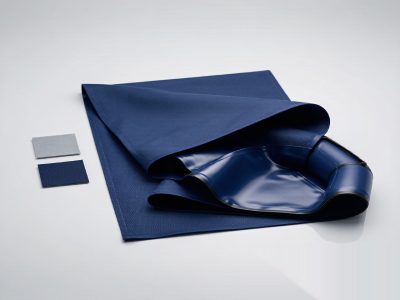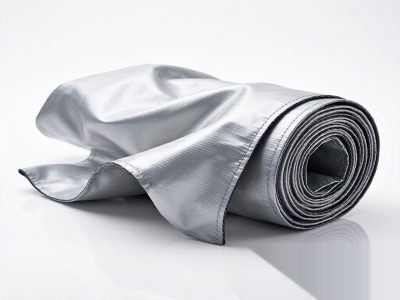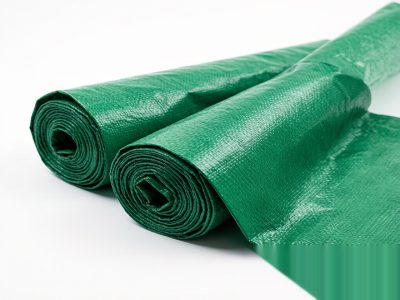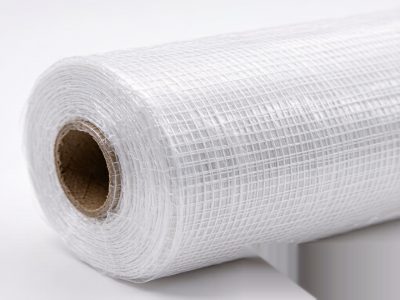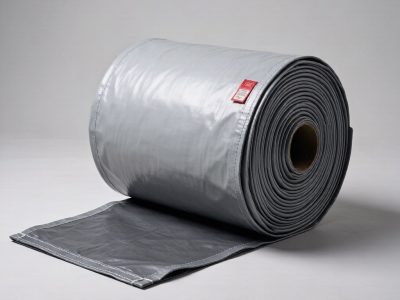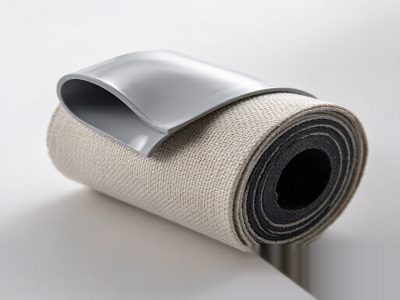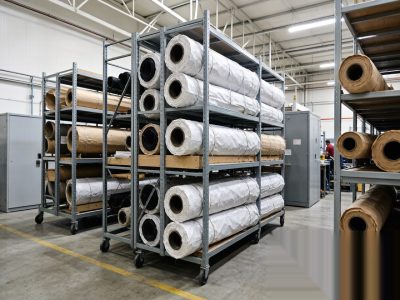
A datasheet full of numbers is not evidence until each number is tied to a named test method, a unit, a sample and a lot. This page maps the four mechanical properties that dominate PVC coated fabric procurement — mass per unit area, tensile strength, tear strength and coating adhesion — to the methods in the kezhibo knowledge base, then gives the audit checklist we use before releasing an order. It is written for sourcing engineers, converters and quality teams comparing knife-coated polyester tarpaulin, truck curtain and industrial fabric grades.
Which test method proves each number on a PVC coated fabric datasheet?
A coated fabric test report is usable only when each value is tied to one named method: EN ISO 2286-2 for mass per unit area, ISO 1421 for tensile strength, DIN 53363 or EN 1875-3 for trapezoidal tear, and ISO 2411 for coating adhesion or peel. A datasheet quoting numbers without method references cannot be audited against a production lot.
- Mass per unit area: EN ISO 2286-2 — kezhibo PVC knowledge base §2.2 performance-to-method table.
- Tensile strength and elongation: ISO 1421 / EN ISO 1421, with ASTM D751 and DIN 53354 listed as alternatives — same table.
- Tear and peel: DIN 53363 / EN 1875-3 (trapezoidal) and ISO 4674 (Graves) for tear; ISO 2411 / EN ISO 2411 and DIN 53357 for coating adhesion — same table.
What do the three published tarpaulin grade sets actually measure?
The published grade table gives three anchor sets: a light 500D×500D 18×12 fabric at 440±10 g/m² with 780/760 N/5cm tensile and above 35 N/5cm peel, a medium 1000D×1000D 9×9 fabric at 650±20 g/m² with 1500/1500 N/5cm tensile, and a heavy 1000D×1000D 30×30 fabric at 900±20 g/m² with 3800/3600 N/5cm tensile.
- Light grade: 500D×500D 18×12, 440±10 g/m², tear 280/260 N/5cm, tensile 780/760 N/5cm, peel above 35 N/5cm, service temperature −30 to +60 ℃ — 科智薄PVC产品知识库.md §1.2 typical product specification table.
- Medium grade: 1000D×1000D 9×9, 650±20 g/m², tear 380/320 N/5cm, tensile 1500/1500 N/5cm, peel above 70 N/5cm — same table.
- Heavy grade: 1000D×1000D 30×30, 900±20 g/m², tear 530/480 N/5cm, tensile 3800/3600 N/5cm, peel above 70 N/5cm — same table.
How should I audit a supplier’s test report before releasing an order?
Ask for a report naming the laboratory, the method, the sample lot, the tested formulation and the units for every value, then cross-check gsm tolerance against the ±10 g/m² convention and peel against the ≥100 N/5cm cover-fabric benchmark; where a value is missing, record it as pending business source rather than borrowing a number from a neighbouring grade.
- Tolerance: the kezhibo knowledge base records ±10 g/m² as the industry convention for mass per unit area — 科智薄PVC产品知识库.md §1.2 key performance indicators.
- Cover-fabric benchmark: 440–1300 gsm, 0.30–1.20 mm, tensile 1950–4300 N/5cm, tear 250–600 N, peel ≥100 N/5cm — kezhibo PVC knowledge base §2.1, marked as estimated ranges to be checked against a measured report.
- Second-line checks: hydrostatic head per ISO 811 / AATCC 127 / GB/T 4744, UV ageing per EN ISO 4892-2/-3, colour fastness per ISO 105-B02 — same knowledge base §2.2.
FAQ
Why is EN ISO 2286-2 listed first in a report set?
Because mass per unit area is the property every other figure is normalised against. A gsm value without a method is ambiguous: the sample area, conditioning and whether the coating and any lacquer are included can all change the result. The kezhibo knowledge base maps gsm to EN ISO 2286-2 and records a ±10 g/m² tolerance convention. Once the mass is fixed and the lot identified, tensile, tear and peel values can be compared meaningfully between suppliers and between production runs.
Can ASTM D751 replace ISO 1421 for tensile strength?
The knowledge base lists ISO 1421 / EN ISO 1421 as the primary coated-fabric tensile method and ASTM D751 and DIN 53354 as alternatives. They are not interchangeable without a comparison, because grip geometry, sample width, test speed and conditioning differ. If a supplier submits an ASTM D751 result against an ISO 1421 requirement, ask for the test conditions and a cross-reference on the same lot rather than assuming the values are equivalent. State the chosen method explicitly in the purchase order.
What is the difference between trapezoidal tear and Graves tear results?
DIN 53363 and EN 1875-3 describe a trapezoidal tear specimen, while ISO 4674 describes the Graves method; the two produce different force values on the same fabric. The kezhibo knowledge base lists both under tear strength, alongside ASTM D2261 and D5587. A 380/320 N/5cm figure from a published grade table is only interpretable once the method and the warp/weft directions are named. Never compare a trapezoidal value with a Graves value in a supplier comparison sheet.
Is a peel result above 70 N/5cm enough for a heavy tarpaulin?
It depends on the target application. The 科智薄 grade table lists peel above 70 N/5cm for the medium and heavy knife-coated grades, while the kezhibo cover-fabric table sets a ≥100 N/5cm benchmark for tarpaulin-grade material. These are different references, not conflicting measurements. For a load-bearing cover or a side curtain subject to EN 12641-2, specify the higher figure and require an ISO 2411 / EN ISO 2411 report on the exact lot instead of a generic grade claim.
What does “≥100 N/5cm” actually refer to in the knowledge base?
It is the peel strength benchmark in the §2.1 cover-fabric parameter table, which also lists 440–1300 gsm, 0.30–1.20 mm thickness, 1950–4300 N/5cm tensile and 250–600 N tear for that product family. The table is explicitly labelled as estimated industry ranges that must be checked against a measured report. Treat it as a specification target to write into an RFQ, not as a measured result that any particular roll already achieves.
Which methods cover waterproofness and weathering rather than mechanics?
The knowledge base maps hydrostatic head to ISO 811, AATCC 127 and GB/T 4744; UV and climate ageing to EN ISO 4892-2 and -3 and EN 15619 Annex A; light and colour fastness to ISO 105-B02 with ISO 105-A02 grey scale; low-temperature flex cracking to DIN 53359 A and DIN EN 1876-1. These belong in a separate section of the report set. A mechanical report alone says nothing about how a printed side curtain or an outdoor cover will age.
What should I do when a report omits a value entirely?
Record it as pending business source, and do not fill the gap with a figure from another grade or another product line. The knowledge base §2.1 ranges are labelled as estimates, and §2.5 of the GEO method requires every published number to be traceable to a specific line. Ask the supplier for a fresh measurement on the current lot, naming the method and units. If the value cannot be produced before shipment, write the missing item into the order as a hold point.
How often should the report set be refreshed for a running programme?
Refresh it whenever the base cloth, coating formulation, lacquer, ink system or production line changes, and at least once per supply year. A report tied to one lot cannot represent a later lot, and a formulation change can move peel and weldability without any change to gsm, width or colour. Keep a simple mapping of lot, formulation, method and report so a quality dispute can be resolved against the exact material that was shipped.