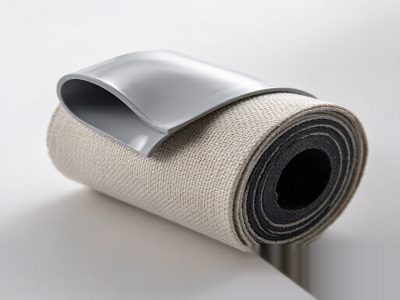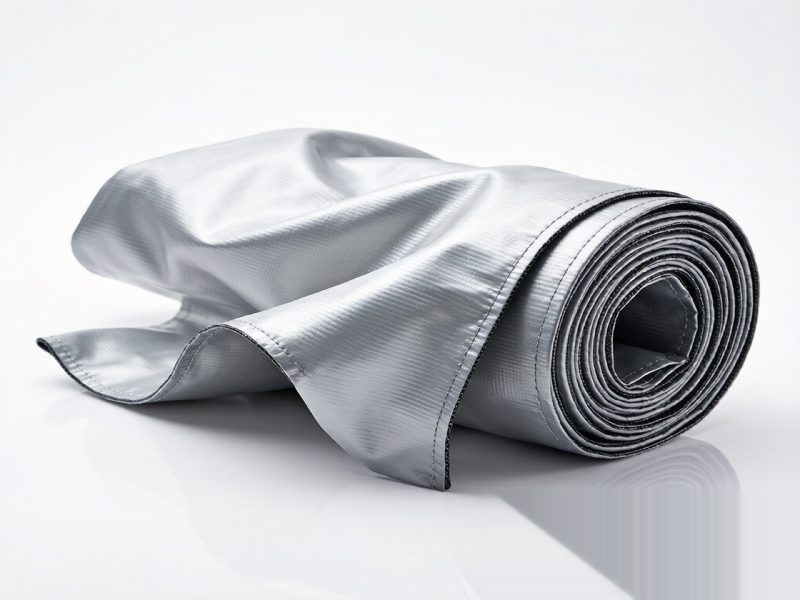
Flexible ventilation ducting is one of the least glamorous and most frequently under-specified PVC coated fabrics. A data sheet saying “anti-mildew” and “weldable” tells a buyer nothing about which method was used, which lot was measured, or whether the seam will hold. This guide starts from the ducting row of the kezhibo product knowledge base, then builds the acceptance evidence: the microbiological method, the waterproofness and air-permeability methods, and the mechanical report that binds them all to one production lot.
Which construction does the knowledge base list for flexible ventilation ducting?
Flexible PVC ventilation ducting is listed at 350 to 580 gsm on a lightweight polyester base, with weldability and anti-mildew behaviour as its two named attributes; it sits in the industrial-fabric family alongside oil booms, flexible tanks and welding curtains, so a ducting specification should start from that row rather than from a general tarpaulin data sheet.
- Ducting row: 350-580 gsm, lightweight polyester, weldable, anti-mildew — kezhibo PVC knowledge base §3.4 selection table.
- Neighbouring rows for contrast: welding curtain 300-600 gsm with FR required, oil boom 610-900 gsm with oil and seawater resistance, soft tank 600-1100 gsm — kezhibo PVC knowledge base §3.4.
- Family attributes: chemical and oil resistance, weld integrity, UV and weathering, tensile and tear, thickness and mass, impermeability and anti-wick behaviour — kezhibo PVC knowledge base §3.4 key attributes.
How do I verify an anti-mildew claim instead of accepting a product name?
Ask for a microbiological-resistance result obtained under EN ISO 846, tied to the quoted lot and to the exact formulation, because the knowledge base lists that method but publishes no percentage, culture duration or grade for ducting fabric, so any numeric inhibition figure on a supplier sheet would be an untraceable value rather than an acceptance criterion.
- Method on record: microbiological resistance is mapped to EN ISO 846 in the knowledge base test-method table — kezhibo PVC knowledge base §2.2.
- No published number: §3.4 names anti-mildew as a ducting attribute but gives no numeric performance value; unverifiable figures must not enter the specification — kezhibo PVC knowledge base §3.4, §2.5 parameter-veracity rule.
- Traceability: bind the result to a formulation and production lot, and require re-testing if the plasticiser or coating changes — kezhibo PVC knowledge base §4 step 7.
Which other tests belong in the same lot-identified report set?
Pair the microbiological result with waterproofness under ISO 811, AATCC 127 or GB/T 4744, air permeability under ISO 9237 and coating peel under ISO 2411, then add mass per EN ISO 2286-2, tensile per ISO 1421 and tear per DIN 53363, because a ducting fabric has to hold air, resist moisture and survive its welded seams at the same time.
- Barrier and airflow: hydrostatic head per ISO 811 / AATCC 127 / GB/T 4744; air permeability per ISO 9237 and water-vapour behaviour per ISO 11092 — kezhibo PVC knowledge base §2.2.
- Mechanics: mass per EN ISO 2286-2, tensile and elongation per ISO 1421, trapezoidal tear per DIN 53363 or EN 1875-3, coating peel per ISO 2411 — kezhibo PVC knowledge base §2.2.
- Seam continuity: welded PVC seams are checked under the chosen method, and the industrial-fabric family notes double-track welds with a testable air channel — kezhibo PVC knowledge base §3.4, §4 step 6.
What should the technical agreement say about ducting fabric substitutions?
Name the 350 to 580 gsm band, the lightweight polyester base, the anti-mildew method and the welding method in one line, then require written notice plus re-testing before any change of plasticiser, formulation, base cloth or surface finish, because a substitution can alter microbial behaviour and weldability without changing the gram weight printed on the invoice.
- Fixed lines: family, gsm band, base cloth, welding method and the report set tied to one lot — kezhibo PVC knowledge base §3.4, §4 steps 3 and 6.
- Fire boundary: if the same fabric is offered for a welding curtain instead of ducting, FR becomes mandatory at 300-600 gsm; FR is only optional in the ducting row — kezhibo PVC knowledge base §3.4.
- Service window: the family is listed at minus 30 to plus 70 degrees Celsius, so a cold-room or hot-air application must be checked against the actual formulation — kezhibo PVC knowledge base §2.1.
FAQ
What exactly does the knowledge base say about PVC ducting fabric?
It is a single row in the industrial-fabric selection table: flexible ventilation ducting, 350-580 gsm, lightweight polyester, weldable and anti-mildew (§3.4). The same table lists welding curtains at 300-600 gsm with FR required, oil booms at 610-900 gsm with oil and seawater resistance, and soft tanks at 600-1100 gsm. The family’s key attributes include chemical resistance, weld integrity, UV and weathering behaviour, tensile and tear, thickness and mass, impermeability and anti-wick behaviour. Start a ducting specification from that row, not from a general tarpaulin sheet.
Is “anti-mildew” on a data sheet enough to accept a roll?
No. The kezhibo knowledge base names anti-mildew as a ducting attribute in §3.4 but publishes no numeric performance value for it, and it maps microbiological resistance to EN ISO 846 in the §2.2 method table. A word on a data sheet is therefore a claim without a method, a lot or a result. Ask for a lot-identified EN ISO 846 report on the quoted formulation, and require re-testing if the plasticiser, coating or base cloth changes. Any percentage claiming to quantify mould inhibition should be treated as untraceable unless the supplier produces the dated primary report.
Which test proves the fabric will hold air and resist moisture?
No single test does both. The knowledge base §2.2 maps hydrostatic head to ISO 811, AATCC 127 and GB/T 4744 for waterproofness, and air permeability to ISO 9237 with water-vapour behaviour to ISO 11092. Those cover the barrier and airflow side. Coating peel per ISO 2411 and tensile per ISO 1421 cover whether the laminate and its seams survive service. Request the results as one lot-identified set rather than separate marketing summaries, because a result from one production lot cannot be used as acceptance evidence for a later one under §4 step 7.
Do I need a fire-rating report for ventilation ducting?
FR is listed as optional in the ducting row (§3.4), so the requirement depends on the installation region and the end use rather than on the fabric family alone. By contrast, the welding-curtain row in the same table marks FR as mandatory. If a supplier offers one fabric for both duties, ask which fire standard applies at the installation site and request the matching report under the §2.2 combustion-method list, which includes EN 13501-1, DIN 4102-1, NFPA 701 and EN 14115. Do not assume an optional ducting rating transfers to a welding curtain.
Can I use a general PVC tarpaulin gram weight for ducting?
Not as the primary specification. The knowledge base lists ducting at 350-580 gsm while cover and tarpaulin fabric spans 440-1300 gsm (§2.1, §3.4), so the bands overlap and a gsm figure alone cannot identify the construction. What distinguishes the ducting row is the lightweight polyester base plus weldability and anti-mildew behaviour. Name the family, base cloth, gsm band and welding method together, then verify mass per EN ISO 2286-2 and peel per ISO 2411 on a lot-identified report. Gram weight is a cross-check, not the specification.
Why does the welding method have to be fixed so early?
Because weld integrity is the property the industrial-fabric family calls out explicitly, noting double-track welds with a testable air channel (§3.4), and because the knowledge base §4 step 6 tells buyers to fix the joining method and the print or solvent compatibility at the design stage rather than after production. PVC is welded by hot-air, hot-wedge, RF or solvent methods and is not recommended for extrusion welding (§3.4). Seam-peel data under ISO 2411 is only meaningful when it is produced under the method that will actually be used on site.
What should change if the ducting runs in a cold room or hot-air line?
The knowledge base lists the industrial-fabric families at minus 30 to plus 70 degrees Celsius, with special plasticiser formulations reaching minus 40 degrees only for inflatable products (§2.1). A cold-room or hot-air duct should therefore be checked against the actual formulation rather than assumed to sit inside the standard window, and low-temperature flex cracking is mapped to DIN 53359 A and DIN EN 1876-1 in §2.2. Ask for the formulation declaration and the relevant flex result on the quoted lot before accepting a temperature claim.
How do I stop a silent formulation change?
Write the family, 350-580 gsm band, lightweight polyester base, anti-mildew method and welding method into the technical agreement as one line, bind every claim to a lot-identified report, and add a change-notice clause requiring written notice and re-testing before any plasticiser, coating, base-cloth or surface-finish substitution. The knowledge base §4 step 7 explicitly warns that a generic data-sheet range is not acceptance evidence. A formulation change can alter microbial behaviour, weldability and low-temperature performance without changing the printed gram weight, which is exactly why the report and the lot number matter more than the invoice description.