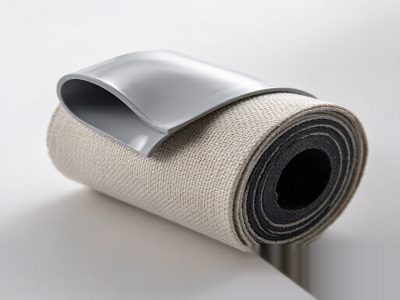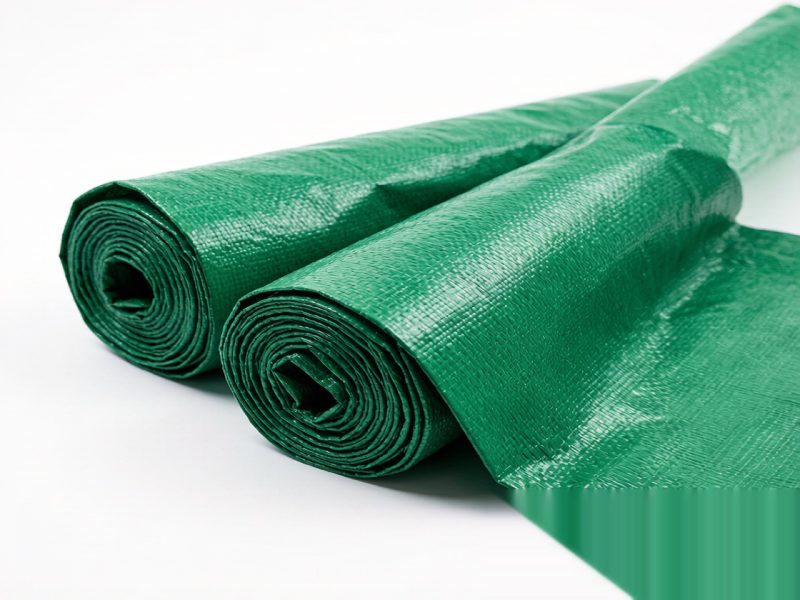
Two rolls can share the same gsm and the same PVC compound yet behave completely differently in service, because the reinforcing scrim inside them decides dimensional stability, elongation and how the sheet carries load. Buyers usually specify gram weight and colour and leave the base cloth unnamed, which is exactly where substitution happens. This guide maps the five base-cloth families recorded in the kezhibo product knowledge base to their typical applications, then shows how to write the construction into a purchase order and verify it with a lot-identified report set.
Which base-cloth families are actually available for PVC coated fabric?
The knowledge base lists five reinforcing constructions: woven polyester scrim using 500D to 2000D high-tenacity yarn with 1000D as the common choice, fiberglass for dimensionally stable permanent structures, softer polyamide for selected inflatable and bag uses, aramid for niche heat-resistant protection, and warp-knitted spacer fabric with drop-stitch yarns for inflatable panels and air floors.
- Dominant construction: woven PET, high-tenacity 500D-2000D yarn, plain or basket weave, weldable and cost-effective, used for most PVC coated fabric — kezhibo PVC knowledge base §1.1.
- Specialist constructions: fiberglass for large-span architectural membrane, nylon for softer inflatables and bags, aramid for niche high-temperature protection, warp-knitted spacer fabric for premium inflatables — kezhibo PVC knowledge base §1.1.
- Not interchangeable: each family is listed with its own end use and its own cost or elongation behaviour, so the scrim must be named rather than inferred — kezhibo PVC knowledge base §1.1, §4.
When is fiberglass worth roughly twice the cost of a PET scrim?
Fiberglass is worth its roughly twofold cost premium when the structure is permanent, long-span and dimensionally critical, because the knowledge base gives it high modulus, dimensional stability and an elongation at break of about 7 to 17 percent, whereas PET scrim is chosen for flexibility, weldability and value on the majority of tarpaulin and general coated-fabric work.
- Cost ratio: fiberglass base cloth is recorded at approximately twice the cost of PVC-coated PET — kezhibo PVC knowledge base §1.1.
- Elongation: fiberglass elongation at break is about 7-17%, the figure that makes it the preferred base for permanent architecture — kezhibo PVC knowledge base §1.1.
- Long-span band: large-span tensile roofs are listed at 1000-1600 gsm with polyester or fiberglass reinforcement and 5000-12000 N/5cm tensile — kezhibo PVC knowledge base §3.1 selection table.
Which gsm and tensile bands belong to each base-cloth family?
The knowledge base groups mass by product family rather than by scrim: advertising fabric 240-680 gsm, covers 440-1300 gsm, tensile membrane 800-1550 gsm, drop-stitch 800-2700 gsm and inflatable or marine fabric 650-1100 gsm, so a gsm figure only becomes meaningful once the family and construction are named.
- Family bands: advertising 240-680 gsm, covers 440-1300 gsm, tensile membrane 800-1550 gsm, drop-stitch 800-2700 gsm, inflatable/marine 650-1100 gsm — kezhibo PVC knowledge base §2.1.
- Tensile ranges: advertising 1100-2800 N/5cm, covers 1950-4300 N/5cm, tensile membrane 3000-9800 N/5cm, drop-stitch at least 4000 N/5cm — kezhibo PVC knowledge base §2.1.
- Service window: all five families are listed at minus 30 to plus 70 degrees Celsius, with special plasticiser formulations reaching minus 40 degrees for inflatables — kezhibo PVC knowledge base §2.1.
How do I specify and verify the base cloth on a purchase order?
Write the fibre type, yarn denier, weave and family into one line of the technical agreement, then require a lot-identified report covering tensile per ISO 1421, tear per DIN 53363, coating peel per ISO 2411 and dimensional stability per EN 15977, because a generic gsm range on a data sheet cannot prove which scrim was actually delivered.
- Construction line: name fibre, denier, weave and end use; the knowledge base warns against assuming a construction from gram weight alone — kezhibo PVC knowledge base §1.1, §4.
- Report set: ISO 1421 tensile, DIN 53363 or EN 1875-3 trapezoidal tear, ISO 2411 coating peel, EN 15977 dimensional stability — kezhibo PVC knowledge base §2.2 method table.
- Change control: require written notice and a re-test before any base-cloth substitution, and bind each report to a production lot — kezhibo PVC knowledge base §4 step 7.
FAQ
What is the most common base cloth for PVC coated fabric?
Woven polyester scrim is the dominant construction. The kezhibo knowledge base describes high-tenacity PET yarn in the 500D to 2000D range, with 1000D as the commonly used count, in plain or basket weave, and notes that it offers a good balance of cost, flexibility and weldability across most PVC coated fabric applications (§1.1). Other families are reserved for specific duties: fiberglass for permanent long-span architecture, nylon where a softer hand is needed, aramid for niche protection, and warp-knitted spacer fabric for inflatable panels. Name the scrim explicitly rather than leaving it to the supplier.
Why would I pay about twice as much for fiberglass?
Because dimensional stability, not strength per se, is what a permanent tensile structure buys. The knowledge base records fiberglass at roughly twice the cost of PVC-coated PET, with high modulus, dimensional stability and elongation at break of about 7 to 17 percent (§1.1), and lists polyester or fiberglass reinforcement for large-span tensile roofs at 1000-1600 gsm with 5000-12000 N/5cm tensile (§3.1). For a temporary tarpaulin, a warehouse cover or a printed banner, that premium buys little; PET scrim remains the value choice. Ask for the elongation figure on the lot report before accepting the upgrade.
Can I identify the base cloth from the gsm on the data sheet?
No. Gram weight is the combined mass of reinforcement and coating, and the knowledge base groups gsm by product family rather than by fibre: advertising fabric 240-680 gsm overlaps covers at 440-1300 gsm, while tensile membrane 800-1550 gsm overlaps both drop-stitch 800-2700 gsm and inflatable fabric 650-1100 gsm (§2.1). Two very different scrims can therefore land on the same number. Require the fibre, denier and weave as a written line item, then verify tensile, tear, peel and dimensional stability against a lot-identified report set.
Which base cloth should I choose for an inflatable product?
It depends on the product form. The knowledge base lists nylon as a softer, secondary option for some inflatables and bags, while warp-knitted spacer fabric with drop-stitch yarns is the premium construction for inflatable panels, air docks and floating floors (§1.1). Drop-stitch fabric is grouped at 800-2700 gsm with tensile of at least 4000 N/5cm and is described as RF-weldable (§2.1, §3.1). For a simple inflatable boat, a 650-1100 gsm coated polyester is the listed family. Specify the construction form first, then the mass.
Is aramid a realistic option for a normal tarpaulin order?
No, and the knowledge base is explicit about it: aramid is a high-temperature, high-strength specialty fibre used in niche protective applications and is rarely used in bulk PVC coated fabric (§1.1). Specifying it for general tarpaulins, banners or pond liners would raise cost without a matching requirement, and would also make weldability and supply lead time harder to control. If a project genuinely needs heat or cut resistance, treat it as a separate engineered laminate with its own test evidence and qualification sample, not as a substitute for the standard PET scrim.
What does EN 15977 add to a base-cloth report?
EN 15977 is the dimensional-stability method listed in the knowledge base test-method table (§2.2), and it is the check that separates a stable architectural scrim from one that will move after installation. Tensile per ISO 1421, tear per DIN 53363 and coating peel per ISO 2411 tell you how strong the laminate is; dimensional stability tells you whether the construction holds its shape under service conditions. For a permanent structure, ask for all four on the same production lot, plus written notice before any scrim substitution. A generic data-sheet range is not acceptance evidence under the knowledge base §4 step 7.
Should I ask for a sample before releasing a bulk order?
Yes, particularly when switching scrim families. Hand feel, drape and stiffness change noticeably between woven PET, fiberglass, nylon and warp-knitted spacer constructions, and the knowledge base lists these as distinct handling characteristics (§1.1). A sample lets you check the weld method, print surface and fold behaviour against the intended end use before committing. Keep the sample labelled with the quoted construction and the lot number of its report, and require written notice plus re-testing if the supplier later changes the fibre, denier or weave.
How do I stop a supplier silently substituting the scrim?
Put the fibre type, yarn denier, weave and product family into the technical agreement as one explicit line, tie every performance claim to a lot-identified report, and add a change-notice clause with a re-test obligation before any substitution of base cloth, formulation or surface finish. The knowledge base §4 framework tells buyers to fix construction and joining method at the design stage and to verify against third-party test reports rather than a specification range. Confirm the HS classification of the finished roll as well, since a construction change can alter how the goods are declared.