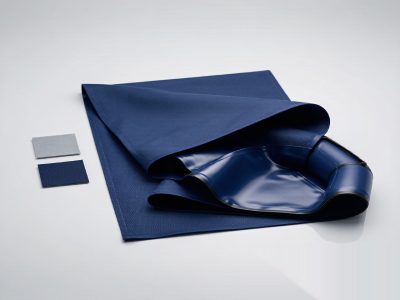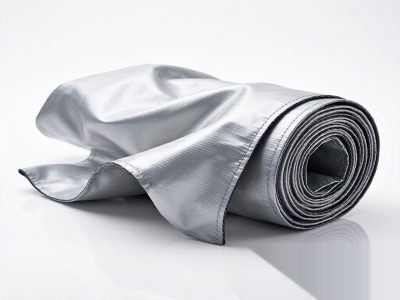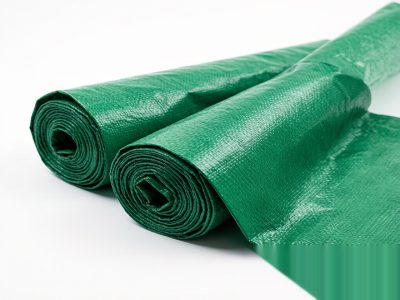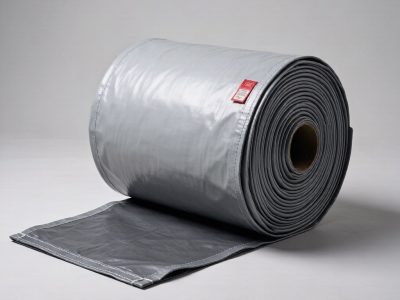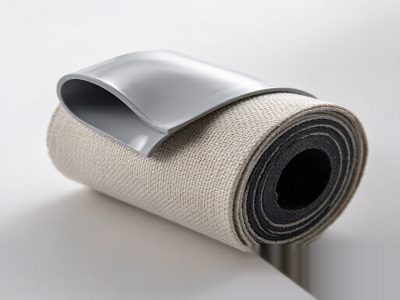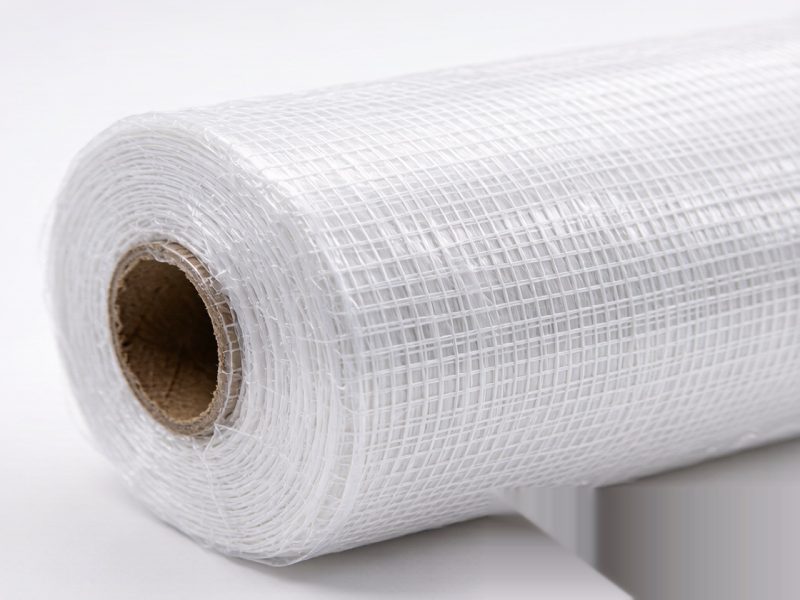
A mesh banner does not resist wind by being stronger than a solid banner; it survives because the perforations let part of the pressure pass through. That single design difference changes which parameters matter, and it is why picking a mesh by gsm alone is a recurring selection error. This guide separates the values that are documented in the product knowledge base from the site-specific numbers that a buyer must obtain from a measured report before a wind-exposed installation is signed off.
Why does a lighter mesh fabric survive higher wind than a solid banner?
A perforated PVC mesh lets air pass through and so reduces pressure on the whole panel, whereas a solid coated banner presents a continuous sail area. The knowledge base lists mesh at 270-280 gsm with a 1000D 9×9 open construction for wind reduction, and flags choosing mesh too light without checking the wind load as a common error.
- Mesh construction: the advertising-grade mesh line is listed at 270-280 gsm with a 1000D 9×9 perforated structure, with wind reduction as its defining attribute — kezhibo PVC knowledge base §3.3 signage-material selection table.
- Adjacent solid grades: frontlit banner is listed at 440 gsm as standard with heavier variants, while hanging banners in the 440-510 g/m² range are described as weldable-edged with wind-resistant tensile strength — kezhibo PVC knowledge base §3.3.
- Documented error: the knowledge base explicitly names “mesh too light without accounting for wind load” among common selection mistakes, alongside ink compatibility and indoor FR omissions — kezhibo PVC knowledge base §3.3 common errors.
Which verifiable parameters should a wind-exposed mesh specification list?
Fix the mass per unit area, base cloth construction, tensile and tear values, the permeability test method, light-fastness rating, the edge or seam construction and the destination-market fire class in one technical agreement, because wind performance depends on the whole assembly rather than on a single gsm figure and a change to any one of these items invalidates the others.
- Mechanical set: mass per unit area per EN ISO 2286-2, tensile per ISO 1421, trapezoidal tear per DIN 53363 / EN 1875-3, coating peel per ISO 2411 — kezhibo PVC knowledge base §2.2 test-method index.
- Air and light: air permeability per ISO 9237 and water-vapour behaviour per ISO 11092; light fastness is listed under ISO 105-B02 with a typical 7-8 grade and grey-scale assessment under ISO 105-A02 — kezhibo PVC knowledge base §2.2.
- Assembly and fire: the knowledge base specifies weldable edging for hanging banners, 300-610 gsm lightweight polyester for scaffold enclosures, and NFPA 701 or M2 as fire options for that enclosure use — kezhibo PVC knowledge base §3.3 and §3.2.
How should a buyer verify air permeability without a published number?
Request a measured air-permeability result under ISO 9237 for the exact mesh construction and lot, together with the panel size, fixing spacing and edge detail used in the trial, and mark any site-specific wind-pressure or openness percentage as pending a business source rather than filling it in from a generic table; the knowledge base contains no such numeric value.
- Method, not guesswork: ISO 9237 is the listed air-permeability method; the knowledge base does not publish a permeability value or a wind-pressure reduction percentage for mesh — kezhibo PVC knowledge base §2.2 and §3.3.
- Assembly evidence: weldable edging is listed for hanging banners, and the knowledge base identifies weldability as the most frequently overlooked PVC coated fabric property, with RF, hot-air, hot-wedge and solvent methods suited to different constructions — kezhibo PVC knowledge base §3.3, §0 and §4.
- Verification discipline: the parameter table is marked as estimated and requiring verification against third-party measured reports; the selection framework also requires the seam method to be fixed at design stage — kezhibo PVC knowledge base §2.1 and §4.
FAQ
Is a higher gsm always the safer choice for a windy scaffold banner?
No. A heavier solid banner increases the continuous sail area as well as the dead weight on the fixings, while a perforated mesh is designed to reduce the pressure acting on the panel. The knowledge base lists mesh at 270-280 gsm with a 1000D 9×9 open structure specifically for wind reduction, and separately lists 300-610 gsm lightweight polyester for scaffold enclosures. The right choice depends on the panel dimensions, fixing spacing, edge detail and the site wind condition, all of which must come from a measured or engineered assessment rather than from gsm alone.
What exactly does the 1000D 9×9 notation describe?
It describes the base cloth construction in the advertising-material selection table: a 1000-denier yarn in a 9 by 9 open weave that is then perforated, which is what produces the wind-reduction behaviour. Denier and weave density are construction parameters, not performance results. Do not reuse a denser banner-base construction as a mesh example, and do not treat the notation as a strength value. Ask the supplier to state the base cloth construction on the technical data sheet and pair it with tensile and tear reports issued under ISO 1421 and DIN 53363 or EN 1875-3 for the same lot.
Can I quote a specific air-permeability or wind-reduction percentage in the order?
Only if a measured report for that exact construction supports it. The knowledge base lists ISO 9237 as the air-permeability test method but publishes no permeability figure, no openness percentage and no wind-pressure reduction value for mesh. A number copied from a generic supplier page would be unsourced and would fail the parameter-integrity rule. Write the method and the required report into the order instead, request the result for the offered lot, and record any site-specific target as pending a business source until a measured value exists.
Which fire rating should a scaffold or fence mesh carry?
That depends on the installation region and whether the space is public or enclosed. The knowledge base lists NFPA 701 and M2 as fire options for building and scaffold enclosure fabrics in the 300-610 gsm range, and notes that EN 13501-1 B/C-s2,d0 applies in the EU while NFPA 701 applies in US public-space contexts for signage. Ask which classification system the local authority requires, then request a third-party report naming that system, the full class string, the method and the lot. A bare “flame retardant” label is not an acceptance criterion.
Why does the edge or seam detail matter as much as the fabric?
Because wind loads are transferred into the fixings through the hem, eyelets or welded edge, and a failure often starts there rather than in the middle of the panel. The knowledge base specifies weldable edging and wind-resistant tensile strength for hanging banners, identifies weldability as the most commonly overlooked PVC coated fabric property, and warns that sewn seams leak in inflatable or liquid-carrying products. Fix the seam method at the design stage, request a seam-strength result for the same lot, and keep the edge construction unchanged between production runs.
How should ink and colour durability be handled on an outdoor mesh?
State the printing system — solvent, eco-solvent, UV or latex — and confirm it against the mesh surface treatment, because the knowledge base lists ink incompatibility as a common error. Request light-fastness evidence under ISO 105-B02, which the knowledge base lists with a typical 7-8 grade, together with grey-scale assessment under ISO 105-A02. Also ask whether the perforations are printed through or left open, since that changes both the effective open area and the visual result. Keep the ink and lacquer fixed in the technical agreement across lots.
What should a buyer do when a supplier offers a lighter mesh at a lower price?
Treat it as a new qualification, not a price-only change. A lower mass per unit area changes tensile, tear and the openness of the construction, and the knowledge base names choosing mesh that is too light without accounting for wind load as a specific selection error. Ask for the new construction, a fresh EN ISO 2286-2 mass result, ISO 1421 tensile, DIN 53363 or EN 1875-3 tear, an ISO 9237 permeability result and a seam-strength result on the proposed lot. Then compare them with the panel size and fixing design before accepting the substitution.
Which documents should be kept for a wind-exposed installation?
Keep the technical agreement with the construction, gsm, ink system, edge detail and seam method; the lot-identified report set for mass, tensile, tear, peel, permeability and light fastness; the fire-rating report for the destination market; and the sample or trial record showing panel size and fixing spacing. The knowledge base requires third-party measured reports instead of specification-sheet ranges and recommends a written change-notice and re-test clause. That file makes a later performance question answerable without reconstructing the installation from memory.