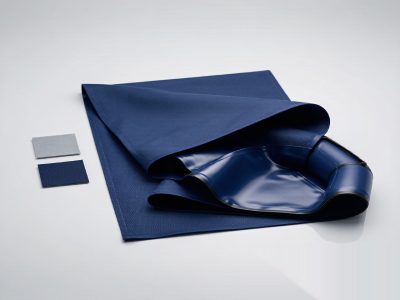
Fire classes are not interchangeable. A German B1, a French M2 and a European B-s2,d0 come from three different classification systems with different test methods, and a US NFPA 701 result is a pass-or-fail vertical flame test rather than a class letter. Writing the wrong string into a specification produces a report that looks plausible and fails at acceptance. This guide sets out the system, the full class string and the method that belong together, and the documents a buyer should request.
Why can a DIN 4102 B1 rating not be written as EN 13501-1 (B1)?
DIN 4102-1 and EN 13501-1 are separate classification systems: the German standard uses B1, B2 and B3 with its own method, while EN 13501-1 expresses a class as A1 to F plus smoke suffix s1 to s3 and droplet suffix d0 to d2. Writing “EN 13501-1 (B1)” therefore mixes two systems and leaves the smoke and droplet classes undefined.
- German system: DIN 4102-1 gives B1 (hard to ignite, self-extinguishing), B2 and B3 — kezhibo PVC knowledge base §2.3 fire-rating quick reference and §5 standards index.
- European system: EN 13501-1 is A1-F plus the s and d suffixes; B-s1,d0 means low flammability, limited smoke and no flaming droplets, and B-s2,d0 is commonly specified for large-span tensile roofs — kezhibo PVC knowledge base §2.3 and §3.1.
- Method link: the knowledge base lists EN 14115 and EN 15619 for temporary tent structures, where EN 15619:2014 combines mechanical grades F1-F3 with fire grades T1-T4 determined through EN 14115 — kezhibo PVC knowledge base §2.3 and §5.
Which fire-rating system applies to each destination market for PVC coated fabric?
Match the classification system to the installation region before fixing the specification: EU construction uses EN 13501-1, Germany additionally cites DIN 4102-1, France uses NF P 92-507 M-classes, and the US uses NFPA 701 for textiles and CPAI-84 for tents. The applicable class must be confirmed against the local code rather than assumed from a neighbouring market.
- Europe-wide construction: EN 13501-1 B-s2,d0 or higher is typical for tensile structures, with C often treated as the floor and B preferred for public or enclosed spaces; ASTM E84 Class A with FSI ≤25 is listed for the US, CAN/ULC-S109 for Canada and AS/NZS 1530.3 for Australia and New Zealand — kezhibo PVC knowledge base §3.1 regulatory references.
- Tents and event structures: CPAI-84 tests the base fabric horizontally and the tent body vertically, both after laundering and ageing, and is approximately comparable to BS 7837:1996; EN 13782 covers European event tents — kezhibo PVC knowledge base §2.3, §3.2 and §5.
- Truck side curtains and industrial covers: EN 12641-2:2019 sets the European side-curtain requirements, while German B1, French M2 and NFPA 701 are listed as optional fire options for cover fabrics depending on the destination — kezhibo PVC knowledge base §2.3 and §3.2.
What evidence should a fire-rating claim carry on a purchase order?
Require a third-party report that names the laboratory, the exact classification system, the full class string, the test method, the sample lot, the coating formulation and the report date, then cross-check it against the installation-region rules; a bare “fire retardant” label or a single letter without the system and method gives an acceptance team nothing to verify.
- Method index: burning behaviour is listed under EN 13501-1, DIN 4102-1, NFPA 701, EN 14115 and NF P 92-507; NFPA 701 is a vertical flame propagation test with a pass-or-fail outcome — kezhibo PVC knowledge base §2.2 and §2.3.
- Formulation linkage: the knowledge base warns that a surface-applied FR treatment can decay after cleaning and that a body-FR compound behaves differently, so the report must identify the formulation and any aftercare or re-test condition — kezhibo PVC knowledge base §3.1 common selection errors.
- Lot and change control: keep the report tied to one lot, require written notice before any formulation, lacquer or base-cloth change, and attach a re-test obligation; the selection framework requires third-party measured reports rather than specification-sheet claims — kezhibo PVC knowledge base §4, step 7.
FAQ
Can a supplier’s B1 report be used to satisfy an EN 13501-1 requirement?
Not as written. DIN 4102-1 B1 belongs to the German classification system, while EN 13501-1 uses a letter from A1 to F plus separate smoke and flaming-droplet suffixes. A B1 report does not state an s class or a d class, so the full string required by the European system is missing. Ask for a report that names EN 13501-1 as the system, gives the complete class string such as B-s2,d0, identifies the test method and laboratory, and ties the result to the lot and coating formulation being shipped. Where only a B1 result exists, record it as national evidence and request the additional test rather than translating it.
What does B-s2,d0 actually mean on a membrane specification?
It is one complete EN 13501-1 class string. The B is the reaction-to-fire letter on the A1-F scale, s2 is the smoke-production class, and d0 means no flaming droplets. The knowledge base notes B-s1,d0 for low smoke and no droplets and lists B-s2,d0 or higher as typical for large-span tensile roofs, with C often treated as the floor and B preferred for public or enclosed spaces. Because each suffix is a separate classification, a specification that quotes only “B” is incomplete. Always put the whole string, the system name and the method in the order.
Which standard should I cite for a tent or marquee in the United States?
CPAI-84 is the US tent and camping standard in the knowledge base: it tests the base fabric horizontally and the tent body vertically, with measurements after laundering and after ageing, and it is described as approximately comparable to BS 7837:1996. NFPA 701 is also listed for US textile and membrane vertical flame propagation and is a pass-or-fail test rather than a grade. The two are different instruments with different scopes, so confirm which one the local code and the venue’s authority require before writing the order, and request the corresponding report for the actual lot.
Is an M2 class equivalent to a European C-s2,d0?
There is no automatic equivalence in the knowledge base. NF P 92-507 is the French system with M1/M2 classes, while EN 13501-1 is the European system with A1-F plus s and d suffixes. Both appear in the regulatory references for tents, awnings and cover fabrics, but the methods and classification logic differ. Do not substitute one string for the other in a technical agreement. If a French project accepts an M2 report and an EU project needs an EN 13501-1 string, request two reports or a documented, authority-accepted equivalence rather than a supplier’s verbal conversion.
Why does the knowledge base warn about surface-applied flame-retardant treatment?
Because a surface treatment can lose effectiveness after cleaning or weathering, whereas a flame-retardant compound incorporated into the PVC body behaves differently over the service life. The knowledge base lists “using a surface-applied FR instead of a body FR” among common selection errors for high-performance composite fabrics. A buyer should therefore ask the supplier to state how the rating is achieved, whether any aftercare or re-treatment condition applies, and what the report says about testing after laundering or ageing. That detail belongs in the technical agreement, not only in the sales conversation.
What should a fire-rating report set include alongside the class string?
Ask for the laboratory name, the classification system, the full class string, the test method, the sample identification and lot, the coating formulation, the units and the report date. Add the mechanical and coating reports that govern the same lot — EN ISO 2286-2 for mass per unit area, ISO 1421 for tensile, DIN 53363 or EN 1875-3 for tear and ISO 2411 for peel — because a formulation change can move both fire behaviour and mechanical values. Keep a mapping of lot, formulation, method and report so a later substitution is visible.
Does EN 15619 replace EN 13501-1 for temporary structures?
No. EN 15619:2014 is the European standard for temporary tent structures and combines mechanical grades F1-F3 with fire grades T1-T4, where the fire grades are determined through EN 14115. EN 13501-1 remains the construction-product reaction-to-fire classification system. They address different objects and use different grade notation, so a tent specification should state which of them the authority requires and quote the corresponding grade string. Confusing the two produces the same failure mode as writing B1 into an EN 13501-1 line.
How should a multi-market order handle several destination requirements?
List each destination separately on the order, naming the system, the full class string, the method and the required report for that market, and avoid a single blanket fire-rating line. The knowledge base repeatedly warns that fire classes follow installation-region rules and must not be assumed, and it lists different references for EU construction, German, French, US, Canadian and Australia/New Zealand contexts. Where one production lot must serve several markets, request a report set that covers every named system and freeze the formulation in the technical agreement so one lot is not quietly split into different compounds.