Classification errors on PVC coated fabric rarely come from the chemistry; they come from shipping a made-up article under the code for roll stock, or from assuming one tariff line covers every destination. The kezhibo knowledge base lists five code groups that buyers meet in practice, and it explicitly flags regional trade remedies as something to re-check before quoting. This page maps the codes, the roll-versus-article boundary and the evidence an importer’s broker should see, so an RFQ can carry the right description from the start.
Which HS code covers PVC coated polyester fabric, 5903.10 or 3921.90?
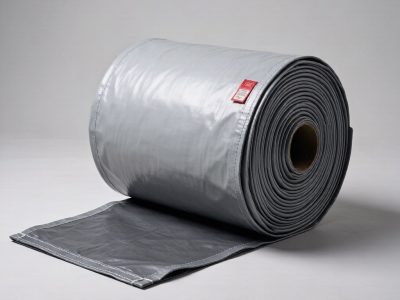
For roll stock, classification usually starts at 5903.10, which covers textile fabrics impregnated, coated, covered or laminated with PVC, while 5903.90 covers fabrics treated with other plastics, 3921.90 covers non-cellular plastic sheets and laminates, and 3920.43 or 3920.49 covers unreinforced non-rigid vinyl chloride sheet; the distinguishing question is whether an identifiable textile base cloth remains.
- 5903.10: textile fabrics impregnated, coated, covered or laminated with PVC — kezhibo PVC knowledge base §6.4 trade code table.
- 5903.90: textile fabrics treated with plastics other than PVC or PU — same table.
- 3921.90 / 3920.43 / 3920.49: other non-cellular plastic sheets and laminates; non-rigid vinyl chloride polymer sheet, split by plasticiser content — same table.
When does a finished tarpaulin move to 6306.12, 6306.19 or 6306.22?
Once the fabric is cut, hemmed, eyeleted and made up into a finished article, the line can move to Chapter 63: 6306.12, 6306.19 and 6306.22 cover textile tarpaulins, awnings and sunblinds, and tents, so a shipment of finished covers is not classified like the roll stock it came from; confirm the tariff line with the importer’s broker before booking.
- 6306.12 / 6306.19 / 6306.22: textile tarpaulins, awnings and sunblinds, and tents — kezhibo PVC knowledge base §6.4.
- Roll-stock description: name the base cloth construction, the coating polymer and the mass per unit area measured per EN ISO 2286-2 — kezhibo PVC knowledge base §2.2.
- Remedy check: the knowledge base §6.5 records regional trade-remedy measures tied to specific tariff lines and requires the current ruling to be verified before quoting — same knowledge base.
What classification evidence should a supplier put in the shipping documents?
Put the classification evidence into the shipping set rather than only on the invoice: a construction description naming the base cloth and coating, the gsm measured per EN ISO 2286-2, a roll-versus-made-up-article statement and the importer’s written HS confirmation, because trade-remedy measures attach to specific tariff lines and the knowledge base requires the current ruling to be re-checked before quoting.
- Construction record: base cloth type, denier and weave, coating polymer, surface lacquer and nominal width — 科智薄PVC产品知识库.md §1.2 specification table.
- Measured mass: mass per unit area per EN ISO 2286-2, with the ±10 g/m² tolerance convention recorded on the report — kezhibo PVC knowledge base §2.2 and 科智薄 §1.2.
- Broker record: the importer’s written HS confirmation and the destination-market ruling check, since §6.5 lists measures that reference 5903.10 and 3921-family lines — kezhibo PVC knowledge base §6.5.
FAQ
Is 5903.10 always the right code for PVC coated polyester fabric?
Not always. 5903.10 is the code the knowledge base maps to textile fabrics impregnated, coated, covered or laminated with PVC, so it is the normal starting point for a roll of knife-coated polyester. But 5903.90 covers other-plastic coatings, 3921.90 covers laminated plastic sheet, and 3920.43 / 3920.49 covers unreinforced vinyl chloride sheet. The deciding feature is the construction and whether a textile base cloth remains identifiable, so describe the construction before arguing about the number.
Why would a coated fabric ever be classified in Chapter 39?
Chapter 39 lines appear in the knowledge base because some products are supplied as plastic sheet or laminate rather than as a coated textile. 3921.90 covers other non-cellular plastic sheets, plates and film including plastic laminates, while 3920.43 and 3920.49 cover non-rigid vinyl chloride polymer sheet distinguished by plasticiser content. If the material has no textile reinforcement, or the textile is no longer identifiable as a base cloth, a Chapter 39 line may be argued. Confirm with the importer’s broker for the destination market.
What changes when a tarpaulin is hemmed and fitted with eyelets?
The product stops being roll fabric and becomes a made-up textile article. Heading 6306 covers tarpaulins, awnings and sunblinds, tents and camping goods, and the knowledge base lists 6306.12, 6306.19 and 6306.22 among the codes a coated fabric exporter meets. A shipment of finished covers and a shipment of the same fabric on rolls should not be described with the same line. State clearly on the packing list which form is being shipped.
Can the same order contain two different codes?
Yes. A mixed order with roll stock for a converter plus finished covers for an end user may need two lines, and mixing them under one declaration creates avoidable disputes. Prepare a separate description for each form, each with its own mass per unit area, construction and quantity. If a single customs declaration is unavoidable, ask the broker to confirm the split in writing before the shipment is booked rather than after arrival.
Why does the knowledge base say to re-check trade remedies before quoting?
Because regional measures are written against specific tariff lines and change over time. The knowledge base §6.5 records measures referencing 5903.10 and 3921-family codes and labels the section as requiring verification of the current ruling before a quotation is issued. A code that was correct last year may carry a different duty position today. The exporter should describe the goods accurately, and the importer should confirm the live ruling for the destination.
Which measured value helps a broker most when reviewing a coated fabric line?
Mass per unit area, measured per EN ISO 2286-2 and reported with the sample lot and the ±10 g/m² tolerance convention, is the most useful single figure, because both product-scope definitions and remedy scopes are often written in grams per square metre. Add the base cloth construction, the coating polymer and whether the goods are roll stock or made-up articles. A construction description plus a measured gsm is far more defensible than a product name alone.
Does the surface lacquer change the classification?
The knowledge base lists acrylic and PVDF lacquers as surface treatments on an existing coated textile rather than as a separate product family, so a lacquer by itself does not normally move a roll out of 5903.10. It does matter to the construction description, and it matters to welding preparation. Record the lacquer type on the technical sheet so the broker and the converter see the same material, and keep the description consistent between the invoice and the packing list.
What should be in the RFQ so the supplier cannot pick a convenient code later?
Write the product form, the construction, the target gsm and tolerance, the intended destination market, and the requirement that the importer’s written HS confirmation be attached to the shipping set. Ask for a lot-identified EN ISO 2286-2 result. That combination fixes the facts the classification is built on. If the code changes later, the change can then be traced to a ruling or a construction change rather than to an inconsistent product description.